
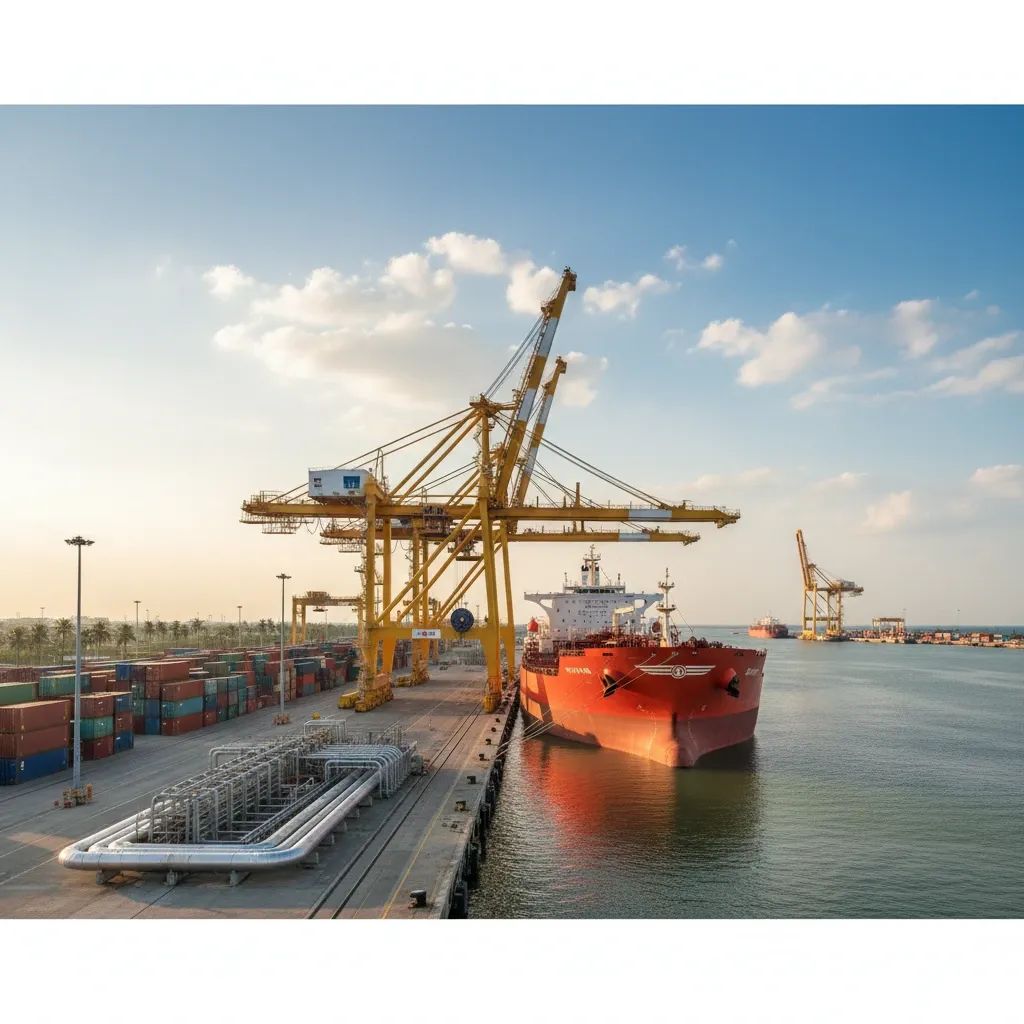
Thailand's energy predicament has reached an inflection point. After months of watching crude oil prices spike and global shipping routes collapse, the Thailand government is signaling that the worst may have passed—at least for the immediate term. Deputy Prime Minister and Foreign Minister Sihasak Phuangketkeow confirmed this on April 21 after meeting with Omani counterparts, cementing a tentative agreement that could spare Thai households and businesses from acute fuel shortages as the country enters its highest-consumption season.
Why This Matters
• Hormuz closure triggered a 50% collapse in Thai oil supplies: Without alternate arrangements, a May-June shortfall would have forced painful price caps or rationing of petroleum products that keep the economy moving.
• Oman offers a reliable pressure valve: A long-term supplier since 1998, the sultanate has committed to releasing surplus crude if Thailand provides advance notice—creating a critical safety net without permanent price commitments.
• Fuel prices remain elevated but stabilizing: Diesel hovering around 34.70–41.70 baht per liter and gasoline at 52.04–52.54 baht per liter represents relief from the March peaks, though still well above pre-crisis levels.
What the Pump Actually Looks Like Now
For someone filling a tank in Bangkok or Chiang Mai on April 21, the news of stabilization translates into concrete figures. PTT, Bangchak, PT, and Susco are quoting:
• Diesel B20 at 34.70 baht per liter—the lowest-cost option for most commuters
• Standard diesel holding around 41.70 baht per liter
• Gasoline at 52.04–52.54 baht per liter depending on station
• Ethanol-blended options (E20 and E85) ranging from 31.39–35.45 baht per liter
These represent recent reprieve. On April 5, diesel spiked 18% in a single month to 50.54 baht per liter. On April 17, PTT and Bangchak cut diesel by 1.50 baht and gasoline by 0.50 baht, reflecting weakening global spot prices. The recent movement is downward, but prices remain substantially above 2025 levels.
For a taxi driver or delivery operator burning 60 liters weekly, this means hundreds of additional baht monthly. For agricultural businesses dependent on diesel for pumps and machinery, the cumulative drag on profit margins remains severe. The Thailand government froze liquefied petroleum gas (LPG) prices until May—a safety valve for household cooking and heating—but this subsidy costs the state treasury and cannot persist indefinitely.
The Crisis That Forced New Thinking
The Strait of Hormuz, a maritime funnel barely 54 kilometers wide, normally channels roughly 20–25% of global oil and LNG shipments through its waters. For Thailand, that narrow passage represents something far more critical: the lifeline for 58% of crude oil imports and 24% of liquefied natural gas. On February 28, 2026, that lifeline fractured.
Following escalating U.S.-Israel strikes against Iranian military positions and the killing of Supreme Leader Ayatollah Khamenei, Iran retaliated with missiles and drones before announcing—and enforcing—the Strait's closure. The result: naval skirmishes, insurance companies suspending war-risk coverage on passing vessels, and crude oil cargoes becoming economically impossible to ship regardless of political status. Thai tankers and commercial freighters that normally transit the route faced premiums so steep that shipping became economically unfeasible even when technically permitted.
Thailand's exposure proved far worse than initially calculated. The country imports approximately 50% of its crude oil from the Gulf region, predominantly from the United Arab Emirates. Another 30% of LNG traveled through the same waters. The simultaneous loss of both energy sources triggered an immediate supply shortfall equivalent to roughly 50% of Middle Eastern inflows. State reserves initially estimated to last 60 days suddenly became the only buffer between stability and crisis.
Rebalancing the Energy Portfolio
The Thailand Ministry of Energy faced a choice: deplete reserves rapidly or activate contingency plans that had existed more on paper than in practice. Sihasak's visit to Oman represented the diplomatic half of this response. What emerged was neither a permanent solution nor a dramatic rescue, but rather a structured agreement with built-in flexibility.
Oman will supply surplus crude when production exceeds domestic consumption—but only with advance notice from Bangkok. Price remains open to negotiation. The clarity is modest, but for a country confronting an energy shock of this magnitude, the certainty alone carries weight. Thailand has purchased Omani crude continuously since 1998, meaning both parties understand the commercial mechanics and have working relationships at state and corporate levels.
Sihasak noted that actual purchases depend on Thai demand levels and price competitiveness. The Foreign Ministry is simultaneously engaging Brazil, Nigeria, Kazakhstan, Azerbaijan, Russia, and Malaysia through parallel diplomatic channels—a deliberate strategy to ensure Thailand never again sits dependent on a single threatened corridor. PTT Public Company, the state-owned oil and gas conglomerate, is directing this sourcing effort through its network of over 1,600 suppliers across 80 countries, enabling rapid pivots if disruptions emerge elsewhere.
The target is explicit: reduce Middle Eastern crude's share of Thai imports to just 30% of total volume, a dramatic rebalancing from the historical 50–70% dependency. This requires finding reliable alternatives from the Americas, Africa, and Central Asia simultaneously—an undertaking requiring both commercial negotiations and geopolitical leverage.
Building Resilience Across Multiple Fronts
Immediate measures extend beyond diplomatic dealmaking. The Thailand Cabinet ordered petroleum traders to increase mandatory strategic reserves from 1% to 3% of turnover by April 30, a move designed to prevent panic buying while ensuring inventory buffers against sudden disruptions. Current government estimates place total crude and refined product reserves at approximately 95–110 days of normal consumption—adequate breathing room, but hardly a margin for complacency.
Reserve Requirements and Strategic Positioning
Strategic reserves remain the first line of defense. By maintaining 95–110 days of inventory, Thailand creates a buffer that allows time for supply diversification and diplomatic negotiations. The Cabinet's mandate to raise trader reserves from 1% to 3% of turnover by April 30 reinforces this approach, preventing panic buying while building distributed inventory across the supply chain.
Alternative Fuel Push
Simultaneously, the government is aggressively pushing alternative fuels. Biodiesel blending targets increased from B5 to B7 standards, and ethanol-based fuels like E20 and E85 are being promoted to reduce absolute crude oil consumption. These strategies work at the margins—they trim demand rather than solve supply problems—but they compound, reducing vulnerability to any single source being cut off.
The Thailand central bank revised its 2026 GDP growth forecast downward, citing elevated energy costs as a primary driver. Economic models circulating among officials suggest a prolonged Hormuz closure could shave 0.2–0.9 percentage points from baseline growth. Given Thailand's already modest forecasts, that gap could drop annual GDP expansion to as low as 1.3% instead of projected 2–3%. This isn't recession territory automatically, but it's recessionary territory if combined with other shocks.
Every $10 per barrel increase in crude oil prices typically translates to roughly 0.5% higher consumer inflation. Thailand's exposure is among Asia's highest: net oil imports represent 4.7% of GDP, the largest energy vulnerability in the region. Manufacturing sectors reliant on petrochemical inputs, agriculture dependent on fuel-intensive machinery, and logistics firms handling regional trade all face margin compression if energy prices surge anew.
The Deficit Problem Nobody Really Wants to Address
Behind the stabilization narrative sits a less comfortable reality: the Thailand Oil Fuel Fund is depleted. The government used this mechanism to cap consumer fuel prices during the worst of the crisis, absorbing the gap between wholesale costs and retail prices. The fund's reserves evaporated. Officials are now discussing an emergency borrowing decree of up to 500 billion baht to handle energy-related fiscal pressures and other impending costs. Whether such a measure passes legislative scrutiny remains uncertain—Thailand's political landscape remains fragmented, and budgetary maneuvers of this scale require consensus.
The borrowing would essentially shift the energy shock's cost from the Oil Fuel Fund's accounting ledgers to national debt. This buys time but does not eliminate the problem; it defers it to future taxpayers and future administrations.
The Longer View: Renewable Momentum
While headlines fixate on crude oil and the Strait of Hormuz, the Thailand Ministry of Energy is simultaneously stewarding a parallel energy transition that positions the country differently by 2030 and beyond. The updated Power Development Plan (2024–2037) targets renewable electricity comprising 33% of generation by 2030 and 51% by 2037, with an aspirational goal of 70% by 2050.
Utility-scale solar has been identified as the most cost-effective pathway for large-scale deployment. Plans include floating solar installations across nine dams, community solar initiatives, wind projects, and expanded biomass and hydropower. Battery energy storage systems and smart grid infrastructure are receiving parallel investment to smooth intermittency.
The government is also exploring advanced technologies including feasibility studies for small modular reactors (SMRs) and carbon capture and storage systems. Regional cooperation through the ASEAN Power Grid is positioned as critical infrastructure for building a more resilient, interconnected energy ecosystem across Southeast Asia.
This longer-term shift reflects a recognition that energy security cannot rest indefinitely on imported fossil fuels routed through contested waters and vulnerable to geopolitical disruption. But these projects require years of capital deployment and regulatory coordination. For now, they remain aspirational frameworks running parallel to the urgent daily reality of stabilizing fuel supplies.
The Verdict for May and June
Sihasak Phuangketkeow and the Ministry of Foreign Affairs are projecting manageable conditions through Thailand's peak-demand months. Oman stands ready with surplus crude. Negotiations with alternative suppliers are advancing. Strategic reserves are adequate. Domestic price-support mechanisms, though strained, remain in place through May at minimum.
The stabilization is real, but it is contingent. Another flare-up in U.S.-Iran tensions, a new attack on shipping in the Strait, or a spike in global oil prices could unwind these gains within weeks. Thai residents should expect fuel prices to fluctuate in coming months rather than converge to a stable level. Transport-dependent sectors will continue absorbing higher costs. Inflation will likely remain sticky above pre-crisis norms.
What has changed is the government's ability to demonstrate it has a plan and contingency arrangements in place. That visibility matters as much as the actual fuel supply—it reduces panic, stabilizes business decision-making, and buys diplomatic space for longer-term energy repositioning. For now, that is enough.


