
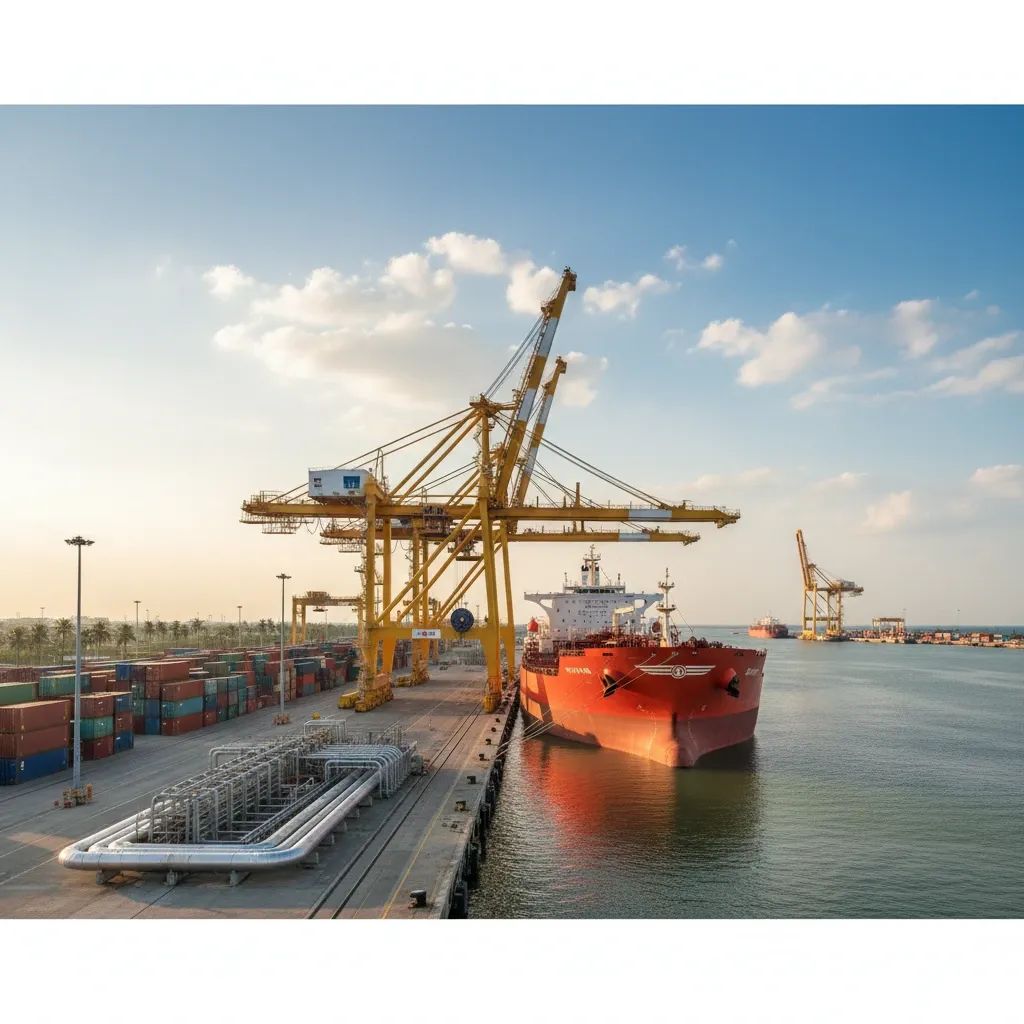
The Thailand Ministry of Energy has declared the kingdom's fuel supply stable and sufficient to weather global market turbulence, offering reassurance to residents, businesses, and the tourism sector as geopolitical tensions in the Middle East continue to rattle international oil markets.
Why This Matters
• 95-day oil reserve: Thailand currently holds approximately 95 days of oil reserves, combining domestic stockpiles and confirmed alternative imports from non-Middle Eastern suppliers.
• Diesel price freeze: The government has locked diesel prices at ฿29.94 per liter for 15 days using the Oil Fuel Fund to cushion volatility.
• Tourism unaffected: Pattaya and other tourism hubs report normal operations, with no disruptions to transport or visitor arrivals despite global energy anxieties.
Strategic Reserves Exceed Two-Month Buffer
Energy Minister Auttapol Rerkpiboon confirmed that Thailand's petroleum reserves now stand at roughly 95 days of consumption as of early March 2026, a figure significantly higher than the previous baseline of 60 to 65 days. This buffer comprises two distinct layers: domestic strategic stocks capable of sustaining the country for approximately 65 days if all imports were to halt, plus an additional 30 days secured through diversified supply contracts with the United States, South Africa, and Malaysia.
The expanded reserve cushion reflects a deliberate pivot away from Middle Eastern crude, which historically accounted for 72.4% of Thailand's energy imports by value. With the Strait of Hormuz—a chokepoint for one-fifth of global seaborne oil—experiencing intermittent disruptions due to military escalation between Iran and Western powers, Thai authorities have accelerated negotiations with alternative suppliers and tightened domestic storage mandates.
Oil companies operating in Thailand have been instructed to raise their mandatory inventory levels from 1% to 3% of annual throughput, a regulatory change designed to deepen the national buffer and reduce exposure to short-term supply shocks. The government has also suspended most petroleum exports temporarily, with exceptions only for Laos and Myanmar under existing regional energy cooperation frameworks.
What This Means for Residents Right Now
For those living and working in Thailand—whether Thai nationals or expatriates—the immediate picture is reassuring: fuel is available at controlled prices, daily life continues without disruption, and there is no reason to alter your routines or travel plans.
The ฿29.94 per liter diesel freeze is particularly significant for residents' wallets. To put this in context: this price is lower than pre-crisis 2022 levels and represents one of the most stable diesel prices in Southeast Asia. By comparison, Malaysia's diesel is currently around RM2.20 per liter (approximately ฿20), while Vietnam's hovers near 21,000 VND per liter (roughly ฿28)—making Thailand's controlled rate competitive for the region.
The 95-day reserve provides a meaningful three-month cushion that puts Thailand in a stronger position than many regional neighbors. Singapore maintains only 30-day reserves, while Malaysia operates with approximately 60-day coverage. This stronger buffer means Thai residents face significantly lower risk of sudden fuel shortages or price spikes compared to neighboring countries.
For expatriates considering the broader economic picture: Pattaya and other tourism zones remain fully operational, with no disruptions to transport, accommodation, or service availability. If you're monitoring energy costs for business operations or daily expenses, the current price freeze offers visibility through mid-March, though you should anticipate potential increases afterward if global crude markets remain elevated.
Tourism Sector Registers No Operational Impact
Pattaya, Thailand's eastern seaboard resort city and a bellwether for the kingdom's tourism health, continues to operate without energy-related friction. Fuel availability for taxis, tour buses, and the city's iconic baht buses remains uninterrupted, and visitor flows continue at robust levels. Hotels, restaurants, and entertainment venues report steady bookings, with beaches and nightlife districts maintaining their typical vibrancy.
Industry representatives indicate that the geopolitical backdrop has not yet translated into cancellations or hesitancy among international travelers. Pattaya welcomed over 20 million tourists by September 2025, and momentum has carried into early 2026, supported by festivals such as the Pattaya International Kite Festival and anticipation around the upcoming Songkran holiday. The city's tourism infrastructure, heavily reliant on road transport and short-haul logistics, has encountered no fuel supply constraints.
This stability is critical for Chonburi province, which encompasses Pattaya and draws nearly 10 million foreign visitors annually—primarily from Malaysia, China, India, Russia, and South Korea. Before the pandemic, the province generated ฿300 billion in tourism revenue annually, a figure authorities aim to approach again as international travel normalizes. While the Russia-Ukraine conflict and recent Middle East escalation have introduced variables—particularly affecting Russian arrivals—the broader tourism trajectory remains upward.
Price Controls and Market Interventions
To shield consumers from global oil price spikes, the Thailand Cabinet has deployed the Oil Fuel Fund to freeze retail diesel at ฿29.94 per liter for a 15-day period starting in early March 2026. This intervention addresses the risk of imported inflation, given that analysts at Goldman Sachs have warned of crude potentially exceeding $100 per barrel if Strait of Hormuz transit remains impaired, while Barclays projects a worst-case scenario of Brent crude reaching $120 per barrel if the conflict intensifies.
Other retail fuel prices in the Bangkok metropolitan area as of March 6–7, 2026, reflect modest volatility:
• Gasohol 95: ฿30.55–฿31.85 per liter
• Gasohol E20: ฿28.34–฿29.44 per liter
• Premium gasohol 97: ฿49.54–฿49.84 per liter
• Premium diesel: ฿43.44–฿49.84 per liter
Provincial authorities have been tasked with monitoring distribution networks to prevent panic buying and hoarding at retail stations, while emergency protocols are being refined to address potential shortfall scenarios.
Immediate Renewable Energy Plans
The Thailand government is advancing initiatives to reduce fossil fuel dependence. The Power Development Plan (PDP) 2026 targets renewable energy exceeding 51% of total electricity generation in the near term, with an estimated 354.3 megawatts of new solar and waste-to-energy capacity being added in 2026 alone. To meet rising electricity demand from data centers and artificial intelligence infrastructure, the government is promoting direct power purchase agreements (Direct PPA) for green electricity, with a 2,000-megawatt pilot program aimed at data center operators seeking 100% renewable power.
Longer-Term Structural Reforms and Baseload Security
Beyond renewable expansion, Thailand is pursuing structural reforms to ensure baseload power stability. The PDP 2026 considers the deployment of small modular reactors (SMRs) as a capacity solution to support the kingdom's net-zero carbon goal by 2050. This represents a longer-term strategy, with commercial deployment unlikely before the early 2030s.
On the fossil fuel front, the Department of Mineral Fuels is accelerating exploration activity, with results expected from onshore petroleum surveys and the upcoming announcement of winners from the 24th licensing round in the Gulf of Thailand. Extending production timelines at key fields such as Bua Luang and Pailin by an additional 10 years is under consideration to maintain basehold domestic output. The government is also working to expand liquefied natural gas (LNG) imports and boost generation from hydropower and coal plants as transitional measures, acknowledging that domestic natural gas reserves are declining and import reliance is rising.
Regional Context and Global Linkages
Thailand's energy challenge mirrors that of many Asian economies: high import dependence, vulnerability to Middle Eastern supply routes, and pressure to decarbonize while maintaining growth. The kingdom imports approximately 72% of its energy-related goods from the Middle East, making the Strait of Hormuz a critical artery. The recent blockage of this strait by Iranian forces, which stranded an estimated 150 oil and gas tankers in the Persian Gulf, underscored the fragility of long-established trade corridors.
In response, Thai policymakers have accelerated outreach to Western and African suppliers, while deepening energy cooperation with ASEAN neighbors. The Malaysia-Thailand Joint Development Area (MTJDA) for offshore gas production is being extended, and discussions are underway for carbon capture and storage (CCS) projects to mitigate emissions from hydrocarbon extraction.
The government's decision to continue fuel exports to Laos and Myanmar reflects Thailand's role as a regional energy hub, balancing national security with diplomatic and economic commitments. These exemptions are small relative to domestic consumption but symbolically significant for maintaining cross-border energy ties.
Outlook and Uncertainties
While the current reserve position and price interventions offer near-term stability, several variables could shift the calculus in coming months. The Russia-Ukraine war continues to influence global energy markets, and any easing of sanctions on Russian crude—a scenario under discussion in Washington—could introduce additional supply and dampen price pressures. Conversely, prolonged conflict in the Middle East or further disruptions to shipping lanes would tighten global inventories and test Thailand's diversification strategy.
Domestic demand patterns also matter. The shift toward electric vehicles and declining natural gas vehicle (NGV) usage is gradually reducing petroleum consumption, but the pace of this transition lags behind headline policy targets. Diesel remains the dominant transport fuel, and any sustained price increase would ripple through logistics costs, affecting everything from food prices to tourism affordability.
For now, Thailand's energy posture is defensive but functional: reserves are adequate, prices are managed, and supply chains are diversifying. The tourism sector, a pillar of the economy, continues to operate without constraint, and the broader public has been spared the acute fuel shortages that have plagued some neighboring countries during past crises.
Key Takeaways for Residents
• Current fuel availability: Diesel is available at the controlled price of ฿29.94/liter through mid-March 2026. Standard gasoline remains stable with minor regional variations. No fuel shortages are expected in urban or provincial areas.
• Price stability timeline: The current diesel price freeze lasts 15 days (through approximately March 20, 2026). Budget for potential price increases after this period if global crude markets remain elevated; however, the 95-day reserve cushion reduces the risk of dramatic spikes.
• When to expect changes: Monitor news in mid-to-late March 2026 for announcements about post-freeze pricing. The government has signaled it will manage transitions carefully to avoid consumer shock, but subsidies cannot be maintained indefinitely if global oil prices remain high.
• Where to monitor updates: Official updates come from the Ministry of Energy, Ministry of Commerce, and the Oil Fuel Fund. Local news outlets and provincial government websites provide real-time price information and supply status. Tourism authorities will announce any disruptions to Pattaya or other sectors immediately if they occur—expect no disruptions based on current forecasts.
Whether this stability endures depends largely on forces beyond Bangkok's control—geopolitical developments in the Middle East, global crude demand, and the willingness of alternative suppliers to fill any gaps. However, Thailand's expanded reserves and diversified supply partnerships position the kingdom favorably compared to regional peers.


