
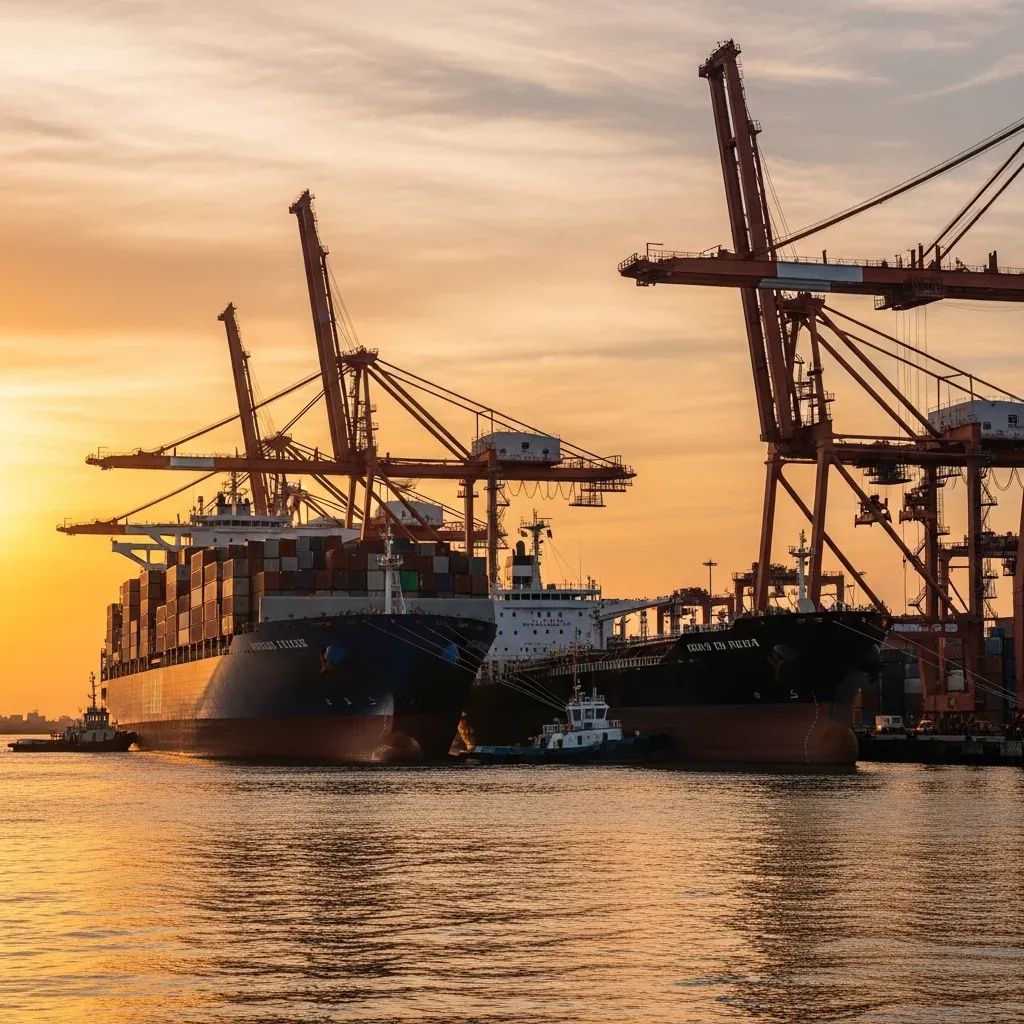
Thai businesses woke up to a mixed picture from Tehran: exports slipped only marginally yet imports collapsed, while global oil traders quietly price in a fresh security premium. In short, limited direct trade, outsized energy risk—and Bangkok is watching every headline.
Snapshot for quick reading
• $120.9 M in Thai exports to Iran last year, down 1.3%
• Imports fell 79.6% to just $8.6 M, giving Thailand a rare surplus
• Agricultural staples still sell, with rubber and rice leading gains
• US tariff threats loom over any company that ignores sanctions rules
• Oil remains the wild card; Iran pumps 3 M bpd and controls the Strait of Hormuz
Trade volume: small on paper, strategic in practice
Iran ranks only 87th among Thailand’s trading partners, yet developments there ripple far beyond the customs-desk spreadsheets. Because Iran is the third-largest OPEC producer, any disruption can lift global crude benchmarks, raising transport and manufacturing costs for Thai firms from Bang Na to Chiang Mai. Officials at NESDB stress that supply still tops demand, but Energy Minister Auttapol Ruekpiboon admits the ministry is set for price spikes should tensions intensify.
What is still selling—and what isn’t
Contrary to the headline decline, several Thai goods quietly gained double-digit growth:• Natural rubber up 54% as Iranian tyre makers hunt non-US sources.• Medical devices up 175%, fueled by hospital upgrades in Shiraz and Mashhad.• Rice shipments up 89% after droughts dented Iran’s domestic harvest.
On the flip side, canned fruit—long a Thai bestseller—fell as Iranian consumers faced a plunging rial and 42% inflation. Frozen seafood and chemicals, once routine imports from Iran, nearly vanished from Thai ports, reflecting sanctions-driven payment bottlenecks.
The Washington factor
Former US President Donald Trump’s renewed 25% tariff threat on countries trading with Iran has rattled regional exporters. Bangkok’s foreign ministry argues Thailand will act on its “economic sovereignty”, yet it quietly advises firms to audit supply chains, payment routes and end-users. Steel parts, auto components and electronics sent via third-country hubs could draw scrutiny if paperwork is sloppy.
Energy markets: Bangkok’s bigger headache
Every Thai driver feels the jitters when analysts mention the Strait of Hormuz, a choke point funnelling one-fifth of the world’s crude. Five straight days of price gains have pushed WTI above $61 and Brent past $65—levels unseen in two months. Consultants warn that a military flare-up could tack on $10–20 per barrel, breaching the psychologically potent $100 threshold. Even if OPEC+ members like Venezuela crank up output, shipping insurance fees and route detours could still pinch Thai refiners and airlines.
How Thai companies can stay ahead
Lock in freight and fuel contracts before premiums expand.
Diversify to alternative settlement currencies such as yuan or dirham where sanctioned links are minimal.
Leverage government insurance schemes from Export-Import Bank of Thailand covering geopolitical non-payment risk.
Pair with local Iranian distributors that already navigate dual-use technology rules.
Diplomatic guardrails and the road forward
The prime minister has ordered the foreign ministry to issue travel advisories and keep hotline numbers open for the Thai community in Iran. At the multilateral level, diplomats are pitching Thailand’s “economic diplomacy 2.0”—a plan to widen trade with South Asia and the Gulf so that any single flashpoint hurts less. Analysts, meanwhile, flag Thailand’s broader vulnerability: a 1.6% GDP growth forecast for 2026 could be shaved further if oil costs balloon.
Bottom line: while the baht-rial trade lane is small, events in Iran function like a pressure gauge for world energy prices. Thai exporters may still find niche opportunities, but the bigger story remains on the petrol station price board—and that is why Bangkok’s radar will stay locked on Tehran for the foreseeable future.


