
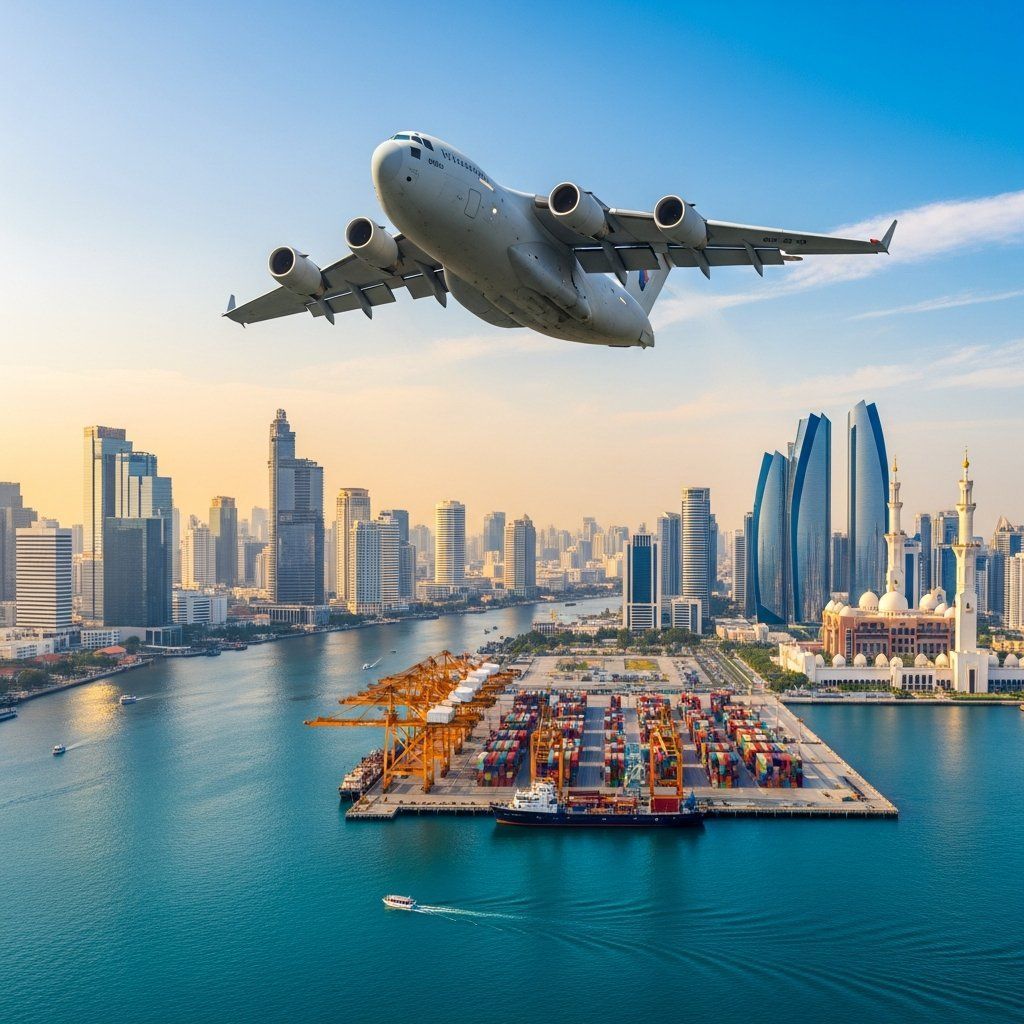
Thailand’s ties with the United Arab Emirates have quietly become one of Bangkok’s most profitable and politically useful friendships. As the two nations toast 50 years of formal relations, policy-makers are drawing up ever more ambitious blueprints—from expanded air links to a first-of-its-kind trade pact—that could reshape how Thai goods, services and skilled workers reach the wider Middle East.
From Pearl Traders to Petroleum Partners
When diplomats exchanged the first handshake in 1975, they could hardly have predicted today’s golden jubilee partnership. What began with Thai rice cargoes and Emirati dates has grown into a Bangkok-Abu Dhabi air corridor powering non-oil trade worth $7.4 B a year. The UAE as Thailand’s top Middle East market now absorbs everything from Thai rubber and auto parts to durian, while Emirati crude and petrochemicals fueling Thai industry keep local factories humming. Analysts believe the still-unfinished Comprehensive Economic Partnership Agreement (CEPA) talks could unlock another wave of tariff-free commerce, positioning Thailand as an ASEAN gateway for Gulf capital.
Capital and Confidence: The Investment Surge
Money has followed merchandise. UAE investors committed $384 M to Thailand between 2020-2024, targeting energy corridors stretching from Rayong to the Eastern Economic Corridor and testing the waters in digital sandboxes for fintech. Petro-giant ADNOC is eyeing smart logistics hubs that dovetail with the BCG economic model championed by Bangkok, while sovereign funds weigh stakes in the proposed Land Bridge megaproject linking the Andaman Sea and the Gulf of Thailand. On the flip side, Thai outbound capital of $62 M finding a safe berth in Dubai free zones is helping local exporters route products onward to Africa and Europe via UAE ports, underscoring the federation’s role as a commercial trampoline.
Health Tourism and Human Capital
Five decades of diplomacy are also visible in hospital corridors and training rooms. The government’s Medical Hub visa that lasts up to 10 years has turned Bangkok, Phuket and Chiang Mai into recovery rooms for GCC patients seeking cardiac and fertility treatment in Thailand. The Maldives’ Aasandha programme linking to Thai and Emirati hospitals from January 2025 will further lift regional patient numbers. On the labour side, Thai massage therapists certificated in Dubai are meeting surging spa demand, while freelance professional licences introduced by Abu Dhabi attract data scientists and chefs from the kingdom. Education ministries are drafting MOUs to weave Thai curricula into Emirati vocational colleges, ensuring a smoother pipeline of bilingual, tech-savvy graduates.
Looking Ahead: Why 2025 Matters
Abu Dhabi has branded next year the Year of the Society, a nationwide focus on cohesion that dovetails neatly with Thailand’s soft-power push. A cultural gala planned in both capitals will showcase khon masked dance beside Emirati falconry, while investors pitch direct ventures in renewable hydrogen and joint research on food security. Officials want an e-commerce bridge for SMEs, hoping CEPA’s ratification will deliver the promised 10% trade boost within its first year. Aviation, too, is set to soar: new daily flights by Gulf carriers will shrink travel time and costs for tourists, entrepreneurs and thousands of Thai workers already thriving in the desert city-states. If the two governments convert these blueprints into ground-breaking ceremonies, the next half-century could make the first one look modest.


