
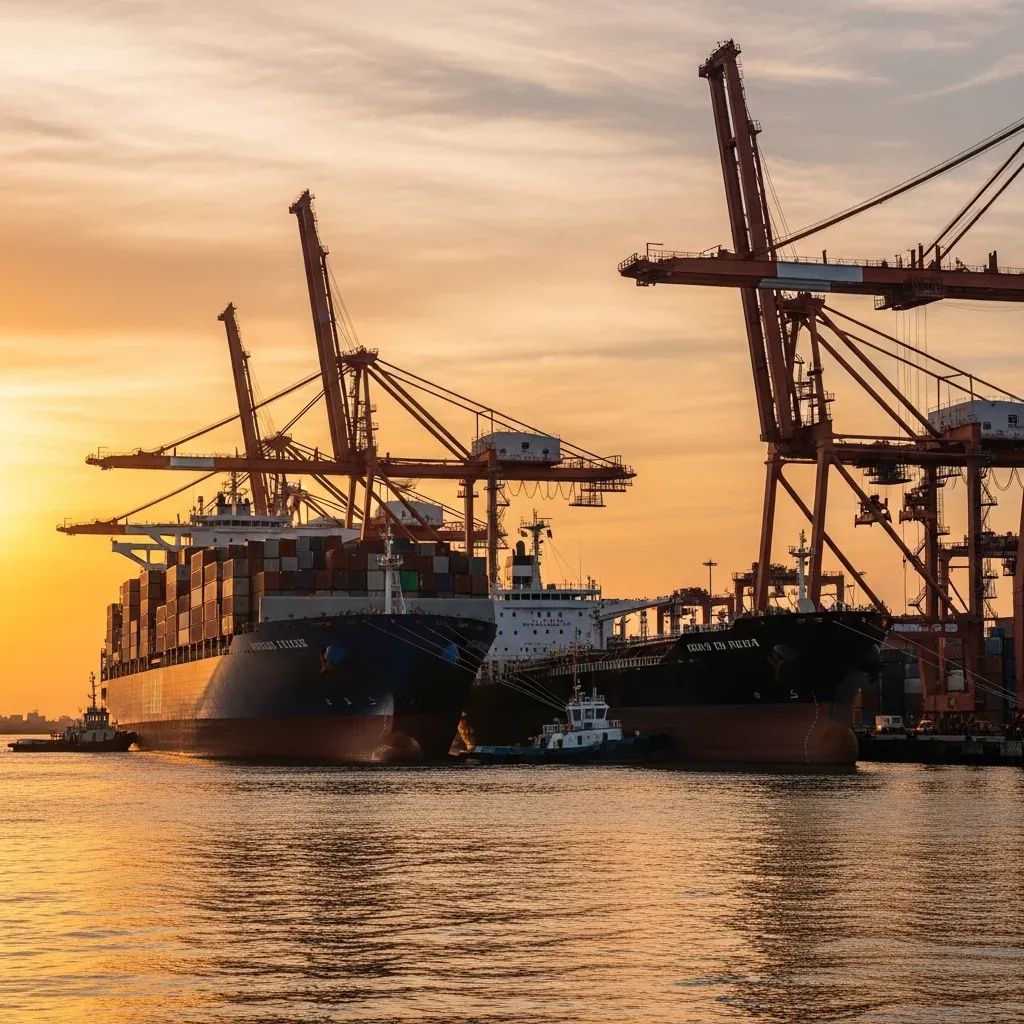
The Thailand National Security Council has approved jet fuel exports to Vietnam and the Philippines this month, a reversal that signals the country's refineries are running so hot that storage facilities are nearing maximum safe capacity. For residents tracking energy security and investment trends, this marks a pivot from precautionary stockpiling to active surplus management—and an early signal that Thailand is positioning itself as a regional fuel hub even as global prices whipsaw.
Why This Matters:
• Export approval for Jet A-1 to Vietnam and the Philippines ends a temporary suspension, reflecting Thailand's confidence in domestic reserves despite Middle East supply disruptions.
• Domestic jet fuel demand is forecast to grow 4% in 2026, driven by a projected 10% jump in tourist arrivals, yet refinery output is outpacing consumption.
• Bangchak Corporation began commercial production of Sustainable Aviation Fuel (SAF) this month at its Phra Khanong facility, marking Thailand's first standalone SAF plant using used cooking oil.
• A 1% SAF blending mandate took effect in January 2026, rising incrementally to 8% by 2036, which will raise the cost floor for aviation fuel but position Thailand ahead of regional competitors on sustainability.
Refinery Overcapacity Meets Regional Shortages
Thailand's refinery network—operating between 1.1 million and 1.2 million barrels per day across all products—has been running at or above 100% utilization as a hedge against potential Middle East supply shocks. The unintended consequence: storage tanks at key depots, including the 90-million-liter Suvarnabhumi facility and a 60-million-liter BAFS depot, are approaching 70% safe capacity, the threshold officials call "tank-top level."
At the same time, Vietnam and the Philippines are grappling with fuel shortages severe enough to force flight cancellations. China and South Korea, normally major regional exporters, have restricted outbound jet fuel shipments to protect domestic supplies. That vacuum has opened a window for Thailand to step in as a swing supplier, leveraging its geographic position and underutilized storage.
Thai officials have stated publicly that approved exports will not compromise domestic fuel consumption, a message aimed at quieting concerns that emerged when the government first suspended most oil product exports (exempting only Myanmar and Laos) earlier this year. The reversal underscores a balancing act: Thailand must prevent storage gridlock without triggering panic over energy security.
The SAF Wildcard: First-Mover Advantage or Cost Trap?
The most consequential development for investors and airlines operating in Thailand is the commercialization of Sustainable Aviation Fuel. Bangchak Corporation's Phra Khanong refinery is now producing approximately 6,289 barrels per day of SAF using HEFA-SPK (Hydroprocessed Esters and Fatty Acids) technology, converting used cooking oil into drop-in jet fuel compatible with existing engines. PTT Global Chemical is also online with a smaller unit producing roughly 103 barrels per day.
The Thailand Ministry of Energy's mandate requires airlines departing from Thailand to blend at least 1% SAF into Jet A-1 fuel starting this year, a requirement that will ratchet up annually to 8% by 2036 under the National Energy Plan 2024. This places Thailand ahead of most Southeast Asian peers on sustainability metrics—but it also introduces a cost problem. SAF currently trades at two to four times the price of conventional jet fuel, and while blending ratios are low today, the escalating mandate will pressure ticket prices and airline margins over the next decade.
For expatriates and businesses tied to tourism, the immediate read is mixed. The Tourism Authority of Thailand is pursuing an "Airline Focus Strategy" to attract 11.66 million long-haul arrivals in 2026, and higher fuel costs could dampen carrier enthusiasm for new routes. Yet the SAF push also differentiates Thailand in a global market increasingly driven by corporate sustainability pledges and European Union regulations that favor low-carbon aviation.
What Geopolitical Turmoil Means for Prices
Jet fuel prices in Asia have been on a roller coaster. Benchmarks tied to Singapore spiked from around $90 per barrel at the end of 2025 to over $230 in early March 2026, before easing slightly. The International Air Transport Association reported prices near $200 per barrel, while Malaysia Aviation Group forecasts a range of $120 to $130 over the coming year.
The catalyst: ongoing conflict in the Middle East and the effective closure of the Strait of Hormuz, which accounts for approximately 65% of Asia's crude oil supply. Thailand, like most of the region, remains a net importer of crude, though it refines a portion domestically and has been diversifying sourcing to mitigate risk.
For residents, the practical impact is twofold. First, higher jet fuel costs translate directly to airfares; Thai carriers have already trimmed schedules and raised prices to absorb the margin squeeze. Second, the price volatility complicates longer-term budgeting for businesses dependent on international logistics or expatriate travel.
Impact on Residents and Investors
Energy Security: The government's willingness to approve exports suggests Thailand's domestic fuel cushion is robust enough to weather short-term disruptions, even as global supply chains remain fragile. However, the Middle East situation remains fluid, and any further escalation could force a policy reversal.
Travel Costs: The 4% projected increase in domestic jet fuel consumption, driven by tourism recovery, will likely keep upward pressure on airfares through 2026. The SAF mandate adds a modest premium today, but that will compound as blending ratios rise.
Investment Positioning: Bangchak Corporation and PTT Global Chemical are early movers in a market where regulatory tailwinds favor low-carbon fuels. For investors tracking Thailand's energy transition, these firms represent a bet on long-term policy alignment with global aviation standards.
Regional Trade Flows: Thailand's ability to supply Vietnam and the Philippines at a time when China and South Korea are restricting exports is a strategic win, deepening economic ties and reinforcing Bangkok's role as a regional logistics node.
Refinery Margins and Market Dynamics
Thai Oil, one of the country's largest refiners, has forecast strong refining margins for 2026, citing sustained regional demand and the pricing arbitrage created by restricted exports from competitors. The so-called "jet crack spread"—the margin between crude oil and refined jet fuel—has widened as refineries globally prioritize higher-margin diesel and gasoline over jet fuel, keeping jet fuel supply tight relative to other products.
For Thailand, this creates a revenue opportunity, but also underscores a structural tension: refineries optimized for diesel production must now retool or co-process feedstocks to meet rising SAF mandates, a capital-intensive pivot that will take years to complete.
The Outlook: Surplus Management or Strategic Stockpile?
The narrative from Thai officials frames this month's export approval as surplus management—a pragmatic response to full tanks and regional need. But the longer-term question is whether Thailand will maintain excess capacity as a strategic buffer or lean into a more aggressive export posture to capitalize on regional shortages.
The answer likely depends on three variables: the trajectory of Middle East tensions, the pace of SAF adoption, and whether domestic diesel demand—which has been declining—continues to soften, freeing up refinery capacity for jet fuel production.
For now, Thailand is threading the needle: exporting enough to relieve storage pressure, meeting domestic demand with a comfortable margin, and building the infrastructure to become a regional SAF leader. Whether that balancing act holds through 2026 will depend on forces far beyond Bangkok's control—but the early signals suggest Thailand is better positioned than most neighbors to navigate the turbulence.


