
Why This Matters
• Visa overstay carries immediate legal penalties: Unauthorized stay in Thailand results in fines, deportation, and re-entry bans that can impact future travel for years.
• Online misinformation is spreading: Some online communities falsely suggest Thai temples offer shelter to foreigners without legal consequences, creating confusion about immigration requirements.
• Temple incidents are increasing: Recent cases of foreign nationals staying at religious sites without authorization have prompted clearer enforcement of immigration laws and reporting requirements.
The Incident: Police Response at Wat Chalong
Police responded to a report from nearby residents about a foreign national staying repeatedly at Wat Chalong, one of Phuket's most visited Buddhist temples. Officers discovered a Ghanaian national with minimal personal belongings. When questioned, the man explained he had encountered employment difficulties in his home country and had sought refuge in Thailand. He indicated he had received advice through online communities suggesting Thai temples might provide shelter for foreigners facing hardship.
Police documented his details and transferred the case to immigration authorities for further investigation and processing.
The Online Advice Problem
Across various online platforms, fragments of advice circulate among economically vulnerable migrants, suggesting that travel to Thailand with minimal funds and seeking shelter at temples represents a viable option. This advice contradicts Thai immigration requirements. According to Thai law, every foreign national must maintain valid entry permission and comply with residency terms. Temples operate as religious institutions, and while monks may offer short-term assistance reflecting Buddhist values, they cannot provide indefinite housing to foreign nationals without valid visas.
The Thai government has clarified publicly that temples are cultural and spiritual landmarks, not alternatives to legitimate immigration pathways. Community reporting of suspicious long-term foreign residence at temples has increased as awareness of proper immigration procedures has grown.
Legal Consequences of Visa Overstay
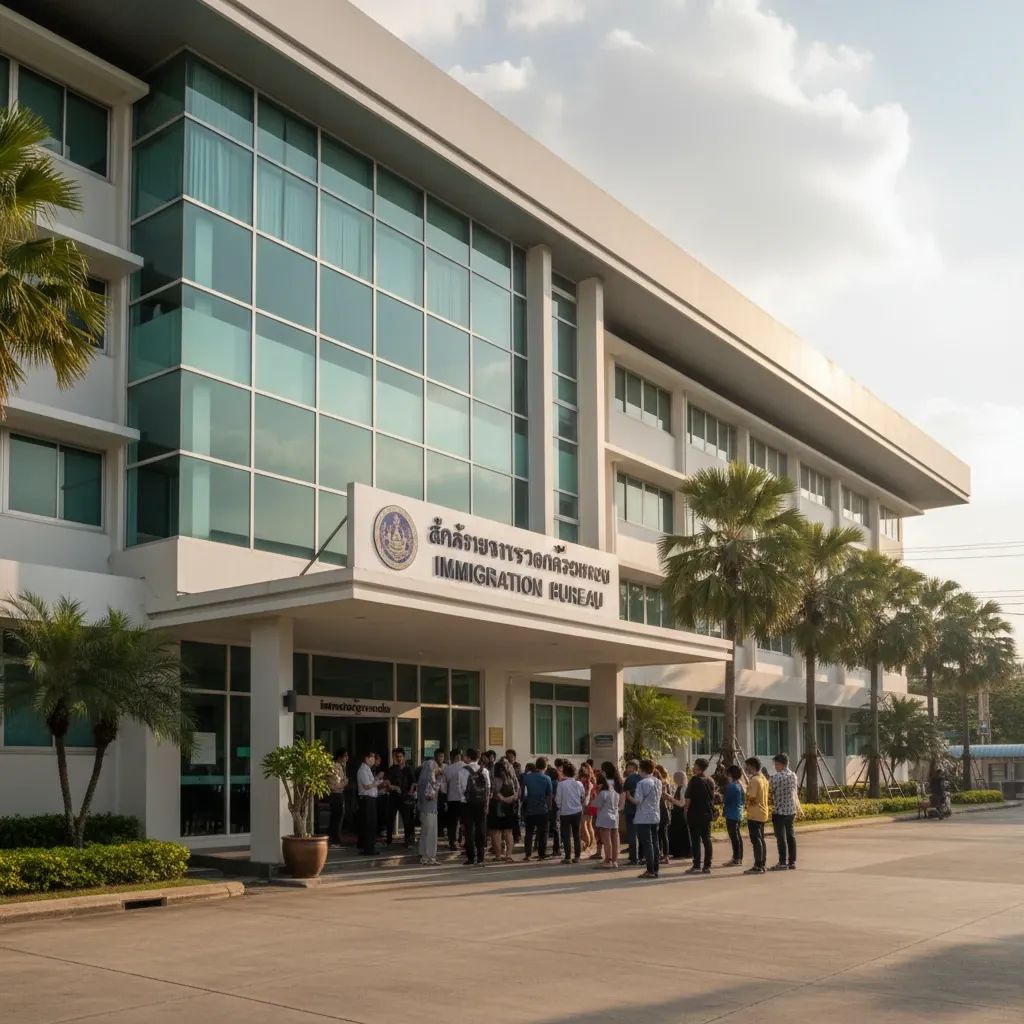
Thailand's immigration authorities enforce clear penalties for unauthorized stay. According to Thai Immigration Bureau regulations, foreign nationals found in violation of visa requirements may face:
• Administrative fines
• Detention at Immigration Detention Centres
• Deportation proceedings
• Re-entry bans that can last years
The severity of penalties depends on factors including the length of overstay, whether the individual voluntarily reported themselves versus being discovered, and individual circumstances. Re-entry bans can range from 1 to 10 years or longer in serious cases. Those unable to pay fines may face detention while travel documents are processed, with associated costs charged to the individual.
Arrest through police discovery typically results in harsher penalties than voluntary surrender to immigration authorities. For any foreign national discovered overstaying, the financial and legal consequences are substantial and long-lasting.
Thailand's Immigration Enforcement Environment
Thai authorities, including the Royal Thai Police and Immigration Bureau, have increased enforcement of visa regulations in recent years. Border procedures have been tightened, and visa-free entry periods for many countries have been reduced. Officials emphasize that foreign nationals must comply with all residency requirements and that violations are treated with increasing seriousness.
Temples themselves are now in a clearer position regarding their legal obligations. While providing meals or temporary assistance to visitors reflects Buddhist tradition, they are required to comply with Thai immigration law regarding reporting of foreign residents.
Legitimate Options for Foreigners Facing Hardship
For any foreign national encountering financial hardship or employment difficulties in Thailand, legitimate pathways exist:
Consular Services: Your country's embassy or consulate can provide emergency assistance, including repatriation funds or crisis counseling.
Official Immigration Channels: The Thai Immigration Bureau allows individuals to apply for extensions if facing temporary hardship or to arrange voluntary departure with reduced penalties compared to arrest.
Welfare Organizations: Recognized welfare organizations operate in major Thai cities, offering temporary support to nationals of specific countries.
Immigration Bureau Contact: Foreign nationals facing legal questions about their visa status should contact the Immigration Bureau directly for accurate guidance. Voluntary compliance typically results in more favorable outcomes than being discovered through enforcement operations.
The Deportation Process
If deportation proceedings occur, the process involves identity verification, documentation assembly, and investigation conducted at Immigration Detention Centres. Processing duration depends on how quickly the individual's home country issues travel documents. Detention costs and transportation fees are charged to the individual. Immigration officers escort deported individuals through airport procedures, and if the foreigner cannot afford the flight, the liability may fall to the airline or shipping company that facilitated entry.
The system prioritizes ensuring authorized departure from Thailand.
Enforcement Priorities and Prevention
Thailand's government response to visa violations has focused on enforcement: tighter visa rules, coordinated police-immigration protocols, and public messaging that consequences are serious. Border officials flag certain risk factors for secondary questioning, but economic desperation is not a formal visa category. Only after someone is discovered staying unlawfully does enforcement activate.
Online communities continue circulating informal migration advice, sometimes based on outdated information or individual experiences that do not represent current law. The gap between what online forums suggest and what Thai immigration law actually permits remains significant.
Key Takeaway for Expats
For any foreign national in Thailand, the legal requirement is clear: maintain valid visa status and comply with all residency terms. While Thai institutions embody generosity and compassion, these values do not override immigration law. The legal and financial consequences of unauthorized stay—fines, detention, deportation, and years-long re-entry bans—are severe and will impact future travel plans significantly.
Foreign nationals with questions about visa compliance should contact their embassy, consulate, or the Thai Immigration Bureau directly for accurate legal guidance rather than relying on online advice or informal arrangements.


