
Religious Discipline in the Age of Social Media: Thailand's Songkran Reprimand Case
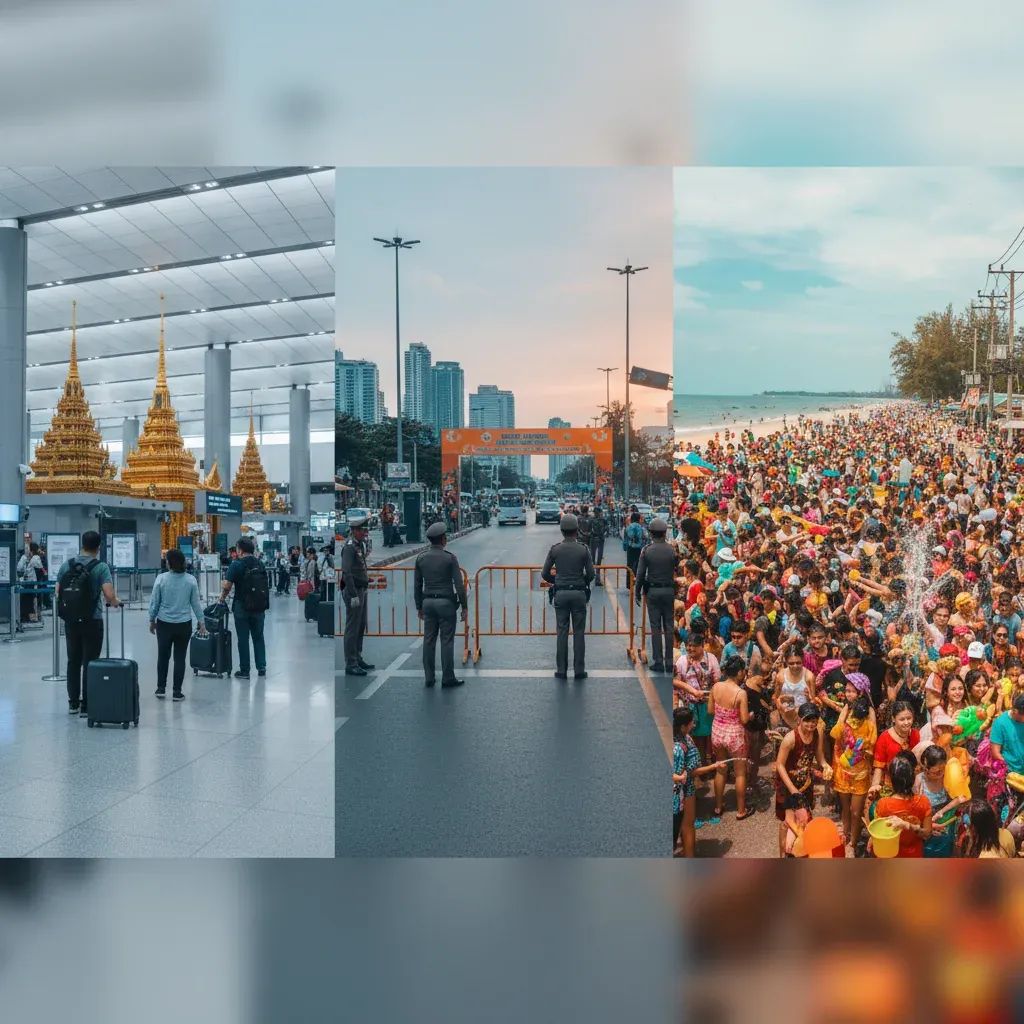
In April 2026, during Thailand's Songkran festival, images began circulating online showing an assistant abbot from a royal temple in Khon Kaen's Muang district participating in water festivities. The monk was photographed splashing water and applying talcum powder to participants' faces—behavior the Khon Kaen Office of Buddhism deemed incompatible with monastic standards.
After a formal investigation, Thailand's provincial Sangha authorities issued a 1-year written reprimand against the monk. While stopping short of temporary suspension or expulsion, the sanction carries real weight: it remains permanently on his record and signals that repeat violations could result in removal from his leadership position or expulsion from the temple.
Officials confirmed the monk's statement that he had momentarily "lost composure" while surrounded by other monks, novices, and community members engaged in water play. The breach lay not in the act itself but in the visibility and context—a public-facing display that the Sangha determined compromised the dignity expected of senior clergy.
Why This Matters to Temple Visitors and Expats
For those living in or visiting Thailand, this case raises practical questions about appropriate conduct during Songkran at temples. What This Means for Foreign Residents: If you participate in Songkran festivities at temples or during merit-making activities, be aware that monastic authorities are increasingly monitoring public behavior and documentation. While Songkran participation itself is not prohibited, the manner and visibility of participation now carries institutional scrutiny. Respect traditional boundaries even during festivals—avoid excessive water play with senior monks, and be mindful that photos shared on social media may trigger official reviews. For regular temple donors and merit-makers, this case signals that temples are becoming more formalized about conduct expectations during festive seasons, though this shouldn't discourage participation in traditional celebrations.
Understanding the Vinaya Framework
The reprimand roots in the Pali Vinaya, the ancient monastic code governing Thailand's Theravada Buddhist clergy. While remarkably detailed, the Vinaya was composed for a pre-digital world, creating ambiguities when applied to contemporary scenarios.
The code explicitly prohibits anācāra—roughly translated as "unbecoming conduct"—categorized as a dukkața offense, a minor infraction requiring confession and remediation. The definition is intentionally broad, encompassing any action that undermines monastic dignity or invites public reproach. Festive participation doesn't automatically violate Vinaya; the manner of participation does.
Equally significant is the concept of lokavajja, which refers to worldly reproach. An action that technically violates no specific rule might still warrant sanctions if it damages public confidence in the Sangha. This principle has become the de facto enforcement mechanism in the digital age. A photo, once circulated, becomes a form of public criticism that monastic authorities cannot ignore without appearing complicit.
Monastic authorities increasingly view Vinaya transgressions pragmatically: violations matter less for their severity than for their capacity to erode lay support. Donations, merit-making rituals, and temple patronage form the economic foundation of Thailand's monastic system. If the public loses faith, the entire structure destabilizes.
What the Reprimand Signals About Institutional Change
The 1-year written admonition demonstrates that Thai Sangha leadership is willing to publicly discipline senior monks—historically a rare occurrence. Traditionally, monastic discipline occurred quietly, handled entirely within temple hierarchy or provincial councils.
Public sanctions communicate to lay supporters that the Sangha takes accountability seriously. They also send internal signals to younger monks and novices about acceptable boundaries.
However, critics argue the enforcement remains inconsistent. The Khon Kaen case—a relatively minor incident during a national festival—received proportionally substantial attention, suggesting that media visibility drives outcomes as much as transgression severity.
Practical Implications for Thailand's Buddhist Community
For Thailand's Buddhist lay community, incidents like this trigger broader anxieties about institutional trustworthiness. Merit-making—supporting monks and temples to generate spiritual benefit—is foundational to daily religious practice for millions of Thais. If clergy cannot maintain basic standards, the spiritual transaction becomes questionable.
Practical consequences are emerging. Some lay supporters report becoming more selective about temple financial support, favoring organizations with transparent governance. Temple administrators are now issuing internal training sessions on social media conduct, particularly for younger monks unfamiliar with how digital documentation reshapes reputation and accountability.
Provincial Sangha councils are expected to draft clearer guidelines for Songkran and national celebrations, specifying permitted participation forms. Rather than relying on vague tradition, authorities will likely issue detailed protocols—a bureaucratic response to ambiguity reflecting how Thai institutions increasingly formalize practices once governed by informal consensus.
Broader Questions About Authority and Modernity
The reprimand highlights a fundamental challenge facing Thailand's religious institutions. Theravada Buddhism in Thailand has historically centered on respect for hierarchical authority and deference to senior clergy. The Vinaya itself reflects this structure—power to interpret and enforce discipline flows downward from senior monks and regional councils.
Digital culture distributes power differently. A photograph or video becomes evidence that anyone with a smartphone can share, debate, and contextualize. Monastic authorities find themselves reactive rather than proactive—responding to public criticism rather than setting agenda through internal deliberation.
This shift has forced the Sangha to adopt external accountability mechanisms historically unnecessary. The incorporation of public oversight and documented processes represents moves toward institutional transparency that older forms of monastic governance never required.
Some senior monks view this as authority erosion; others see necessary evolution. Thai monastic leadership appears to have settled on a middle ground: maintaining hierarchical decision-making while incorporating public oversight and documented processes.
Looking Forward: Songkran 2027 and Beyond
As Thailand approaches future Songkran celebrations, temple administrators and monastic leaders will navigate increasingly complex expectations. The assistant abbot in Khon Kaen serves as a visible reminder that even momentary lapses in composure can generate institutional consequences when documented and shared.
For ordinary Thais and residents, the implications are subtle but real. Religious authority is becoming more accountable, at least in its public-facing dimension. That accountability comes with costs—reduced spontaneity, increased bureaucracy, and external scrutiny's intrusion into spaces traditionally governed by internal norms.
The Sangha's historical role as a stabilizing moral force persists, but the mechanisms through which that authority operates are being rewritten in real time. The reprimand against the Khon Kaen monk is ultimately about how institutions maintain legitimacy in an age when every moment can be recorded, shared, and judged by millions.


