
The Rescue
A 17-year-old Thai girl who was sold into sex trafficking in Nigeria by her own family has been rescued and returned to Bangkok, sparking a criminal investigation into her mother, grandmother, aunt, and uncle. The teenager, who has not been publicly identified, was held under conditions of coercion and physical restraint for eight weeks before Thai and Nigerian authorities extracted her to safety this month at Suvarnabhumi Airport.
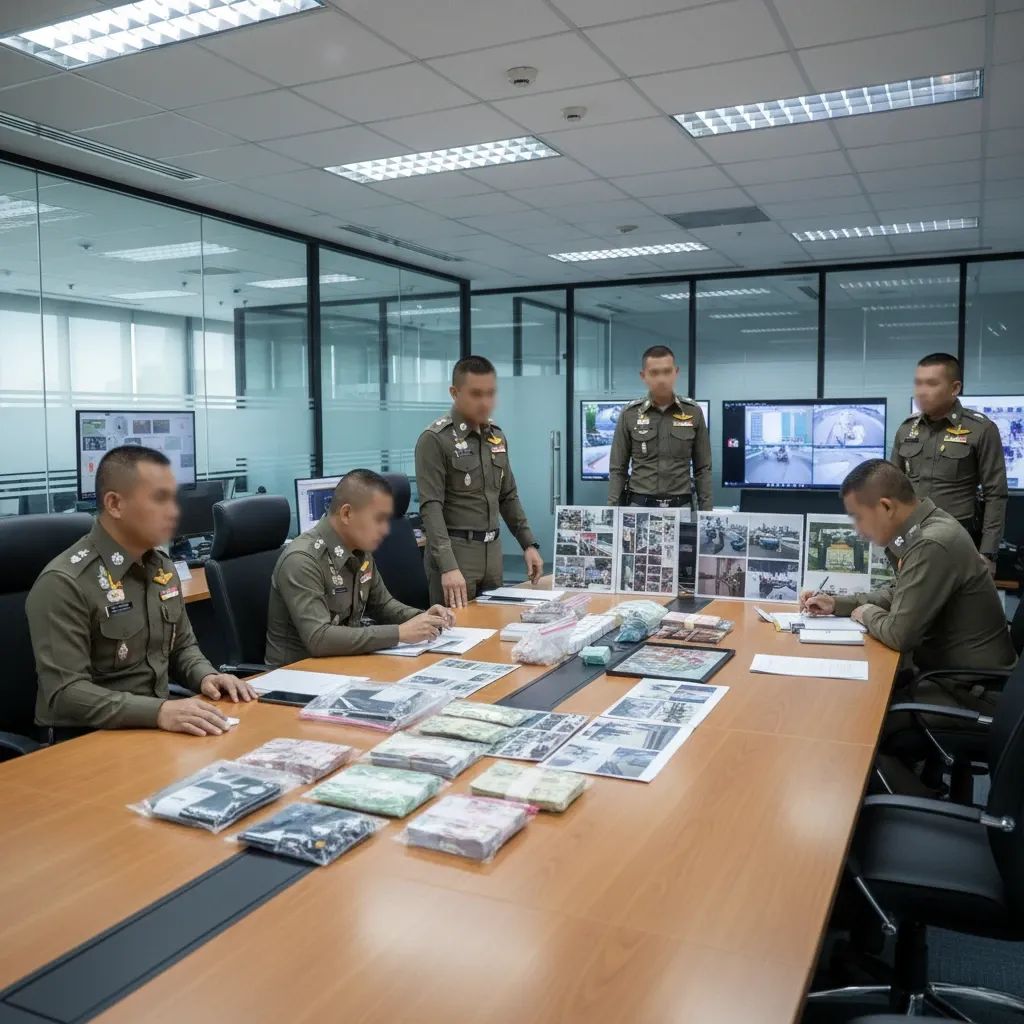
The repatriation represents a rare prosecution of family-based trafficking as organized crime—a deliberate policy shift by Thailand's Central Investigation Bureau that treats exploitation by relatives with the same severity as international criminal syndicates. What distinguishes this case is not merely the successful rescue, but the prosecutorial apparatus now in place to hold family members criminally accountable while protecting the survivor from having to testify directly against her own relatives.
How She Was Rescued
The teenager managed to send a single message through social media to a school friend while in Lagos, creating an alert chain that eventually reached Thai diplomatic staff in Nigeria. The Thai Embassy in Lagos then mobilized local law enforcement contacts and coordinated with international NGOs to locate her across multiple locations before traffickers could move her again.
Embassy officials worked backward from intelligence about her location, using Nigerian law enforcement networks to narrow the search before executing extraction to safety. This operational speed reflects Thailand's deliberate investment since 2024 in overseas consular capacity specifically designed for trafficking situations. The entire extraction was completed within weeks—a timeline that reflects how coordinated international enforcement can reach victims even when perpetrators are their closest relatives.
The Betrayal
The teenager's family faced accumulated debts from unspecified sources. Facing creditors, relatives informed her of an alleged overseas employment opportunity in Nigeria. She was assured she would work, earn income, and help pay family obligations. Instead, she was sold into a commercial sexual exploitation network.
Investigators are now constructing a financial timeline using wire transfers and payment documentation to prove deliberate conspiracy. If evidence demonstrates that family members received direct payment for facilitating her trafficking arrangement, prosecutors can escalate charges toward human trafficking racketeering, which carries enhanced penalties. The Central Investigation Bureau has advanced criminal charges against all four relatives, signaling this case will proceed to prosecution.
Authorities have not yet disclosed where the teenager is originally from, specific details about where she was held in Nigeria, or the current detention status of family members.
Her Path Forward
Upon landing in Bangkok, she entered protective custody managed by Pen Nueng Foundation, a Bangkok-based organization specializing in survivor support, and the Ministry of Social Development and Human Security.
Critically, prosecutors have structured her involvement in the case through documented statements and alternative legal mechanisms rather than requiring her to testify directly against her relatives. This represents a deliberate policy innovation: victim testimony through transcript and video deposition, rather than in-court exposure, has become standard in Thailand's newer trafficking prosecutions involving minors.
The foundation projects that comprehensive rehabilitation will require 12 to 18 months of intensive intervention. Support services include specialized psychological counseling addressing trauma from sexual exploitation, medical care, educational continuity, and vocational training. The survivor will reside in the foundation's shelter system during initial recovery phases.
The Department of Children and Youth will determine her long-term guardianship arrangements. Return to her family home has been explicitly ruled out. Authorities are exploring alternative custody options—potentially with distant relatives or court-approved guardians—to enable her to resume secondary education and proceed with her original university entrance preparation, interrupted by her family's trafficking decision.
The Transnational Trafficking Connection
This case illuminates a trafficking route that has historically received less public attention than reverse flows. While Thai victims trafficked to Nigeria remain statistically uncommon compared to other trafficking patterns, the route is expanding as criminal networks professionalize their operations across borders.
In February 2026, Nigerian authorities rescued 23 Nigerian youths who had been trafficked to Thailand, Myanmar, Laos, and Cambodia under false employment and scholarship promises. Upon arrival, victims were confined to monitored hostels and forced into romance scams and cryptocurrency fraud. This operation revealed the professionalization of transnational criminal logistics: syndicates now exchange services across borders, with Nigerian networks supplying technologically skilled labor to Southeast Asian criminal operations, while reciprocal arrangements send victims in the opposite direction for sexual exploitation.
What Thailand Is Doing
Thailand's Central Investigation Bureau has negotiated bilateral agreements with Nigerian authorities for joint investigations and witness protection arrangements. These address the logistical complexity of prosecuting transnational cases where evidence and witnesses are scattered across continents.
The newly launched SHIELD system, operational this month, aims to compress victim extraction windows to 72 hours by connecting law enforcement in 10+ countries to track suspects and facilitate real-time repatriation coordination. Current repatriation timelines often stretch weeks; this system represents a deliberate effort to reach victims faster.
The Ministry of Social Development and Human Security operates a 24-hour trafficking hotline (1300) that receives roughly 180 calls monthly from individuals reporting coercion or exploitation. Many callers cite debt-related pressure as a precursor to trafficking recruitment. Following this repatriation, the ministry is expanding debt relief awareness campaigns targeting rural provinces where economic desperation creates trafficking vulnerability.
Secondary schools now incorporate trafficking awareness modules, emphasizing that exploitation can originate within family structures and that minors possess legal protections enabling them to report abuse by relatives without fear of criminal retaliation or legal consequences.
Why This Matters for Thailand
This teenager's repatriation reflects how coordinated systems—international enforcement capacity, diplomatic infrastructure, survivor support systems, debt relief accessibility, and community awareness—can respond when exploitation occurs. No single measure solves trafficking. But when authorities respond faster, recover victims sooner, and prosecute perpetrators before the next cycle begins, families in Thailand are better protected.
For residents and expatriates in Thailand, this case demonstrates that authorities are taking family-based trafficking seriously, that survivors are being protected from courtroom trauma, and that prevention efforts are expanding in schools and communities nationwide.


