
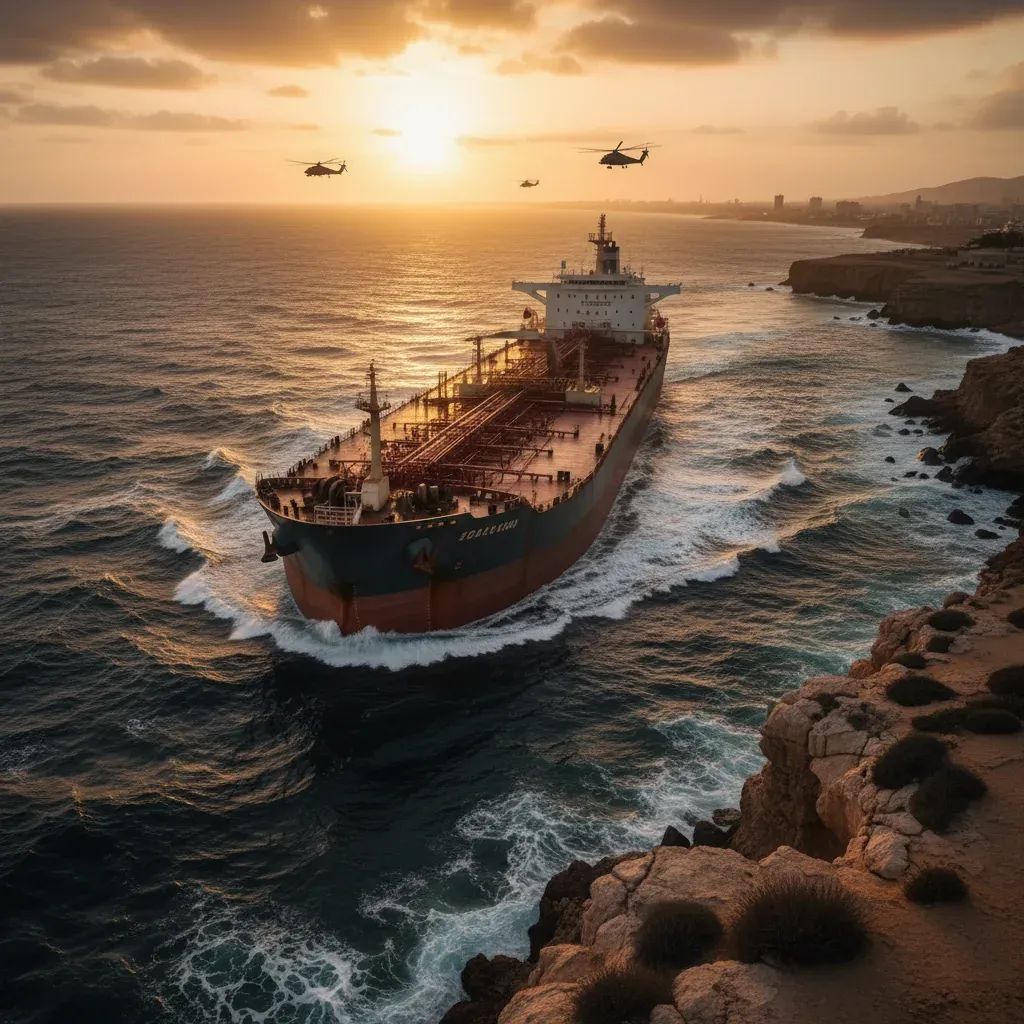
The Thailand Cabinet faces mounting pressure to secure alternative energy routes as Iran and the United States exchange the heaviest bombardment since a fragile ceasefire collapsed earlier this month, threatening the global oil chokepoint that Thailand relies on for over half its crude imports.
Why This Matters
• Energy security at risk: Thailand imports 50-60% of its crude oil and natural gas through the Strait of Hormuz, now effectively blockaded by both sides.
• Price shock incoming: Global oil benchmarks surged past $126 per barrel at peak tensions in March; renewed fighting threatens another spike directly impacting fuel costs across Thailand.
• No quick alternatives: With 16.5-17M barrels per day — roughly 20% of global crude trade — normally transiting the Strait, rerouting is slow and expensive.
• Regional allies targeted: Iranian missile and drone barrages have struck US bases in Bahrain, Kuwait, Qatar, Jordan, and Oman, expanding the conflict zone across the Gulf.
Collapse of June Framework Triggers New Wave of Strikes
A memorandum of understanding signed in June aimed to halt hostilities, reopen the Strait of Hormuz to commercial traffic, impose limits on Iran's nuclear program, and grant a 60-day waiver on US sanctions for Iranian oil exports. That framework disintegrated within weeks, with both Washington and Tehran accusing the other of violations.
On July 10, US Central Command launched coordinated airstrikes against approximately 140 Iranian military installations, including missile launch sites, drone storage facilities, radar arrays, air defense batteries, and naval assets. The Pentagon justified the operation as necessary to degrade Iran's capacity to threaten commercial shipping after allegations that Iranian forces attacked multiple cargo vessels in the Strait, leaving one crew member missing and a tanker ablaze.
Iran's Islamic Revolutionary Guard Corps responded with volleys of missiles and armed drones targeting American military infrastructure and allied host nations throughout the Gulf. Strikes hit the major US naval base in Bahrain — home to the Fifth Fleet — and the Al-Salem Air Base in Kuwait. Explosions were also reported in the Iranian port city of Bandar Abbas and on Qeshm Island. US strikes on July 13 reportedly killed two people in southwest Iran.
Strait of Hormuz: The 33-Kilometer Bottleneck
The Strait of Hormuz, a narrow channel linking the Persian Gulf to the Gulf of Oman and onward to the Indian Ocean, has become the tactical and symbolic center of the confrontation. Iran has declared the waterway closed to vessels bound for or departing from ports of the United States, Israel, and their allies. Washington contests this assertion, maintaining that the Strait remains an international passage and that US Navy forces will ensure freedom of navigation.
In practice, traffic has plummeted. Tanker operators report that many vessels are now navigating "dark routes" — switching off transponders to avoid detection — while others simply wait offshore. The result is a de facto dual blockade, with the US enforcing a cordon around Iranian ports and Iran interdicting Gulf-bound shipping.
For Gulf Cooperation Council members whose economies depend on exporting hydrocarbons, the closure is existential. Saudi Arabia, the UAE, Kuwait, and Qatar rely almost entirely on the Strait to reach global markets. Riyadh is urgently expanding pipeline capacity to its Red Sea terminals in an effort to bypass the chokepoint, but current infrastructure cannot handle the volume.
Regional Allies Bear the Brunt of Escalation
The fighting has drawn in nearly every country hosting US forces or positioned along Iran's missile trajectory. Bahrain, Kuwait, Qatar, Jordan, and Oman have all reported incoming Iranian ordnance, with varying degrees of damage and casualties.
Bahrain, where the US Fifth Fleet headquarters are located, has suffered property damage and injuries from missile debris. Kuwait reported damage to a border checkpoint and an offshore oil drilling platform following drone attacks. Qatar — which has been mediating indirect talks between Washington and Tehran — confirmed three injuries from intercepted missile fragments in mid-July. Jordan intercepted three Iranian missiles that caused minor structural damage but no fatalities.
Despite these attacks, both Saudi Arabia and the UAE have publicly refused to permit US forces to use their airspace, territory, or waters for strikes against Iran, complicating American operational planning and reflecting Gulf states' acute fear of being pulled deeper into the conflict.
Oman, which maintains diplomatic ties with both Washington and Tehran, has played a neutral mediating role, proposing a two-lane safety corridor through the Strait. However, Oman summoned Iran's ambassador to protest after a drone strike targeted one of its provinces.
Economic Fallout: Thailand's Energy Bill Set to Climb
For Thailand, the immediate consequence is a sharp rise in energy import costs. Brent crude, which had stabilized in the $80-$90 range earlier this year, surged past $100 per barrel in March and hit $126 at peak tension. Renewed hostilities threaten another upward lurch, translating directly into higher diesel, gasoline, and electricity prices across the country.
Thailand's Ministry of Energy has not yet announced emergency measures, but the government has been monitoring the situation closely. PTT Public Company Limited, Thailand's state-controlled oil and gas company, issued a statement on July 12 acknowledging the supply risk and confirming that contingency planning is underway. Industry sources indicate that emergency cabinet meetings have been scheduled to discuss potential responses, including strategic reserve releases and accelerated negotiations with alternative suppliers.
Thailand maintains strategic petroleum reserves equivalent to approximately 90 days of crude oil imports and 45 days of refined products, managed under protocols established by the Ministry of Energy. These reserves can be released at cabinet discretion in cases of national energy emergency, though such action typically requires formal government declaration and is considered a measure of last resort to avoid depleting long-term security buffers.
Historically, Thailand's fuel pricing mechanism responds to global oil benchmarks with a lag of 5-7 days, meaning current supply disruptions will likely translate into visible price increases at Thai petrol stations within the coming week to 10 days. During the 2008 oil crisis, fuel prices spiked by 35-40% over three months before moderating, and the 2022 Ukraine-related shock saw similar timelines with price increases of 20-25% sustained for several months. Industry analysts anticipate a comparable trajectory if Hormuz disruption persists beyond mid-July.
Diplomatic Efforts Stall as Fighting Enters Second Week
Indirect negotiations facilitated by Qatar and Oman have so far failed to produce a ceasefire. In early July, Iranian President Masoud Pezeshkian declined to meet directly with US envoys, insisting that clear ceasefire terms must precede any discussion of nuclear limits or sanctions relief.
US President Donald Trump declared the April ceasefire "over" on July 8, following allegations of Iranian attacks on commercial shipping. However, he indicated on July 13 that Iran had requested resumed talks and that Washington remained open to dialogue, despite the ongoing exchange of fire.
The collapse of diplomacy has alarmed regional powers. Saudi Arabia's Foreign Minister has been in direct contact with Iranian counterparts, signaling Riyadh's desire to de-escalate rather than be dragged into a wider war. The UAE has similarly sought to distance itself from US military operations while continuing to host American personnel and assets.
What This Means for Residents and Businesses
Thailand-based households should expect fuel price increases of 2-4 baht per liter within the next 7-10 days if current supply disruptions continue. While fuel stockpiling is not recommended — Thailand maintains adequate supply chains and hoarding can create artificial shortages — residents should factor rising energy costs into household budgets. Monitor announcements from the Ministry of Energy (energy.go.th) and PTT (ptt.co.th) for official statements on supply status and any emergency measures.
Diesel-dependent businesses, including transportation, logistics, and agriculture, should consider hedging fuel costs through forward purchases or consulting with PTT and private energy suppliers about volume pricing options. The Thai Chamber of Commerce (thaichamber.org) and Federation of Thai Industries are coordinating business continuity guidance; check their websites for sector-specific updates.
Airlines and tourism operators should expect sustained fuel surcharges. Thai Airways and budget carriers have hedged portions of their fuel exposure, but extended high prices will eventually pass through. Travelers should monitor surcharge notifications and expect potential ticket price volatility.
Thai Airways, Thai Smile Airways, and other carriers have confirmed fuel surcharge adjustments may be applied to international routes within 10-14 days if current tensions persist. Book early if travel is essential, as pricing typically stabilizes once the market assesses supply conditions.
Expats and investors with Middle East operations should stress-test supply chain continuity plans. While Thailand itself faces no direct military risk, logistics partners in the Gulf — particularly in Kuwait, Qatar, and the UAE — may experience operational disruptions. Redirect perishable shipments through non-Hormuz routes if available, and communicate directly with Gulf-based suppliers about contingency timelines.
Policy watchers should track the National Energy Policy Committee proceedings scheduled for late July. Thailand's government is under pressure to accelerate renewable energy targets and negotiate long-term liquefied natural gas (LNG) contracts with Australia and other non-Middle Eastern suppliers. A serious, sustained blockade would likely trigger policy acceleration toward energy diversification, particularly expanded solar capacity and LNG storage infrastructure.
Resources for staying informed:
• Ministry of Energy: energy.go.th (Thai and English)
• PTT Investor Relations: ptt.co.th
• Thai Chamber of Commerce: thaichamber.org
• Stock Exchange of Thailand (SET) energy sector updates
Lessons from Previous Energy Crises
Thailand has weathered two major oil shocks in the past 15 years. During the 2008 global financial crisis, Brent crude climbed from $60 to $147 per barrel over nine months; Thai retail fuel prices rose approximately 38% before collapsing as demand crashed. The government did not tap strategic reserves, instead absorbing market volatility. Recovery took 18-24 months.
The 2022 Ukraine invasion produced a sharper but shorter shock: prices spiked 25-30% in Q1-Q2 2022 but stabilized within four months as alternative supply sources came online. The Thai government implemented modest fuel tax reductions (capping increases at 2-3 baht per liter) but avoided reserve releases, judging the disruption temporary. That assessment proved accurate.
The current Iran-US escalation differs in critical ways: it targets a single, non-replaceable chokepoint rather than spreading disruption across multiple regions. This means either rapid de-escalation (allowing prices to normalize within days) or sustained crisis (lasting weeks to months). The 2008 and 2022 experiences suggest Thai households and businesses should prepare for 4-8 weeks of elevated prices if blockade conditions persist.
No Clear Off-Ramp in Sight
As of July 13, the conflict shows no sign of immediate resolution. Both sides continue to frame their actions as defensive: Washington insists it is protecting international shipping lanes, while Tehran portrays its strikes as retaliation for what it calls illegal aggression on Iranian soil.
The United Nations Security Council has not convened an emergency session, and no major power has proposed a concrete framework to replace the collapsed June agreement. In the absence of third-party enforcement or binding commitments, the risk of further escalation — including potential Iranian attempts to mine the Strait or US operations targeting Iranian oil export infrastructure — remains elevated.
For Thailand, the practical path forward hinges on two scenarios:
Best case (60-70% probability based on historical precedent): Diplomatic pressure from regional and global powers produces a ceasefire within 2-4 weeks. Strait traffic resumes, prices moderate, and Thai energy costs return to $95-$105 per barrel range within 6-8 weeks. Impact: temporary but manageable fuel price spike of 3-5 baht per liter sustained for 4-6 weeks.
Worse case (30-40% probability): Escalation continues beyond August. Strait remains partially or fully blocked for 2-3 months. Alternative suppliers cannot ramp fast enough. Thai energy costs spike 8-12 baht per liter and stay elevated. Government is forced to tap 15-20% of strategic reserves and implement temporary fuel price caps to prevent demand shock. Economic growth slows 0.5-1.0 percentage points. Recovery takes 6-12 months.
Either way, the security of energy supply can no longer be taken for granted. Thailand's government must accelerate diversification through expanded renewables, secured LNG contracts, and pipeline infrastructure bypassing the Gulf. For residents and businesses, the immediate priority is monitoring official updates, adjusting energy budgets, and ensuring supply chain resilience. The window for proactive planning is now.


