
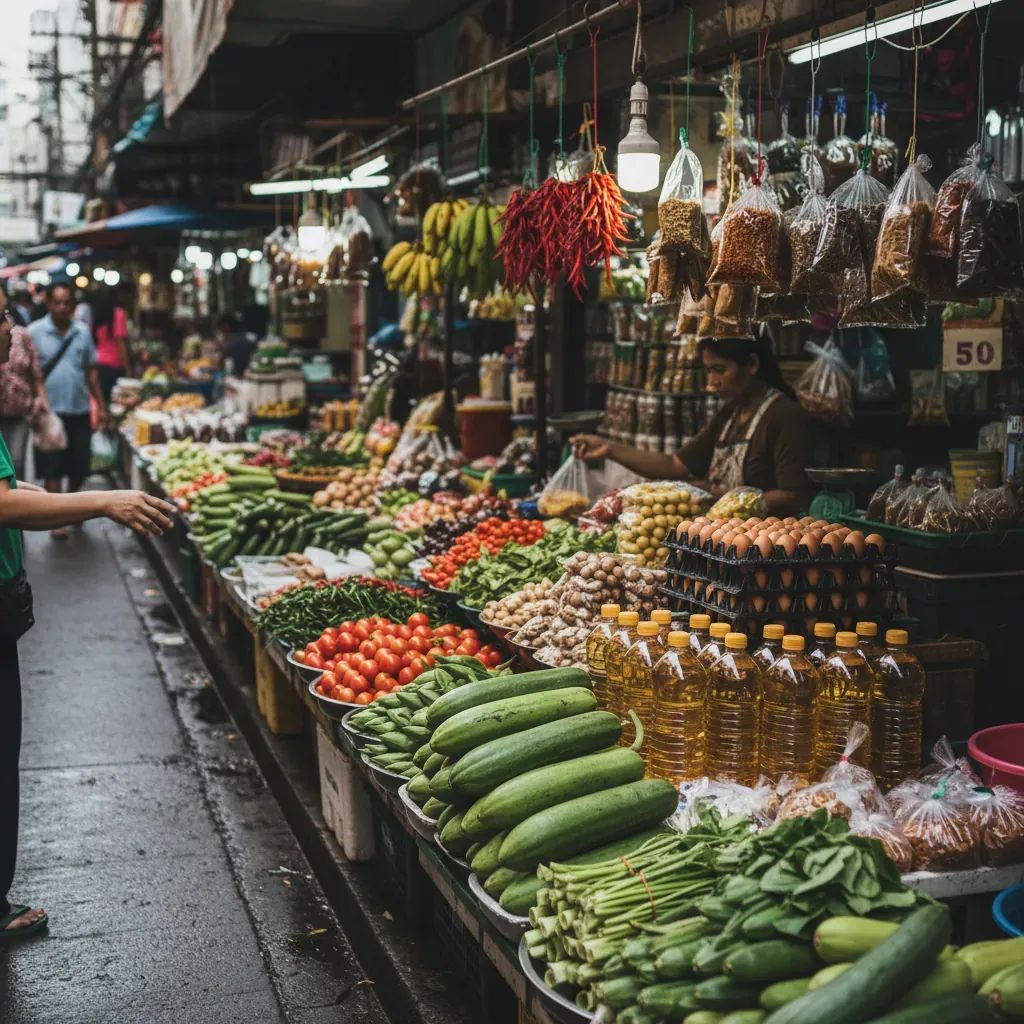
The Thailand Ministry of Commerce has imposed price ceilings on essential consumer goods while signaling that fuel costs will need to adjust due to mounting global energy pressures, a dual policy move that underscores the government's attempt to shield households from inflation even as international markets tighten. For residents and businesses operating in Thailand, this means short-term relief on groceries and household staples, but higher transportation and electricity bills are anticipated.
Why This Matters:
• 59 controlled items will remain price-capped through at least April, including instant noodles, canned fish, powdered milk, and agricultural inputs.
• Fuel prices are set to rise to reflect higher global energy costs, a measure necessary to prevent the state oil fund from accumulating further subsidy debt.
• Global oil volatility driven by Middle East tensions has created upward pressure on crude prices, forcing Bangkok to recalibrate its energy subsidy strategy.
The Price Control Framework
The Thailand Department of Internal Trade (DIT) currently enforces price ceilings on 59 categories of goods and services, prohibiting retailers from exceeding the official cap without prior authorization. Under review is an expansion to 71 controlled items, potentially adding plastic pellets and bottled drinking water to the list—a move aimed at containing cost-of-living pressures as the baht weakens and import costs climb.
Eight product categories face the strictest controls, requiring pre-approval from DIT before any price increase: instant noodles, canned fish, powdered milk, chemical fertilizers, pesticides, and animal feed. To date, no producer has filed for a price hike in these categories, a freeze that extends at least until the end of April according to commitments secured from nine major consumer goods manufacturers.
Six additional household staples—toilet paper, facial tissue, shampoo, laundry detergent, dishwashing liquid, sanitary napkins, and soap—are transitioning from a notification system to a mandatory approval process. Previously, manufacturers could adjust prices after informing authorities; now they must wait for explicit consent, effectively giving the Commerce Ministry veto power over any increase that might trigger public backlash or inflationary ripple effects.
Residents can report price gouging or hoarding through the Department of Internal Trade.
What This Means for Residents
For expatriates, long-term residents, and local households, the immediate impact is stability in grocery bills. Essentials like instant noodles, canned protein, and powdered milk—staples in many Thai kitchens—will not see price increases through April. However, this artificial stability comes with trade-offs.
Economic theory warns that price ceilings set significantly below market equilibrium can trigger shortages, as demand outstrips supply when producers find it unprofitable to maintain inventory at controlled prices. While no widespread shortages have been reported as of late March, the risk remains if global commodity costs continue climbing and manufacturers absorb losses rather than exit the market.
The more immediate concern for most residents is energy costs. The Thailand Ministry of Energy has confirmed that fuel prices will rise in response to global market pressures. This adjustment is essential to prevent the Oil Fuel Fund from accumulating further debt after extended periods of subsidizing the difference between world prices and domestic rates.
For daily commuters, delivery drivers, and logistics operators, fuel price increases translate directly into higher operating costs. Transportation expenses ripple through the economy—what starts as a fuel cost increase eventually shows up in the price of everything from restaurant meals to e-commerce deliveries, even if those final goods aren't themselves price-controlled.
The Global Energy Context
Thailand's energy challenge is anchored in forces far beyond its borders. Global oil markets face upward pressure from Middle East tensions and supply concerns. The Strait of Hormuz, a critical chokepoint for global petroleum flows, has become a focal point amid regional instability, creating supply uncertainty.
Analysts have issued various forecasts for oil prices through 2026, with projections ranging from more conservative estimates to higher scenarios depending on non-OPEC+ production growth and geopolitical developments. The U.S. Energy Information Administration (EIA) and the World Bank have issued competing outlooks, with some models suggesting lower prices if U.S., Brazilian, Guyanese, and Argentine production ramps up as expected, while others warn that geopolitical volatility could sustain elevated prices longer.
For Thailand, which imports the bulk of its crude and refined products, this volatility is compounded by the baht's exchange rate and the country's heavy reliance on diesel for agriculture, freight, and public transport. The government's decision to allow fuel prices to rise incrementally reflects a calculated approach: better to impose gradual adjustments now than risk a sudden, catastrophic spike if the Oil Fuel Fund exhausts its capacity.
Regional pricing dynamics—particularly in Singapore's refined products market, a key reference for Southeast Asia—indicate persistent pressure on importers. Thailand's fuel subsidy, while politically popular, has accumulated substantial debt, forcing policymakers to choose between fiscal sustainability and short-term affordability.
Energy Policy and the Long Game
Beyond immediate crisis management, the Thailand Ministry of Energy is pursuing a broader transformation through the National Energy Plan (NEP). The government's direction under draft power development planning targets a strategic shift away from heavy natural gas dependency toward increased renewable energy contributions.
Solar, wind, biomass, and hydropower imports from Laos are central to this strategy. The government is advancing floating solar farms, rooftop solar installations, and biomass co-firing initiatives. Pilot programs exploring hydrogen blending in natural gas power plants and investments in carbon capture and storage (CCS) for heavy industry are part of the longer-term vision.
This pivot toward renewables is partly a hedge against import dependency but also aligned with Thailand's carbon neutrality commitments and broader climate goals. However, the transition is capital-intensive and gradual. In the meantime, households and businesses must navigate a volatile energy landscape where subsidies can shift and global developments reverberate through domestic markets rapidly.
How Thailand Compares Regionally
Vietnam, Thailand's ASEAN neighbor, has pursued different energy strategies with varying renewable penetration levels. Different ASEAN nations employ distinct approaches to balancing energy affordability, security, and climate objectives.
Germany represents a developed economy example of long-term energy transition, though with substantially different resources, technology bases, and fiscal capacity than Thailand. Thailand's path reflects its distinct economic and geographic context—balancing energy security, affordability, and climate commitments requires calibrating policy to local circumstances.
Thailand continues to derive a significant portion of its electricity from natural gas and must manage the transition carefully given constraints on domestic energy resources and international market exposure.
Practical Takeaways
For residents, the current policy environment requires adaptive budgeting. Grocery costs on controlled items should remain stable through April, but assume that non-controlled categories—fresh produce, imported goods, and discretionary items—will fluctuate with exchange rates and global commodity prices.
Fuel expenses are expected to increase. If you drive, factor in higher diesel and gasoline costs over the coming months. Businesses reliant on logistics should model scenarios where fuel costs adjust upward and consider route optimization and operational efficiencies.
Electricity bills may also adjust as the government reduces subsidies and reflects higher generation costs. Energy-intensive sectors—manufacturing, data centers, hospitality—should audit consumption patterns and explore solar rooftop installations, which now qualify for tax incentives and feed-in tariff programs.
Stay informed through announcements from the Department of Internal Trade and Ministry of Energy. Price controls are policy tools, subject to revision as fiscal and economic conditions evolve. The current framework is a policy response to current conditions, not a permanent arrangement.
The Bottom Line
The Thailand government is navigating competing pressures: cap prices to contain inflation and protect household budgets, but allow fuel costs to rise to prevent fiscal deterioration. For residents, this translates to temporary grocery price stability at the expense of higher transportation and energy bills. The approach depends on whether global energy markets stabilize and whether public tolerance for gradual fuel cost adjustments holds.
Longer-term, Thailand's renewable energy initiatives offer potential for reduced import dependency, but the transition requires sustained investment and time. Until then, residents must navigate a hybrid reality: state intervention on essential goods, market-driven energy costs, and ongoing policy adjustments as conditions evolve.


