
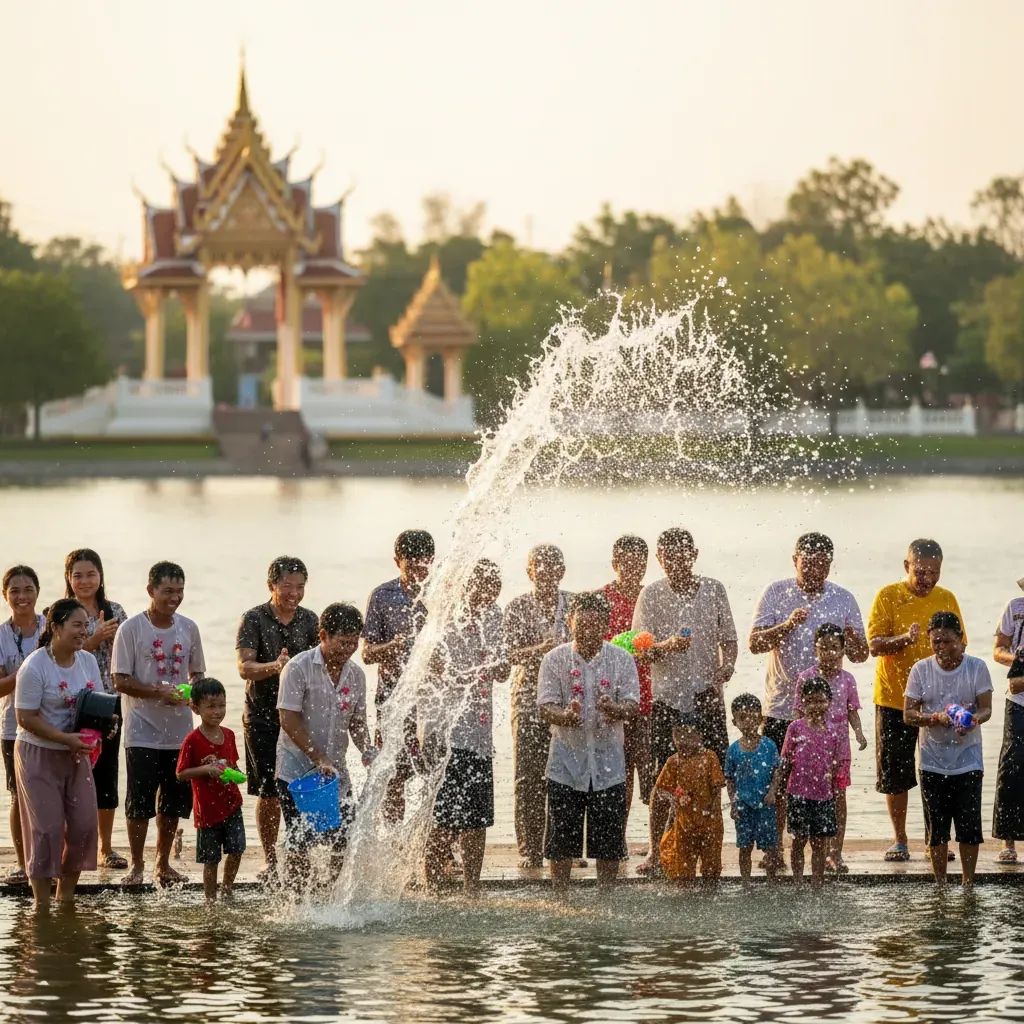
A water festival celebration turned unexpectedly dangerous this month in Udon Thani when a woman suffered a forehead cut during Songkran festivities at Nong Prajak Park—and the culprit was something most revelers bring without thinking: ice cubes in a truck-mounted water tank.
What Happened at Nong Prajak
On April 13 around 1:00 PM, the popular fountain area at Nong Prajak Park in Udon Thani became the site of an injury that shouldn't have occurred. A passing pickup truck laden with a plastic water tank doused nearby celebrants with spray. The problem: the tank contained solid ice cubes mixed with water.
When expelled under pump pressure, the ice didn't behave like soft water. It became a projectile. A woman was struck directly on the forehead, and the impact was severe enough to require stitches. Fortunately, the injury did not affect any critical areas—the ice missed her eyes and temples by millimeters, areas where even minor trauma can cause serious damage. She received on-site medical attention and was released.
Local authorities and residents quickly raised an immediate question: why are people adding ice to water meant for splashing?
Why Ice in Water Tanks Is Dangerous
When water exits a pressurized system—whether from a hose, electric pump, or hand-cranked tank—its velocity increases significantly. Water droplets alone pose minimal risk. But ice cubes are different. They retain their mass and hardness through expulsion, and at close range, an ice cube propelled at velocity transfers concentrated kinetic energy to a small surface area—similar to being struck by a hard object at speed. This is why medical professionals have documented cases where ice-related Songkran injuries mirror blunt-force trauma.
Thailand's Ministry of Public Health has recorded cases of nasal fractures, eye socket damage, and concussions resulting from ice-laden water splashes. The woman injured at Nong Prajak was fortunate—had the ice struck 2 centimeters to the left, her eye would have absorbed the impact.
Official Safety Response
Recognizing these risks, the Udon Thani Provincial Governor launched a comprehensive safety response for the Songkran period. The province deployed:
• 38 primary checkpoints across key routes, staffed with police and health workers trained to administer breathalyzer tests
• 92 service stations offering water, snacks, and rest areas for fatigued drivers
• 450 community monitoring points involving local volunteers coordinating incident reports
• Temporary medical tents stationed every 500 meters at festival sites
Additionally, the Thailand Royal Police issued a water-play safety code for residents and visitors:
Safe practices:
• Ask for consent before splashing anyone unfamiliar to you
• Store valuables in waterproof bags or leave them at lodging
• Drive with full attention; if drowsy, pull over and rest
Unsafe practices:
• Use high-pressure water guns aimed at faces or vehicles
• Carry weapons or sharp objects into crowded festival areas
• Consume alcohol in vehicles or splash motorcycles in motion
• Splash moving motorcycles or cars
• Never sit in the truck bed of a moving vehicle
Violations can result in fines up to 5,000 THB, and in cases causing injury, assault and negligence charges have been filed.
Broader Songkran Safety Context
While ice-cube injuries represent a preventable subset of Songkran harm, road safety remains the primary concern during the festival. Official data from the peak Songkran period recorded 1,108 accidents nationally, resulting in 216 fatalities and 1,073 injuries. Speeding and drunk driving accounted for the majority of serious accidents, with motorcycles involved in approximately 68% of crashes.
Most accidents occurred on straight roads during daylight—conditions where drivers often feel most comfortable letting their guard down.
Practical Safety Guidance for Songkran Celebrations
For anyone participating in Songkran festivities, guidance from Thai health and law-enforcement agencies is consistent:
Water use: Clean, room-temperature water only. No ice. No additives that could cause skin irritation or infection.
Footwear: Wear slip-resistant sandals with good treads. Wet pavement causes fractures and head injuries more often than water itself.
Sun protection: Apply SPF 15+ sunscreen and reapply every two hours. Most water play occurs during peak UV hours (10 AM–3 PM).
Clothing changes: Change into dry clothing within 30 minutes of finishing water play to prevent fungal and bacterial skin infections.
Vehicle safety: Never drive after drinking. Never splash moving motorcycles or cars. If drowsy, stop and rest.
Stranger vigilance: Avoid accepting beverages from unfamiliar people in crowded festival areas.
Why This Matters
The ice injury at Nong Prajak represents a preventable harm disguised as fun. Adding ice to water for Songkran splashing isn't part of Thai tradition—it's a modern convenience that nobody questioned until it caused injury. The incident occurred at one of Thailand's most popular festival sites, during an officially organized event, yet it took local social media to circulate the warning rather than formal authorities detecting the pattern immediately.
This gap in real-time safety coordination means dozens of similar incidents may occur before formal warnings circulate widely.
Songkran should remain—and does remain—a joyful cultural celebration. The vast majority of participants splash, laugh, and leave without injury. But the boundary between celebration and harm exists, and staying informed about preventable risks helps ensure everyone can enjoy the festival safely.
Emergency contacts during Songkran: 191 (police), 1669 (ambulance), 1193 (highway patrol), 1599 (national emergency hotline).


