
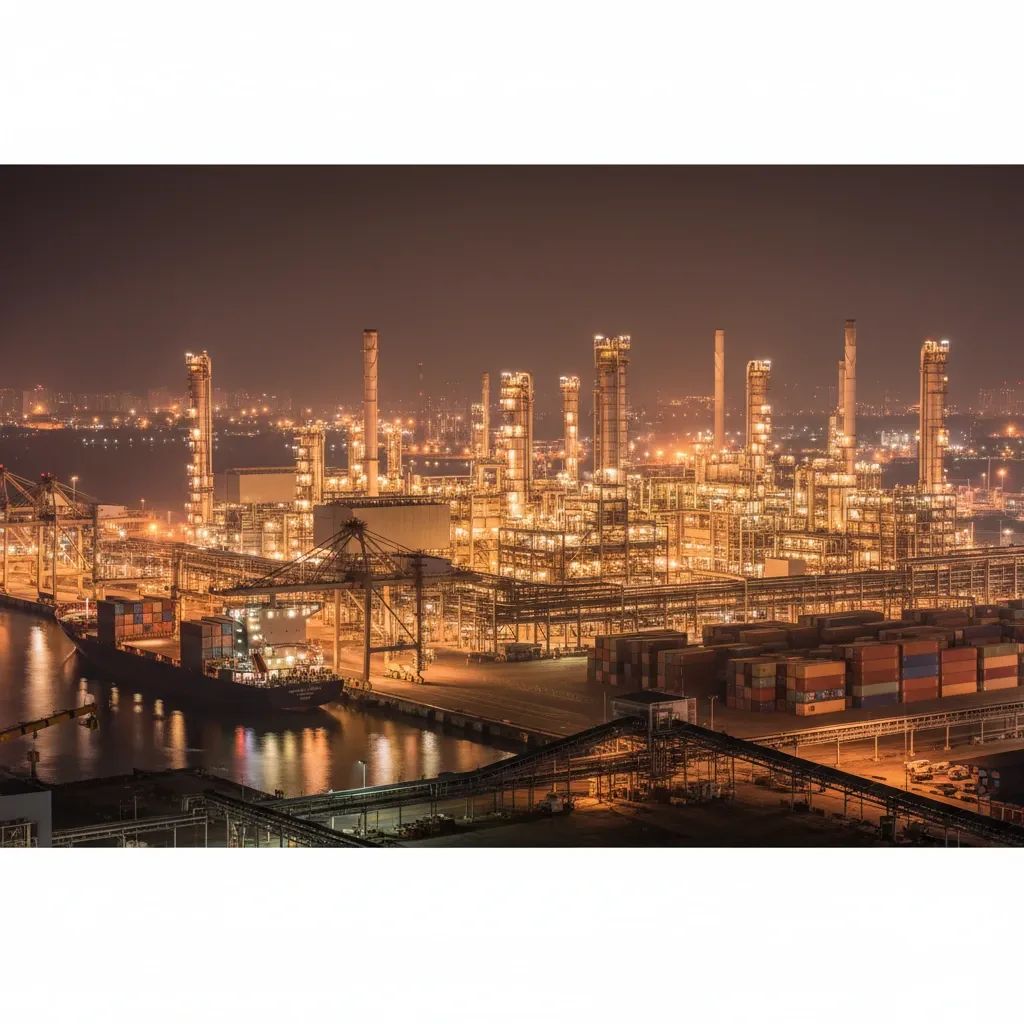
The Philippines government has invoked a year-long national energy emergency, positioning Manila as the first government worldwide to formally trigger crisis protocols in response to fallout from the 2026 Iran conflict. The declaration, signed into effect on March 24 by President Ferdinand Marcos Jr., grants extraordinary executive powers to combat a fuel supply shock that has driven diesel prices above 130 pesos per liter and threatens to push as many as 3.1 million Filipinos into poverty.
Why This Matters
• Fuel prices doubled: Diesel peaked at 125.60 pesos/liter in late March, roughly twice pre-crisis levels, while gasoline surpassed 100 pesos/liter.
• First global emergency declaration: The Philippines became the first nation to formally declare energy emergency status in response to Middle East supply disruptions.
• Regional stability gauge: Manila's crisis response offers a real-time case study for other import-dependent Southeast Asian economies, including Thailand.
• Poverty threshold breach: Between 1.3M and 3.1M citizens risk falling below the poverty line as energy inflation cascades through household budgets.
The Supply Shock Behind the Emergency
The immediate trigger is the closure of the Strait of Hormuz, a critical shipping route that handles roughly 20% of the world's oil supply. For the Philippines, which imports 98% of its crude oil from Middle East suppliers, the disruption proved catastrophic. By March, the country's strategic petroleum reserve had contracted from a comfortable 55–57 days of inventory to just 45 days, crossing into territory that triggers mandatory government intervention under existing energy security legislation.
Executive Order 110, the legal instrument underpinning the emergency, authorizes the Department of Energy to bypass standard procurement procedures, pre-pay for fuel contracts, crack down on hoarding and price gouging, and mandate fuel efficiency protocols across government agencies. The order remains in force through March 2027 unless extended or revoked.
Over 400 fuel stations shuttered operations in March alone, unable to absorb wholesale cost increases. Airlines suspended marginal routes. Transport unions, representing jeepney and tricycle drivers whose livelihoods depend on affordable diesel, threatened nationwide strikes before the government intervened with a 5,000-peso cash subsidy for tens of thousands of operators.
What This Means for the Region
For those tracking energy security across Southeast Asia, the Philippines crisis illuminates the vulnerability of net-import economies. Thailand imports approximately 60% of its oil, a lower dependency ratio than Manila but still substantial. According to the Thailand Ministry of Energy, the country maintains roughly 70 days of strategic reserves, providing a modest buffer but not immunity from sustained disruption.
The Philippines' emergency playbook includes several measures that neighboring governments—including Thailand—may study or adopt if supply conditions deteriorate further:
• Excise tax suspension: Manila temporarily zeroed excise duties on petroleum products, LPG, and kerosene, sacrificing tax revenue to cap retail prices.
• Alternative sourcing: The Philippines Department of Energy opened talks with China, India, and Russia to diversify supply, and formally requested U.S. sanctions waivers to purchase Iranian and Venezuelan crude.
• Coal reactivation: Despite environmental concerns, the government ordered coal-fired power plants to ramp up output to stabilize electricity costs. Indonesia pledged unlimited coal exports to the Philippines to support this pivot.
• Fuel rationing: Authorities permitted the sale of Euro 2-grade fuel, a lower-quality fuel standard that produces more emissions but requires less refining, to stretch available supply.
Thailand has not yet declared a formal emergency, but the Thailand Cabinet has activated its own crisis coordination task force and increased patrols against fuel smuggling along the Malaysian border, where subsidized diesel creates cross-border arbitrage opportunities.
What This Means for Thailand Residents
For context, diesel prices in Thailand currently average 30–32 baht per liter compared to the Philippines' 125.60 pesos (approximately 52–54 baht). Thailand's 60% import dependency means similar supply disruptions could push prices toward 40–45 baht per liter within weeks. For daily commuters relying on motorcycles or vehicles for transport, this could translate to an additional 200–400 baht monthly in fuel costs. Electricity bills would likely follow, potentially adding 500–1,000 baht monthly to household expenses as power generation costs rise.
Small business operators—taxi drivers, delivery services, and transport companies—would face margin compression similar to what the Philippines experienced. Farmers and agricultural workers in rural areas could see transport costs spike, squeezing already thin profits. If Thailand's government activates emergency measures, you might expect temporary tax relief on fuel, potential work-from-home mandates to reduce consumption, or targeted subsidies for vulnerable sectors.
The immediate steps Thailand residents should consider: Monitor the Thai PTT and Shell retail networks for price announcements, explore fuel-efficient vehicle options or carpooling arrangements for daily commuting, and stay informed about Thailand's strategic reserve levels and government responses through official Ministry of Energy communications.
Economic Fallout and the Inflation Cascade
Electricity rates, already the highest in Southeast Asia, climbed further in April when Meralco—the Philippines' dominant distribution utility—raised tariffs by 0.5335 pesos per kilowatt-hour, pushing the all-in residential rate to 14.3496 pesos/kWh (roughly 0.21 USD/kWh). The hike stemmed from a weakening peso and grid strain on Luzon, the country's main island.
For the average Filipino household consuming 200 kWh per month, the April adjustment added approximately 107 pesos to monthly bills. Electricity now consumes an estimated 12% of median household income, a burden that has accelerated rooftop solar adoption. Between March and May, the Philippines became China's largest buyer of solar panels, as middle-class families sought to hedge against further rate increases.
Agricultural provinces bore the brunt of the diesel shock. Farmers in remote areas reported traveling to neighboring towns to secure fuel, adding time and cost to already thin margins. Crop transport expenses doubled in some regions, even as farm-gate prices for rice and corn stagnated, compressing rural incomes and raising food security concerns.
According to the Philippines Statistics Authority, historic inflation spikes swept across transport, food, and utilities sectors, prompting the Bangko Sentral ng Pilipinas to revise GDP growth forecasts downward for the year.
Government Response: Short-Term Relief and Long-Term Pivot
President Marcos' emergency declaration activated the Unified Package for Livelihoods, Industry, Food, and Transport (UPLIFT) framework, a whole-of-government coordination mechanism designed to cushion the blow on vulnerable sectors. Under UPLIFT, the government disbursed 20 billion pesos from the Malampaya Gas Fund to secure additional fuel stocks and stabilize prices.
Civil servants faced mandatory 10% fuel consumption cuts, air conditioning thermostats locked at 24°C or higher, and experimental four-day work weeks to reduce commuting. Carpooling campaigns and free public transport for students and workers in select cities supplemented the effort.
Beyond immediate relief, Manila is accelerating its renewable energy pipeline. The Department of Energy fast-tracked 22 power projects totaling 1,471 MW, predominantly solar, scheduled for commissioning by April. The Green Lane initiative certified 13 renewable projects worth 344.62 billion pesos in the first five months of 2026, targeting 35% renewable energy by 2030 and 50% by 2040.
The Tantangan Solar Project in Mindanao, with 74.5 MWp capacity and battery storage, is slated for completion in October. Offshore wind development received a major boost through the fifth Green Energy Auction (GEA-5) round, scheduled for December, aiming to unlock 19 gigawatts of offshore wind capacity.
Senate Bill 366, the Energy Transition Act, remains in legislative committee but has gained urgency. If passed, it would establish a national framework for decarbonizing transport and power sectors, phase down fossil fuel reliance, and create incentives for electric vehicle adoption and hybrid solar charging infrastructure.
Notably, the government has also reopened discussions about nuclear power, a politically sensitive topic dormant since the closure of the Bataan Nuclear Power Plant decades ago. Proponents argue that nuclear offers the only viable path to reliable, low-carbon baseload power capable of displacing imported fossil fuels.
Regional Comparisons: Who Is Prepared?
While the Philippines scrambled, other Asian economies leaned on deeper reserves and more diversified supply chains:
• China holds an estimated 900M to 1.4B barrels of strategic reserves (equivalent to 180 days of net imports), sources crude from 48+ countries, and imposed a temporary export ban on all petroleum products to safeguard domestic supply.
• Japan maintains one of the world's largest reserve inventories (206–254 days of consumption) and released 80M barrels to stabilize prices, while also subsidizing gasoline and electricity and restarting idled nuclear reactors.
• South Korea, heavily reliant on Middle East imports (60–70% of crude), imposed retail fuel price caps for the first time in 30 years and restarted coal and nuclear plants previously taken offline.
• Singapore formed a ministerial-level crisis committee, secured alternative LNG and crude sources from Australia, and extended targeted support to households and small businesses.
• Vietnam slashed fuel taxes to 0% temporarily, activated its price stabilization fund, and mandated work-from-home schedules to reduce fuel demand.
• Malaysia negotiated with Iran to facilitate tanker passage through Hormuz, expanded imports from Africa, and introduced a MyKad card system to limit subsidized diesel access to citizens, curbing smuggling.
Thailand has not matched the Philippines' emergency intensity but has quietly tightened fuel export controls, expanded talks with Russia and Middle East Gulf states for supply diversification, and accelerated domestic LNG terminal construction to reduce import bottlenecks.
The Road Ahead
The Philippines energy emergency is both a warning and a test case. It demonstrates that even a relatively modest disruption—Hormuz is not entirely closed, merely restricted—can destabilize an import-dependent economy within weeks. For Thailand and other regional neighbors, the lesson is stark: strategic reserves, supply diversification, and accelerated renewable deployment are not optional hedges but essential infrastructure.
Manila's gamble on renewables, nuclear reconsideration, and aggressive executive intervention may yet stabilize prices and prevent the worst poverty projections. But with the Hormuz situation unresolved and global oil markets tight, the Philippines crisis is unlikely to be the last energy emergency declared in Asia this decade. Governments across the region are watching closely—and adjusting their own contingency plans accordingly.
For Thailand residents, the Philippines crisis serves as an early warning system. Stay vigilant about local fuel and electricity prices, consider adopting fuel-efficient alternatives for daily commuting, monitor announcements from the Thailand Ministry of Energy regarding strategic reserve levels and potential government responses, and prepare contingency plans in case of sudden price increases affecting your household budget or business operations.


