
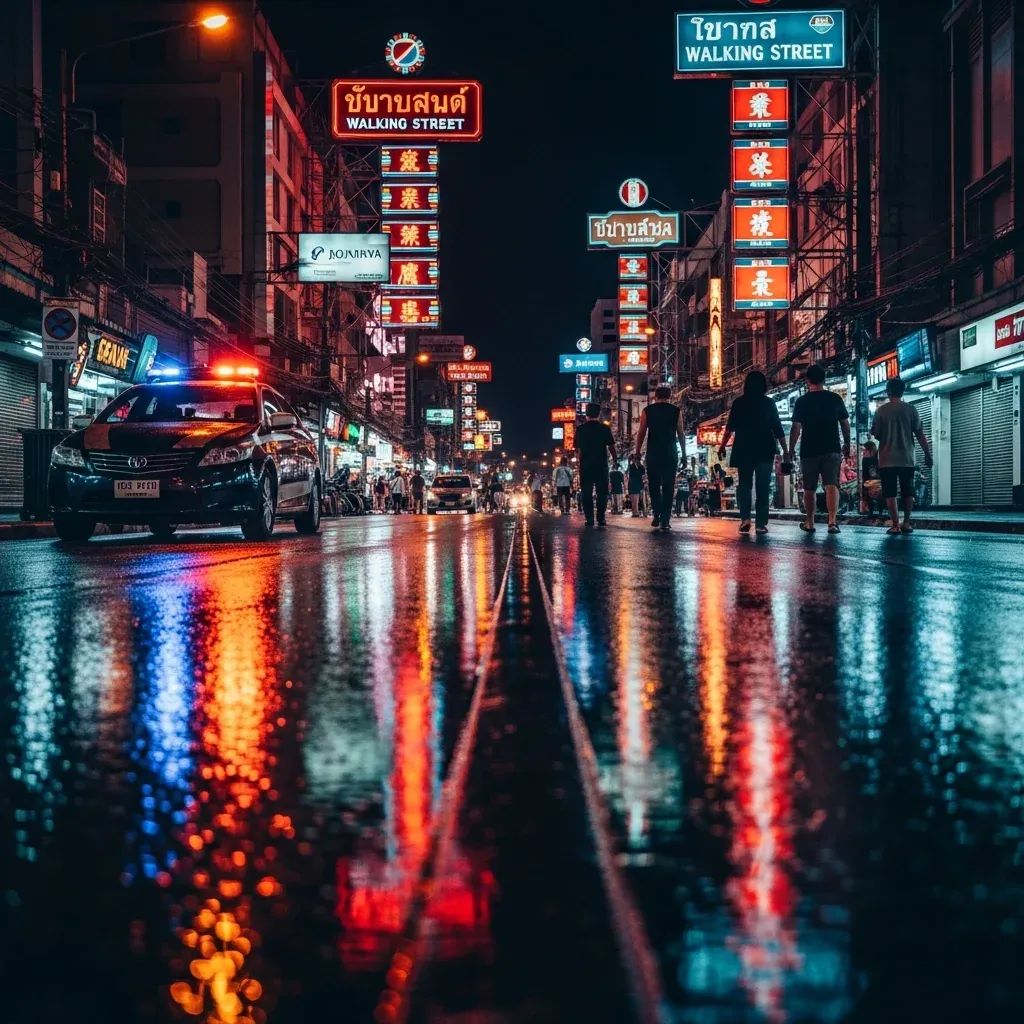
Walking Street Brawl Reignites Reputation Concerns
A 46-second video clip published by the "Pattaya One Day, A Thousand Stories" social media page captured three Thai men—two of whom appeared dressed as nightclub security guards—trading punches with a foreign tourist in the early morning hours of May 27 on Walking Street, the city's busiest entertainment strip. The foreign visitor fought back aggressively despite being outnumbered, while bystanders watched until another foreigner intervened to separate the combatants. The footage went viral across Thai social media within hours, sparking widespread dismay over the escalating brutality of such altercations.
The exact trigger for the confrontation remains unclear, but the incident follows a troubling pattern. Recent months have documented multiple assaults involving foreign tourists on Walking Street and in surrounding entertainment zones. In previous incidents, a German national was attacked and robbed, a Japanese tourist was assaulted by a gang of motorcycle taxi drivers, and a Russian visitor was beaten and robbed. These episodes have generated intense scrutiny from international media and diplomatic missions, amplifying concerns that Pattaya's nightlife economy is breeding a culture of aggression rather than preventing it.
Understanding the Friction: Economic and Social Pressures
The recurring tensions between foreign visitors and Thai nightlife workers suggest deeper structural issues beyond individual bad actors. For Thai nightlife workers—bar staff, security guards, motorcycle taxi drivers, and street vendors—working conditions are often challenging. Many work long shifts in crowded, high-decibel environments, dealing daily with intoxicated patrons, language barriers, and financial precarity. The cost of living in Pattaya has risen alongside tourism recovery, while wages remain inconsistent and tips unpredictable.
On the visitor side, some foreign tourists arrive in Pattaya perceiving the city's permissive nightlife culture as license to ignore social boundaries. Alcohol amplifies ego clashes, cultural misunderstandings escalate into public humiliation, and in the smartphone era, every confrontation becomes potential viral content within minutes. The intersection of economic pressures, cultural friction, pride, and intoxication creates an environment where confrontations are more likely to occur.
Existing Safety Infrastructure and Measures
Pattaya has deployed extensive safety measures to protect both residents and visitors. A comprehensive surveillance network comprising CCTV cameras with monitoring technology operates in high-risk zones including Pattaya Beach, Walking Street, and Bali Hai Pier. The 1337 emergency hotline operates 24/7 in Thai, Chinese, and English, providing rapid reporting channels for incidents.
Thailand Tourism Police and local authorities have implemented protocols addressing nightclub security practices and are working to establish clearer behavioral standards for entertainment venues. Enhanced maritime safety standards now include stricter inspections for passenger vessels, with requirements for license verification, registration checks, and safety briefings for tourists.
Authorities have also deepened collaboration with embassies, consular representatives, and foreign volunteer networks from multiple countries operating in Pattaya, focusing on intelligence sharing and promoting mutual understanding of Thai law among visitors.
What This Means for Residents and Visitors
If you live in Thailand or visit Pattaya regularly, the practical implications of these recurring incidents are clear. The city remains broadly safe for tourists who exercise situational awareness, but nightlife zones—especially Walking Street after midnight—demand extra caution.
Practical safety measures include:
• Avoid confrontations with nightclub staff, motorcycle taxi drivers, or street vendors, even if you believe you are in the right; the legal and physical risks are asymmetric
• Report disputes immediately to authorities rather than attempting to resolve them personally
• Exercise awareness of intoxication levels—both your own and those of people around you
• Stay in groups when possible, particularly in entertainment districts late at night
• Know local customs to avoid unintentional cultural offense that might escalate tensions
The enhanced surveillance infrastructure means that violent incidents are more likely to be recorded and investigated, which should act as a deterrent. However, the same technology raises privacy considerations for residents and long-term expats that warrant ongoing discussion about balancing security with anonymity.
The Deeper Question
As Pattaya continues development as a major tourism hub, an uncomfortable question persists: Are these confrontations outliers—or symptoms of deeper structural strain hidden beneath the booming nightlife economy? The pattern of recurring incidents suggests that enforcement measures alone may be insufficient without addressing underlying economic pressures, worker support systems, and clearer cultural expectations for visitors.
For the hundreds of thousands of Thai workers and foreign residents who call Pattaya home, as well as the millions of visitors who pass through annually, the answer will shape both the city's international reputation and the lived experience of daily life in Southeast Asia's most popular beach destination.


