
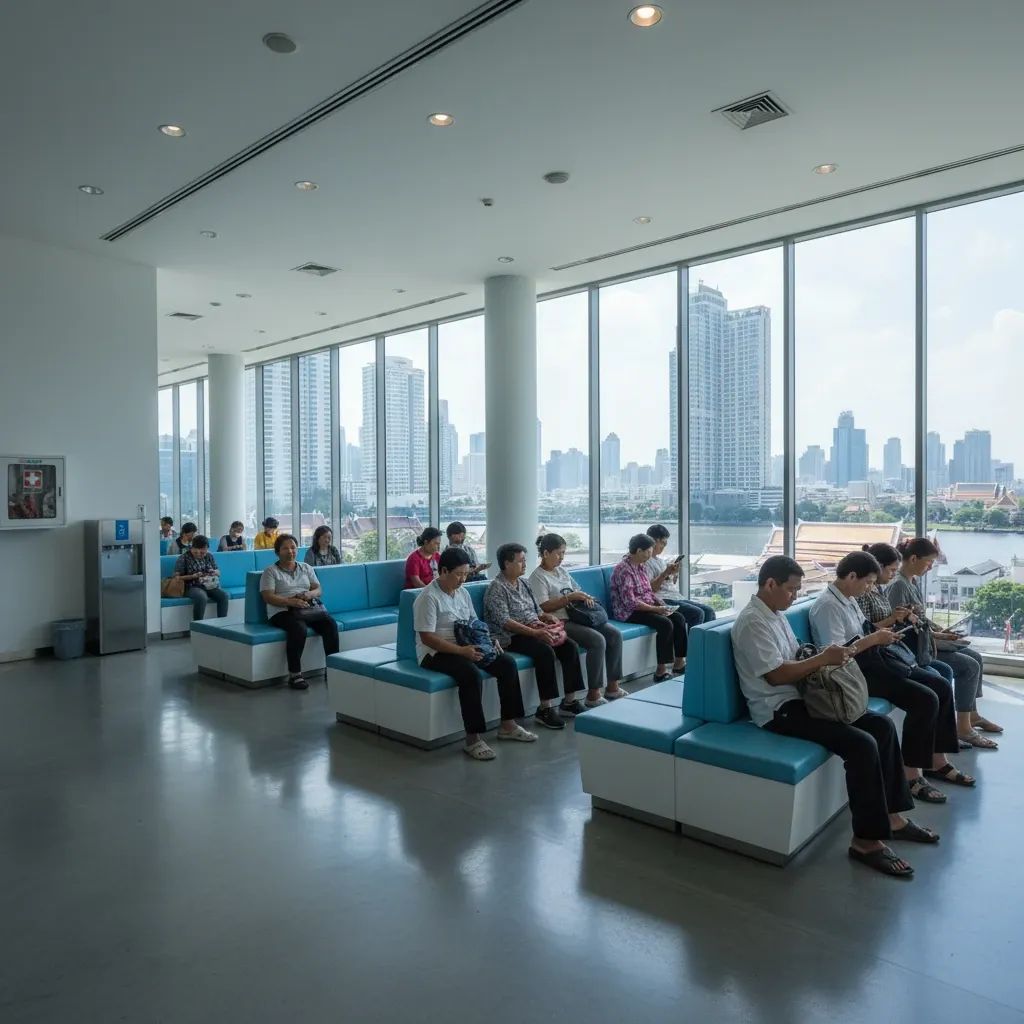
The Thailand Meteorological Department is tracking peak hot-season conditions across the eastern seaboard, with Pattaya recording daytime highs of 33°C and warnings of localized afternoon thunderstorms as unstable air masses hover over the Gulf coast. Residents and tourists should prepare for both intense heat and sudden downpours through mid-month.
Why This Matters
• Health risk escalates: Heat index values are approaching the "yellow zone" (33-41.9°C), triggering official cautions from the Thailand Department of Health to reduce outdoor activity.
• Songkran ahead: The Thai New Year festival (April 13-19) coincides with the year's hottest stretch, when temperatures may spike to 37°C or higher.
• Storm volatility: Afternoon instability can bring sudden, heavy rain—beach-goers should monitor real-time forecasts and have shelter plans ready.
• Tourism pressure: Despite the heat, visitor numbers remain robust; accommodations are managing air-conditioning demands during peak temperatures.
The Furnace Season Peaks on Pattaya's Shore
April traditionally marks the apex of Thailand's hot-and-humid season, and this year is no exception. On April 6, ground-level readings in Pattaya hit 33°C at 1:00 PM, with the mercury routinely climbing into the low-to-mid 30s (°C) throughout daylight hours. Sea surface temperatures hover near 31°C, warm enough for swimming yet signaling the intensity of solar radiation bathing the coast.
Meteorologists describe the pattern as a combination of strong subtropical ridge pressure and minimal cloud cover, which allows sunshine to bear down unfiltered. Sea breezes provide modest relief in the late afternoon, yet inland neighborhoods—especially those lined with concrete and asphalt—trap heat well into the evening.
Local weather models project predominantly sunny skies with only scattered precipitation over the next seven days. When rain does arrive, it tends to be brief but violent: towering cumulonimbus cells dump heavy loads in under an hour, flooding low-lying streets before dissipating. The Chonburi Provincial Disaster Prevention Office has issued advisories urging motorists to avoid underpasses during sudden cloudbursts.
What This Means for Residents and Visitors
The Thailand Department of Health has escalated its heat-risk guidance, emphasizing that April routinely sees the highest incidence of heat exhaustion and heatstroke. Officials now reference the Heat Index—a composite of temperature and humidity—as the primary metric for public safety. The index categorizes risk into four color-coded bands:
• Green (27.0–32.9°C): Normal activity permitted; maintain regular hydration.
• Yellow (33.0–41.9°C): Early risk; curtail midday outdoor work.
• Orange (42.0–51.9°C): High risk; reschedule strenuous tasks to morning or evening.
• Red (≥52.0°C): Extreme danger; cease all outdoor activity immediately.
Pattaya currently oscillates between the green and yellow zones, yet the combination of high humidity and urban heat can push the perceived temperature several degrees higher. Vulnerable groups—children under five, adults over 60, pregnant women, and patients with cardiovascular or metabolic disease—face elevated danger even in yellow-zone conditions.
Practical safety steps include:
• Hydration discipline: Sip at least 2–3 liters of clean water daily; avoid sugary drinks, alcohol, and excessive caffeine, all of which accelerate fluid loss.
• Shade strategy: Stay indoors or under cover between 11:00 AM and 3:00 PM, when ultraviolet radiation peaks. If outdoor work is unavoidable, rotate shifts and enforce rest breaks every 30 minutes.
• Clothing choices: Wear loose, light-colored garments made of breathable fabrics (cotton or technical synthetics). Wide-brimmed hats and UV-blocking sunglasses are non-negotiable.
• Sunscreen protocol: Apply SPF 30+ formulas liberally and reapply every two hours, especially after swimming or sweating.
• Urine check: Dark amber or orange-tinted urine signals acute dehydration; drink water immediately.
Recognizing and Responding to Heatstroke
The Ministry of Public Health reports that heatstroke cases spike during April's furnace, particularly among outdoor laborers and festival attendees. Early symptoms include dizziness, rapid heartbeat, nausea, confusion, and flushed skin with little or no sweat. Advanced cases can trigger loss of consciousness or seizures.
If someone exhibits these signs:
Move the victim to shade or an air-conditioned space immediately.
Loosen tight clothing and elevate the legs slightly.
Cool the body by applying damp towels to the neck, armpits, and groin; use a fan to accelerate evaporative cooling.
Offer small sips of water if the person is conscious; never force fluids on an unconscious victim.
Call 1669 without delay if symptoms worsen or if consciousness lapses—heatstroke is a life-threatening emergency requiring hospital intervention.
Storm Wildcards and Monsoon Transition
While intense heat dominates the current forecast, meteorologists caution that localized thunderstorms can erupt with little notice. Instability in the lower atmosphere, fueled by extreme surface heating and moisture drawn in from the Gulf of Thailand, creates towering convective cells that produce lightning, gusty winds, and torrential downpours. These storms are typically short-lived—lasting 30 to 90 minutes—but can drop several centimeters of rain, overwhelming drainage systems in low-lying neighborhoods.
The Chonburi Provincial Office of Disaster Prevention and Mitigation advises motorists to avoid underpasses and canal-adjacent roads during active storm cells, as flash flooding can occur within minutes. Beach vendors have been instructed to monitor sky conditions and secure lightweight structures when towering cumulus clouds build on the horizon.
Looking further ahead, the transition to the southwest monsoon is expected in late May or early June. That shift will bring more persistent cloud cover, higher humidity, and regular afternoon rains—offering relief from the furnace but introducing new risks, including potential tropical cyclones in the Gulf during peak monsoon months (September–October).
Songkran Under the Sun
The timing of Songkran—Thailand's most exuberant public holiday—amplifies both the festive atmosphere and the health risks. From April 13 to 19, millions of Thais and foreign visitors converge on Pattaya Beach Road for water fights, street processions, and open-air concerts. Organizers have installed hydration stations stocked with free drinking water and first-aid tents staffed by paramedics trained in heat-illness response.
City authorities have also deployed mobile cooling units—essentially air-conditioned spaces parked at key intersections—where revelers can take breaks from the sun. Public-health messaging reminds crowds to pace themselves, drink water frequently, and watch for signs of heat exhaustion in friends and family.
Balancing Enjoyment and Safety
Despite the sweltering conditions, Pattaya remains open for business. Water sports, beach volleyball, and evening markets continue to draw crowds. The key for both residents and visitors is intelligent scheduling: save strenuous activities for early morning (before 10:00 AM) or late afternoon (after 4:00 PM), retreat to air-conditioned spaces during the midday blaze, and always carry a water bottle.
For those unaccustomed to tropical heat, acclimatization takes several days. New arrivals should ease into outdoor routines, monitor their own symptoms closely, and not hesitate to seek medical help if dizziness, confusion, or nausea set in. Prompt intervention for heat-related symptoms usually results in full recovery, but delayed treatment can lead to complications.
The Road Ahead
As the calendar rolls toward May, daytime highs may touch 37–38°C before the monsoon transition brings cloud cover and regular rainfall. Until then, Pattaya will continue to bake under the relentless subtropical sun, testing the resilience of infrastructure, the preparedness of public-health systems, and the adaptability of a tourism industry built on sun, sea, and sand.
For now, the message from meteorologists, health officials, and city planners is consistent: respect the heat, stay hydrated, seek shade, and watch the sky. With sensible precautions and a bit of flexibility, both locals and travelers can navigate the furnace season safely—and perhaps even enjoy the unique energy that comes with Thailand's hottest month of the year.


