
Why This Matters
• Solar installation fires have been documented in Thailand's urban centers, with coastal areas like Pattaya potentially facing unique environmental challenges.
• No mandatory ongoing inspection requirement exists for residential solar systems after they're operational, creating a compliance gap that can affect insurance coverage and property owner liability.
• Insurance claims are increasingly being denied when homeowners cannot prove their installations meet Engineering Institute of Thailand (EIT) standards.
The Fire That Exposed a Regulatory Gap
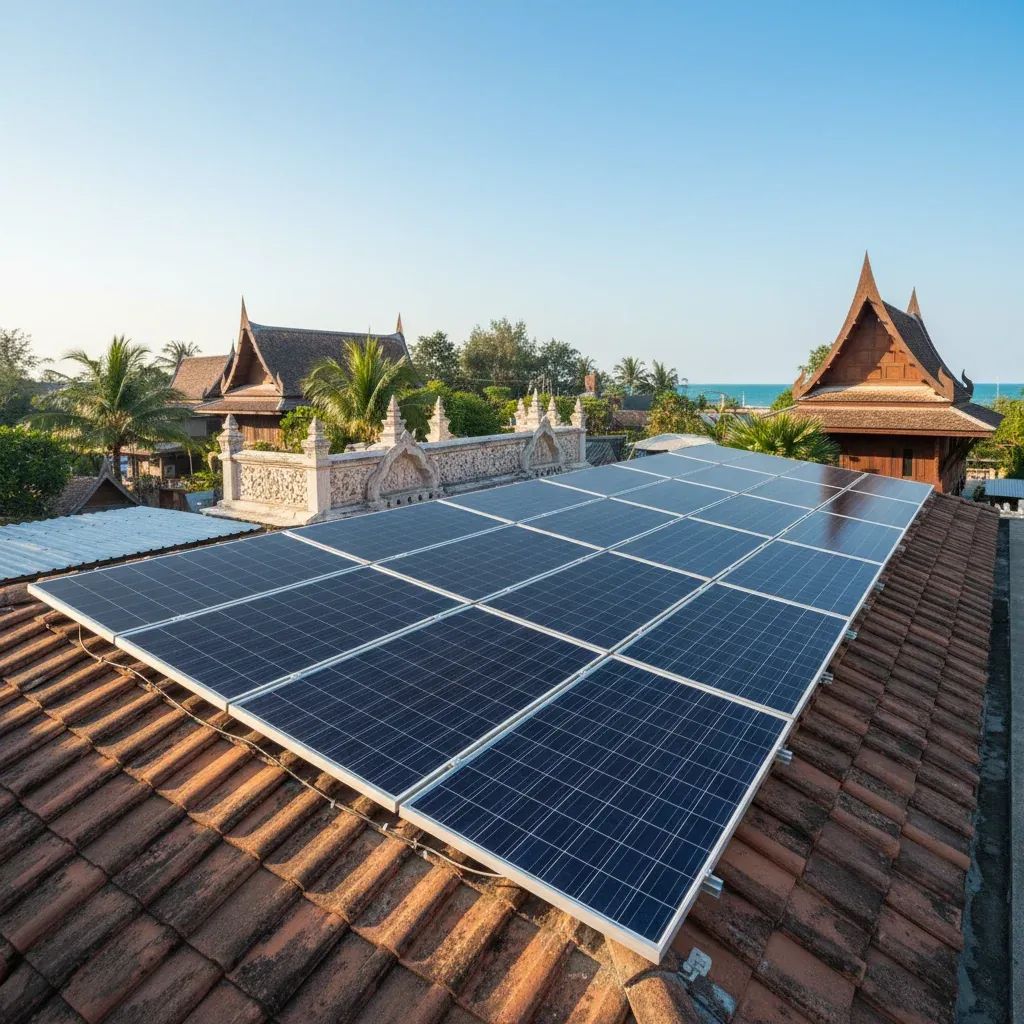
An electrical fire in South Pattaya Soi 20 on April 5 has become a reminder that Thailand's renewable energy expansion requires careful attention to safety infrastructure. The blaze, which authorities believe originated from an electrical spark near a circuit breaker connection on a rooftop solar installation, caused structural damage and forced a family to temporarily relocate. No injuries were reported, and emergency crews from the Pattaya City Enforcement Unit, local police, and volunteer responders contained the fire within roughly an hour.
The incident highlights a critical oversight gap: investigators could not easily verify whether the installation had been properly commissioned, whether rapid-shutdown protection was installed, and whether the installer held required electrical engineering credentials. These are not minor technicalities—they are the measures designed to prevent this type of fire.
Installation Standards Exist, But Enforcement Gaps Remain
Thailand's regulatory framework for residential solar safety includes comprehensive standards in theory. The Engineering Institute of Thailand (EIT) published standard 022013-22 in 2022, which mandates that grid-connected rooftop systems include rapid shutdown devices capable of reducing panel voltage to below 80 volts within 30 seconds during an emergency. This allows firefighters to approach burning panels safely. The standard also specifies requirements for UV-resistant cabling, appropriate connectors, and grounding protocols designed to prevent arc faults.
Both the Metropolitan Electricity Authority (MEA) in Bangkok and the Provincial Electricity Authority (PEA) serving regional areas require formal grid-connection applications and technical documentation before a system can feed power back into the network. On paper, this should act as a gatekeeper. In practice, the agencies review paperwork and test grid compatibility but typically do not conduct ongoing physical inspections after connection approval.
A ministerial decree (No. 72) issued in 2023 streamlined the approval process by exempting solar arrays under 20 kilograms per square meter from building modification permits. While this reduced bureaucratic friction for homeowners, it simultaneously reduced oversight checkpoints. Local building authorities now have minimal involvement in residential solar deployment.
The Thailand Energy Regulatory Commission (ERC) oversees large-scale utility solar farms but has limited authority over residential systems. The Department of Alternative Energy Development and Efficiency (DEDE) requires operational licenses only for installations exceeding 200 kVA—a threshold that excludes most residential rooftops. This creates a regulatory gap for systems between 10 kW and 200 kVA.
Environmental and Technical Risk Factors
Coastal environments like Pattaya present unique challenges for solar equipment. Saltwater air exposure can affect metal components over time. Additionally, tropical climates with high temperatures and significant temperature fluctuations between day and night can place stress on electrical connections and insulation. The Soi 20 system had been operational for about 18 months before the incident, suggesting that degradation can occur faster than many property owners anticipate.
Standard solar system components like DC connectors require appropriate corrosion resistance ratings for coastal installations. Temperature management during installation and the routing of cables away from direct sunlight and heat sources are important technical considerations that should be addressed during proper system commissioning.
Why Insurance Claims Are at Risk
Thailand's property insurance market has begun treating solar installations as requiring specific coverage considerations. Many insurers increasingly request proof of installation compliance with EIT standards and PEA or MEA grid-connection approval certificates before covering fire damage involving solar equipment. Policies written before 2024 may explicitly exclude renewable energy systems from standard fire coverage.
The Soi 20 incident underscores a practical concern: if a solar system that caused fire damage cannot be definitively shown to meet safety standards, insurers may argue that risk mitigation was inadequate, potentially affecting claim approval. This makes documentation critical for property owners.
What Residents Should Do Now
For Thailand homeowners and landlords with existing solar installations, several concrete steps can help reduce fire risk and strengthen insurance standing.
First, obtain and preserve documentation. Request from your installer copies of the grid-connection approval letter from PEA or MEA, the system commissioning report, and certification that all major components carry IEC or Thai Industrial Standards (TISI) marks. If your installer cannot provide these documents, this indicates incomplete compliance.
Second, schedule a professional inspection immediately if your system is older than three years. Hire a licensed electrical engineer to conduct a visual and electrical assessment. Expect to pay approximately ฿3,000–฿8,000 depending on system size. The engineer should test insulation resistance, inspect for loose terminals, photograph connection points, and verify the presence and function of the rapid-shutdown device. In coastal areas like Pattaya and Chonburi Province, more frequent inspections may be warranted.
Third, consider thermal imaging to detect issues not visible to the naked eye. Thermal imaging services are available through solar maintenance firms in Bangkok, Pattaya, and Chiang Mai for approximately ฿5,000–฿12,000 per session. This service can reveal failing connections and degraded components before they become hazards.
Fourth, clean panels regularly, removing debris that accumulates, particularly in coastal areas. Perform this during non-production hours—ideally during evening or early morning—and always cut power at the breaker before beginning. Debris accumulation can create maintenance issues.
Fifth, verify your insurance coverage explicitly includes solar equipment and that the policy language does not impose requirements you cannot meet. If your policy was written before 2024, request a formal amendment to include renewable energy systems, and obtain written confirmation that fire damage originating from the solar array itself will be covered.
Sixth, ensure your installer holds a licensed control electrician credential. Only a licensed engineer can legally supervise installation of grid-tied systems under EIT standards. If you cannot verify this, contact the Electrical Engineering Council of Thailand or request your installer's credential number. Without proper credentials, the installation may not meet compliance requirements, creating potential liability during insurance disputes.
Finding Licensed Engineers: To locate qualified electrical engineers in your area, contact the Electrical Engineering Council of Thailand or ask your provincial PEA/MEA office for referrals. Your local Provincial Electricity Authority office can typically direct you to accredited service providers.
Why This Matters Now
Thailand's installed residential solar capacity has grown significantly in recent years as the government introduced favorable net-metering policies and streamlined procedures. This expansion reflects both strong environmental incentives and substantial financial benefits for property owners. However, rapid infrastructure deployment can sometimes move faster than safety oversight mechanisms.
Industry observers note that ensuring compliance with established standards—particularly regarding professional installation oversight and component certification—remains inconsistently applied across residential installations. This underscores why individual property owner diligence is currently critical.
Regulatory Outlook
Thailand's Ministry of Energy has acknowledged the importance of strengthening solar safety oversight. As the renewable energy sector continues to expand, regulatory frameworks are expected to evolve to address identified gaps.
The Bottom Line for Solar Owners
Thailand's renewable energy transition is essential for long-term energy security and environmental sustainability. However, the Soi 20 incident illustrates that solar energy requires the same professional standards and ongoing attention as other critical electrical infrastructure. Property owners who prioritize licensed installation, maintain inspection records, and update insurance coverage appropriately can successfully capture the financial and environmental benefits while managing safety and financial risks.


