
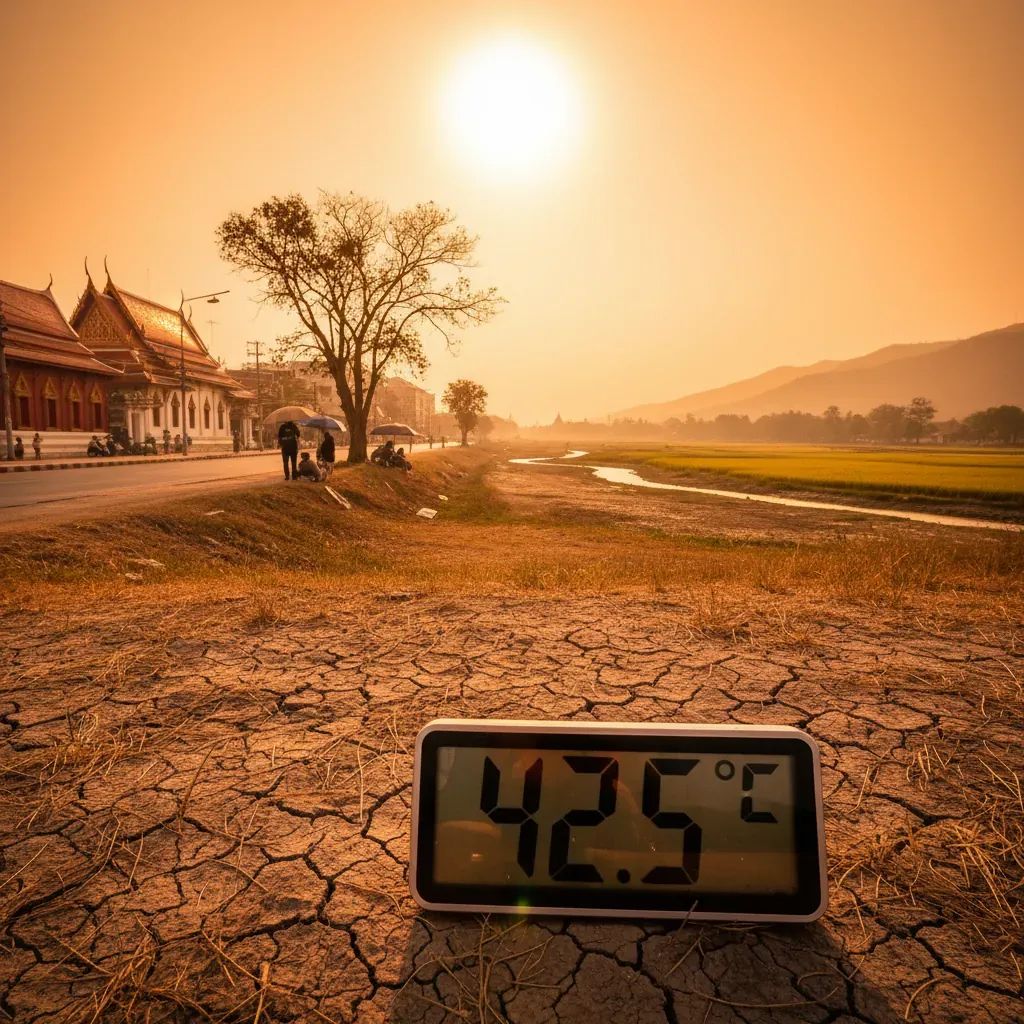
Pattaya Braces for Volatile Week as Tropical Instability Brings Scattered Downpours and Midday Heat
The Thailand Meteorological Department has confirmed that eastern Thailand, including Pattaya and the wider Chonburi Province, is locked in a transitional weather pattern that will bring unpredictable afternoon storms, sweltering daytime conditions, and rare but dangerous lightning activity through at least March 21. For residents and seasonal visitors accustomed to more stable climates, the next several days demand constant situational awareness and basic precautions.
Why This Matters
• Sudden storms with zero-to-60-minute development: Convective cells can form rapidly over warm water and dissipate just as quickly, making traditional forecasts less reliable—stay flexible about outdoor plans.
• Wave heights exceeding 2 meters in active storm zones: Small commercial fishing vessels and tour boats operating in the eastern Gulf face genuine operational hazard; the Thailand Marine Department is actively monitoring conditions.
• Micro-climate fragmentation across the city: On March 18 alone, Phratamnak Hill reported strong gusts while Jomtien Beach remained clear—neighborhoods less than 3 kilometers apart experienced wildly different weather.
The Atmospheric Setup Driving This Pattern
The weakening high-pressure system that has been drifting southward from mainland China is now too weak to suppress moisture-laden southeasterly winds flowing up from the Gulf of Thailand. The result is a clash between warm air aloft and moisture-rich lower winds that creates conditions for isolated afternoon thunderstorms typical of tropical regions during seasonal transitions.
The Pattaya Municipal Enforcement crowdsourced real-time observations from residents on March 18, revealing patchwork conditions across the city. Central Pattaya reported calm skies and mild breezes. Meanwhile, Naklua, Chak Nok, and the Banglamung district saw concurrent rain and gusty winds. Nong Ket Yai recorded heavy rainfall with large droplets typical of convective downpours. This spatial variability is not anomalous for the season—it reflects the chaotic nature of isolated storm cells that form, peak, and collapse within hours.
Local authorities stress that the forecast for any given neighborhood will shift. A street that remains dry in the morning can experience flash flooding by mid-afternoon. Residents should monitor updates from the Pattaya Municipal Enforcement social media channels rather than relying solely on national forecasts.
Temperature, Humidity, and Heat Stress Considerations
Daytime highs are expected to reach 32°C to 37°C through March 21, with overnight lows dropping only to 21°C to 26°C. When combined with relative humidity levels of 71% to 75%, the "feels-like" temperature can climb to 33°C (91°F) or higher—a range that poses genuine risk to outdoor workers, elderly residents, and individuals with cardiovascular conditions.
Daytime heat will be relentless through this period. Hydration is non-negotiable; a sedentary person in shade should consume at least 2–3 liters of water daily during this period. Those working outdoors—including construction crews, street vendors, and delivery personnel—should increase intake and take regular breaks in air-conditioned spaces.
The combination of heat and scattered storms is particularly taxing on cardiovascular health. Thai hospitals in the Chonburi region typically report an uptick in heat-related admissions during late March.
Maritime and Commercial Fishing Operations on High Alert
The Thailand Marine Department has issued standing guidance for boat operators and fishing crews: monitor visible weather on the horizon at all times, and avoid areas where dark clouds are forming or lightning is visible. Waves in the eastern Gulf are forecast to average 1 meter, but will exceed 2 meters in zones where thunderstorms are active—a sharp increase that can capsize smaller vessels or swamp open-deck fishing boats.
The Thailand Department of Fisheries has reminded all commercial operators of mandatory sea condition reporting protocols and advised against departure if local conditions deteriorate between 14:00 and 18:00, when afternoon convective cells typically peak.
Tourism Infrastructure and Drainage Concerns Resurface
The Pattaya tourism sector has absorbed repeated weather disruptions over the past several months, with flash flooding from earlier rainfall events damaging vehicle interiors, submerging ground-floor business premises, and stranding guests in hotels. Beachfront vendors have reported inventory losses, and restaurant operators have faced unplanned closures due to waterlogged premises.
The underlying issue is infrastructure. Pattaya's aging stormwater drainage system was designed for typical monsoon-season rainfall patterns, not the intense, isolated downpours that characterize the hot season transition. Heavy rain concentrated in 30–60 minutes can overwhelm the system, backing up into low-lying streets and basements. For now, residents and business owners in flood-prone zones (typically areas near Central Pattaya Road, Sukhumvit Road, and the beachfront sois) should take preventive measures: installing temporary water barriers, moving valuable inventory to upper floors, and maintaining flood insurance.
Hotel occupancy rates have remained relatively resilient despite the weather volatility and currency headwinds. Demand from international visitors continues to sustain the tourism sector even as seasonal challenges persist.
Air Quality and Dust Haze: A Secondary Concern
Weak air circulation across upper Thailand is allowing dust and particulate matter to accumulate. While current pollution levels remain below hazardous thresholds, residents with pre-existing respiratory conditions—particularly asthma and chronic obstructive pulmonary disease—should monitor air quality indices published by Thailand's Pollution Control Department. On windless afternoons (typically 14:00–17:00), haze visibility can drop noticeably, and indoor air purifiers become a practical investment for sensitive individuals.
The dust is a direct consequence of the same weak-wind pattern driving the convective storms. As high-pressure systems weaken and wind patterns stagnate, both moisture and aerosol particles stall over the same regions. This dual hazard—heat, humidity, storms, and air quality stress—makes late March a particularly demanding month for outdoor work and athletic activity.
What Residents Should Do Right Now
Seek shelter indoors at the first sign of darkening skies or distant thunder. Avoid open fields, parking lots, tall trees, and flimsy structures (including temporary roof coverings and unsecured signage) during active storms. Lightning can strike from a cloud up to 15 kilometers away, so proximity to the rain itself is not the determining factor for safety.
Keep a 72-hour emergency kit accessible: bottled water, battery-powered flashlight, first-aid supplies, and phone chargers. If flooding occurs, do not attempt to drive through inundated roads; water depth can be deceptive, and vehicles can be swept off course in fast-moving currents as shallow as 30 centimeters. The Thailand Royal Police and local disaster-response units are positioned to assist, but prevention is always preferable.
Follow official updates from the Pattaya Municipal Enforcement and the Thailand Meteorological Department via their official social media accounts. Do not rely on unverified reports or informal neighborhood messaging; official channels provide the most accurate local data.
When Conditions Will Normalize
Forecasters project a gradual decline in afternoon thunderstorm probability after March 21, with the likelihood dropping progressively through late March and early April. By early April, weather patterns are expected to shift toward more consistent hot, sunny conditions—though isolated storms remain possible until the Southwest Monsoon formally arrives in May.
April is typically the hottest month of the year in the region, with daytime highs routinely surpassing 32°C. The transition to more stable (if uncomfortably warm) weather typically occurs in the first week of April, when atmospheric dynamics shift and high-pressure systems weaken further.
For now, treat the next 72 hours as a window of heightened volatility. Stay informed, stay adaptable, and stay indoors when the sky darkens. The worst of this pattern will pass soon enough.


