
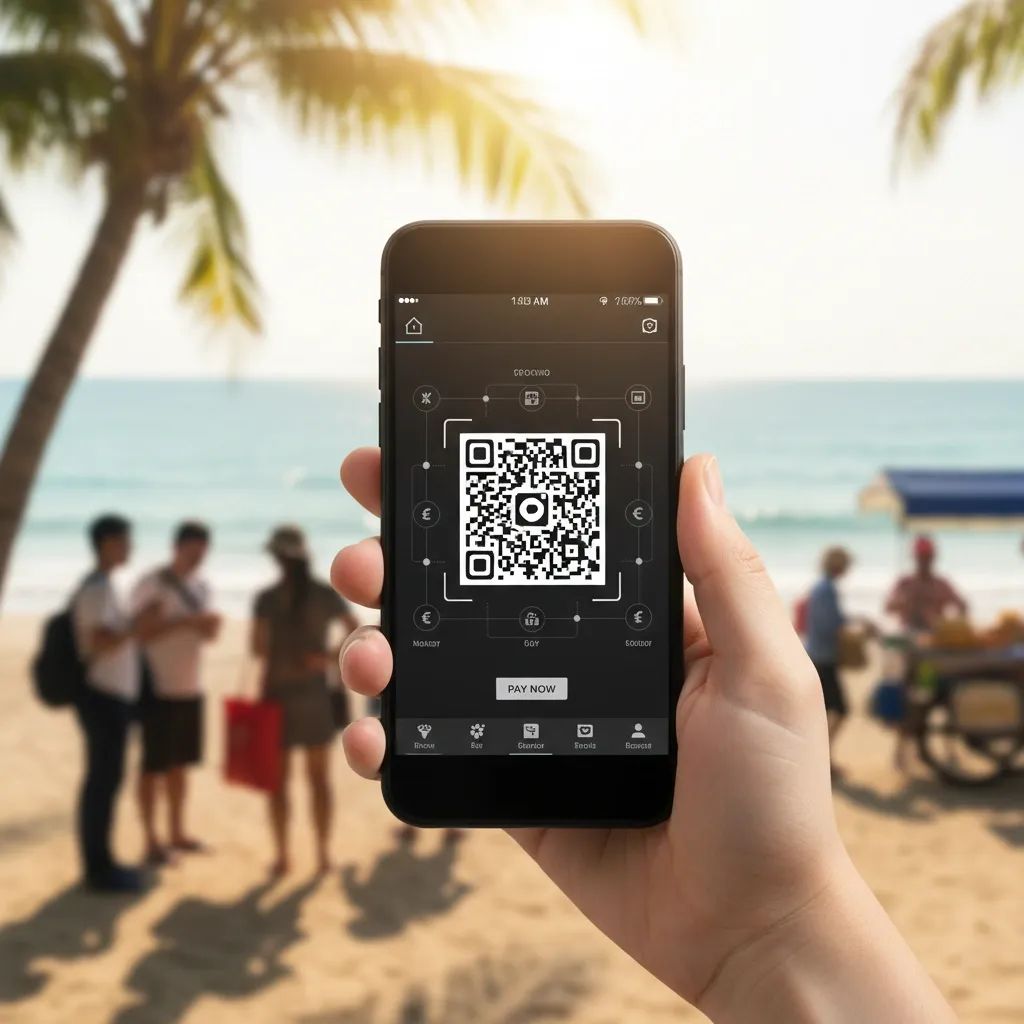
Pattaya is moving forward with a cashless payment partnership that will reshape how millions of visitors and residents conduct transactions across the coastal city. At the center of this initiative sits an emerging collaboration between Pattaya City and TAGTHAi, a social enterprise operating visitor payment networks across Thailand. The city is preparing a formal partnership agreement (MOU) that will integrate the TAGTHAi Easy Pay digital payment system into local tourism infrastructure.
What the Partnership Offers
The TAGTHAi Easy Pay system provides several practical benefits for visitors and residents:
• One payment method: The system uses QR codes compatible with Thailand's PromptPay standard, allowing visitors to pay at restaurants, shops, taxis, and attractions without cash or multiple apps.
• PAY&TOUR card option: International tourists can register at participating currency-exchange counters and receive a PAY&TOUR prepaid card that works across Thai QR terminals, Visa networks, and ATMs—reducing friction for travelers unfamiliar with local payment methods.
• Consolidated transactions: The vision is integrating hotel bookings, dining, attractions, and municipal services into one accessible platform, eliminating repeated app-switching.
• Realistic timeline: Pattaya's City Council has directed departments to finalize the partnership agreement before the current administrative term concludes, with implementation to follow—though specific rollout dates have not yet been announced.
Why This Matters for Pattaya
Mayor Poramet Ngampichet has framed the initiative as an economic multiplier: reducing payment friction typically encourages visitors to spend more and stay longer. Channeling transactions through formal digital payment trails also helps small vendors—street food carts, guesthouses, independent tour operators—gain access to banking services and enter the formal tax system.
The partnership aligns with Thailand's broader Smart Tourism strategy, steered by the Digital Economy Promotion Agency (depa). Cities participating in the Smart City framework are expected to integrate Smart Environment, Mobility, Living, People, Energy, Economy, and Governance capabilities. Pattaya is using the TAGTHAi payment system as a foundation for expanding municipal e-services through its "Pattaya Connect" mobile app, which already offers online tax filing, real-time traffic views, and emergency reporting.
Practical Steps for Residents and Business Owners
For anyone living in or working in Pattaya's hospitality and tourism sectors, the shift introduces both convenience and adjustment:
Benefits: A functional unified payment system will reduce ATM dependency, simplify vendor transactions, and create data trails that help businesses understand customer behavior. Residents using Pattaya Connect services will access municipal processes more efficiently.
Action items: Small-business owners in hospitality and tourism should monitor announcements from the Chonburi Commerce Office and TAGTHAi regarding merchant training workshops, which will likely begin once implementation timelines are confirmed. Guesthouses and restaurants should prepare for terminal installation and staff training. Residents can request the formal MOU publication from Pattaya City Hall to review partnership terms, data-ownership provisions, and dispute-resolution processes.
Key Uncertainties to Watch
Several factors will determine whether this initiative succeeds:
Merchant adoption: Small vendors—massage therapists, street-food operators, motorcycle-taxi drivers—remain unfamiliar with QR payment mechanics and may worry about transaction fees. Widespread merchant education will be essential; without strong participation, visitors will still default to cash and competing apps.
Data transparency: The formal partnership agreement has not yet been released publicly, so clarity is lacking on data ownership, retention policies, and third-party access rights. Residents concerned about privacy should review the MOU once published to understand how visitor spending patterns and movement data will be governed and protected.
Implementation consistency: Pattaya has a mixed track record on sustained enforcement of city policies. Success depends on political commitment persisting beyond administrative changes and on consistent funding for ongoing system maintenance, training, and cybersecurity.
What Comes Next
The MOU finalization is the critical next milestone. Once a formal agreement is signed, the city can announce specific rollout phases, merchant-training schedules, and integration timelines. For now, the partnership represents Pattaya's commitment to modernizing visitor infrastructure and attracting higher-spending tourists who value seamless digital experiences.
Residents and business owners should stay informed through official Pattaya City announcements and the Chonburi Chamber of Commerce. The practical details—particularly fee structures, merchant obligations, and how municipal services integrate—will emerge as the partnership moves from planning to implementation.


