
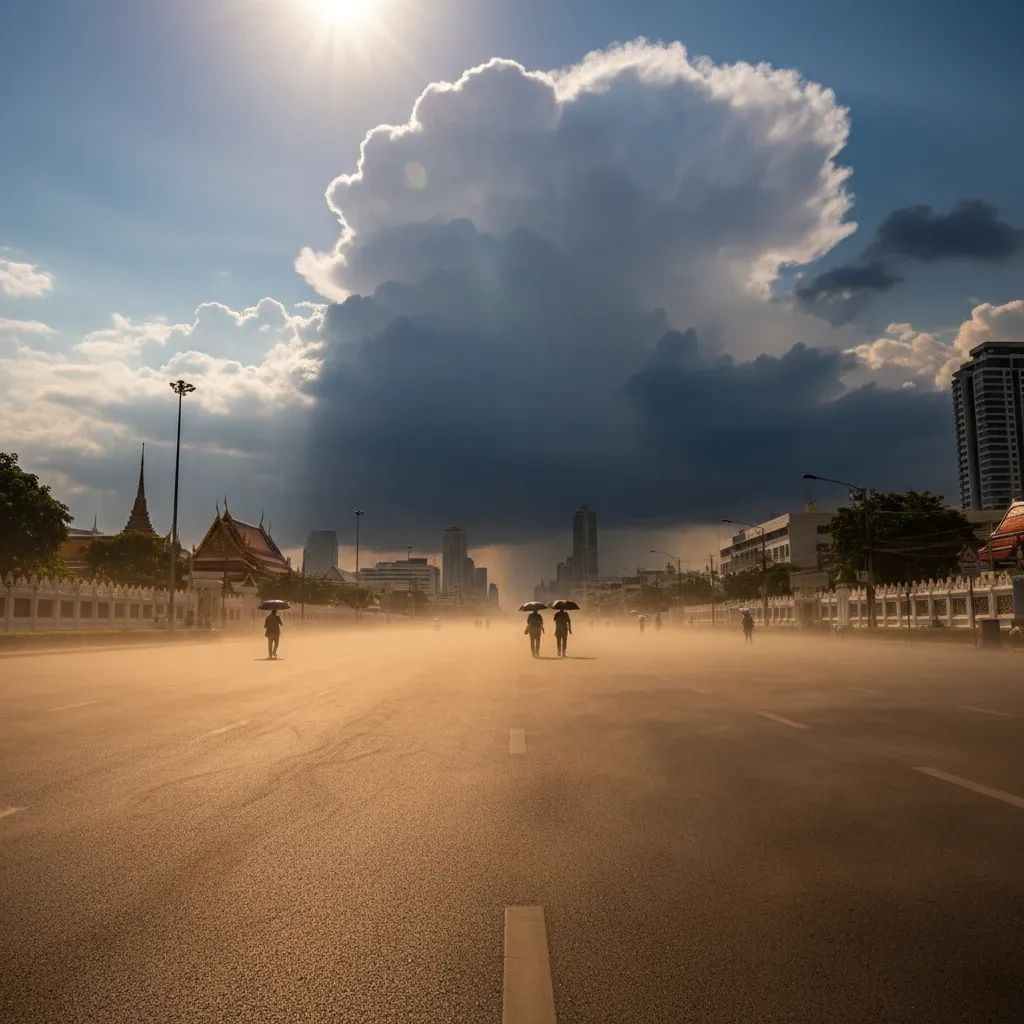
The Thailand Meteorological Department has issued a storm alert covering the coastal resort city of Pattaya and much of upper Thailand through April 25, 2026, marking an abrupt shift from days of punishing heat to volatile weather that could disrupt outdoor tourism and damage agriculture across Chonburi Province.
Why This Matters:
• Timing: Severe thunderstorms, gusty winds, and isolated hail expected April 23–25, hitting northern and northeastern regions first before sweeping toward central plains.
• Tourism impact: Beach activities, diving, and boat tours in Pattaya face disruption as dark clouds and sudden squalls roll in, threatening the peak of Thailand's high-season tourist revenue.
• Safety warning: Authorities urge residents and visitors to avoid open spaces, large trees, unstable structures, and billboards during storms; lightning strikes pose serious risk.
• Agriculture: Farmers in surrounding areas advised to secure crops, fruit trees, and livestock ahead of damaging winds and heavy rainfall.
Summer Storm System Takes Aim at Eastern Seaboard
The weather system responsible for this week's volatility stems from a high-pressure mass moving south from China, colliding with the intense heat that has gripped Thailand's eastern region for much of April. This clash of air masses creates ideal conditions for explosive convective storms — the hallmark of Thailand's summer storm season, which typically peaks between March and May.
According to the Thai Meteorological Department's extended forecast for April 2026, the eastern region, including Chonburi Province where Pattaya is located, will see rainfall totals of 90–120 millimeters this month, with 8–10 days of rain expected from the storm system and typical seasonal patterns. While Pattaya is not in the initial impact zone, local conditions are expected to deteriorate as the storm system expands westward, bringing thunderstorms to 20–40% of the Bangkok metropolitan area by April 24–25.
The northern provinces of Chiang Rai, Phayao, Nan, Uttaradit, Phitsanulok, and Phetchabun will see the first wave of severe weather, with storms covering roughly 20% of the area. The northeastern region faces the most intense conditions, with 30% coverage and heavy downpours expected in Loei, Nong Khai, Bueng Kan, Nong Bua Lamphu, Udon Thani, Sakon Nakhon, Nakhon Phanom, Khon Kaen, Kalasin, Mukdahan, Roi Et, Yasothon, and Amnat Charoen.
Central Thailand, including Saraburi, Kanchanaburi, Ratchaburi, Nakhon Pathom, and Samut Sakhon, will experience scattered storms affecting roughly 10% of the region initially, with intensity increasing as the system moves through.
What This Means for Residents and Visitors
For anyone living in or visiting Pattaya this week, the practical implications are immediate. Beach activities — a cornerstone of the city's tourism economy — become hazardous when storms approach. The Thailand Royal Police and local disaster management teams have activated rapid-response protocols, but individual vigilance remains critical.
Pattaya City's Disaster Prevention and Mitigation Command has been monitoring meteorological updates continuously and coordinating with Chonburi Province authorities to ensure readiness. Personnel, machinery, and emergency supplies have been staged for quick deployment. The city's disaster response framework ties directly into the provincial and national emergency management system, ensuring a coordinated approach when storms hit.
Visitors planning outdoor excursions — particularly water-based activities like snorkeling, parasailing, or island tours — should confirm cancellation policies with operators and monitor real-time weather updates. Sudden squalls can turn calm seas dangerous within minutes, and tour operators typically suspend services when lightning is detected within a certain radius.
For long-term residents, this is a reminder to inspect roof fixtures, secure loose outdoor items, and ensure drainage systems around properties are clear. Flash flooding is a recurring issue in Pattaya during heavy rainfall, particularly in low-lying areas and streets with inadequate drainage infrastructure. Past storms have caused significant traffic disruptions and localized flooding, especially in older neighborhoods and market districts.
Economic Ripple Effects Beyond the Beach
The tourism sector in Pattaya — which relies heavily on predictable weather during the high season — faces a recurring challenge with increasingly erratic storm patterns. While short-term disruptions from a three-day storm system are manageable, the cumulative effect of more frequent and intense weather events has forced hoteliers, tour operators, and restaurateurs to adapt their operations.
Marine ecosystems, particularly coral reefs that draw divers and snorkelers, face long-term stress from higher sea temperatures and storm runoff carrying sediment and pollutants. The degradation of these natural assets diminishes Pattaya's appeal as a marine tourism destination, a concern that resonates beyond immediate weather disruptions.
Farmers in Chonburi's inland districts must balance the welcome relief that rain brings after weeks of heat against the destructive potential of hail and high winds. Fruit orchards, vegetable plots, and livestock operations are particularly vulnerable. The Thailand Ministry of Agriculture and Cooperatives coordinates with local disaster teams to assess damage and distribute aid when crops are destroyed, but prevention remains the best strategy. Reinforcing greenhouses, securing loose equipment, and moving animals to sheltered areas are standard precautions during storm warnings.
Preparing for the Next Wave
The Thailand Department of Disaster Prevention and Mitigation has emphasized continuous vigilance across all provinces, including Chonburi, as summer storm season intensifies. The agency's current preparedness framework focuses on structural inspections, public awareness campaigns, and rapid-response capacity.
Local authorities conduct regular checks on public infrastructure — electrical poles, advertising billboards, bus shelters — to identify hazards before storms arrive. Property owners are urged to do the same for private structures. Large trees near homes should be pruned to reduce the risk of falling branches, and unsecured rooftop installations (water tanks, solar panels, antennas) should be reinforced.
Communication channels have been diversified to reach both Thai residents and the large expatriate and tourist populations in Pattaya. Alerts are disseminated through community loudspeakers, radio broadcasts, mobile apps, and social media platforms in multiple languages. The city's disaster command center maintains a 24-hour hotline for emergency reports and assistance requests.
For visitors unfamiliar with tropical storm behavior, the key signs to watch are rapidly darkening skies, sudden wind gusts, and a noticeable drop in temperature. These indicators can precede a storm by as little as 15–30 minutes. If caught outdoors, the safest action is to seek solid shelter immediately — preferably a substantial building rather than a beach umbrella or open-sided pavilion.
Health and Safety Considerations
Beyond the immediate dangers of lightning, falling debris, and flooding, the rapid temperature swings associated with summer storms pose health risks. Thailand health authorities note that sudden transitions from extreme heat to cooler, wet conditions can stress the body, particularly for young children, elderly individuals, and those with pre-existing respiratory or cardiovascular conditions.
Staying hydrated, avoiding unnecessary exposure during storms, and monitoring local health advisories are prudent measures. For emergencies related to storm injuries or health concerns, Thailand residents can contact the national emergency hotline at 1669 or visit the nearest hospital in Pattaya and Chonburi Province that maintain dedicated emergency response units for severe weather events.
Mosquito populations often surge after heavy rains, increasing the risk of dengue fever and other vector-borne diseases prevalent in tropical areas. The Thailand Ministry of Public Health recommends residents eliminate standing water around properties within 24 hours after storms, use mosquito repellent containing DEET, and seek medical attention immediately if fever, headache, or joint pain develops — all potential dengue symptoms common in Pattaya during the rainy season.
The Thai Meteorological Department forecasts that storm activity will taper off by April 26, with Bangkok and surrounding areas seeing only 10–20% storm coverage from April 26–28. However, as climate patterns become less predictable, the old seasonal rhythms that residents and businesses once relied on are shifting. Preparedness is no longer a one-time exercise but an ongoing requirement for anyone living in or visiting Thailand's eastern seaboard.
Travelers with flexible schedules may choose to adjust plans around the storm window, while those committed to specific dates should build contingencies into their itineraries. Most hotels and tour operators in Pattaya are accustomed to weather disruptions and typically offer rebooking options without penalty when official storm warnings are in effect.
For now, the immediate focus is simple: monitor official updates, secure property, avoid unnecessary risks, and wait for the system to pass. The storms will come, the rain will fall, and within days, Pattaya's beaches will once again fill with visitors seeking sun and surf — at least until the next weather alert.


