
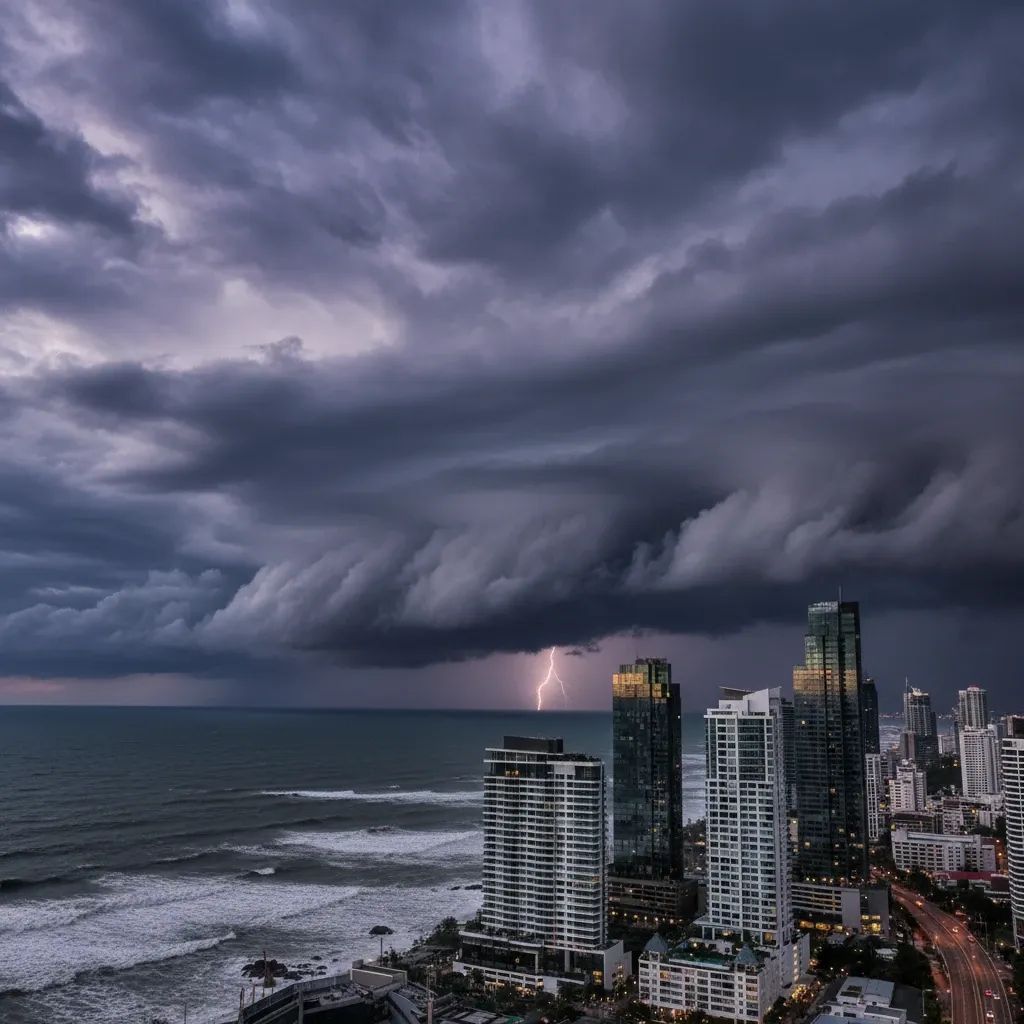
The Thailand Meteorological Department has issued advisories for elevated temperatures and scattered thunderstorms across the Eastern Seaboard, including Pattaya, as the country transitions into its hottest season—a shift that could briefly disrupt outdoor plans and demand heightened vigilance from residents and visitors through mid-March.
Why This Matters
• Temperature spike: Daytime highs in Chonburi Province will reach 34–36°C, with overnight lows holding at 23–26°C—levels that can strain air conditioning and public health.
• Storm window: March 11–13 marks a higher-risk period for severe weather, including gusty winds, localized hail, and sudden downpours.
• Limited rain coverage: Only about 20% of the Eastern region is expected to see precipitation at any given time, meaning most days remain sunny but unpredictable.
• Safety protocol: Authorities recommend postponing open-air activities during thunderstorms and monitoring real-time forecasts from the Thailand Meteorological Department.
How the Weather System Works
A thermal low-pressure zone sitting over upper Thailand has created the conditions for afternoon instability, while southeasterly winds carry moist air inland from both the Gulf of Thailand and the South China Sea. That combination—heat meeting humidity—fuels the convective cells that produce short, sharp thunderstorms typical of the pre-monsoon season.
Between March 11 and 13, meteorologists warn that a high-pressure system descending from China will push cooler air southward, colliding with the hot air mass already in place. This atmospheric clash can trigger summer storms—locally known as "summer thunderstorms" or phayuduron—which bring heavier rainfall, stronger gusts, and occasional hail. While the most intense activity is forecast for the North and Northeast, coastal zones such as Pattaya may still experience abrupt squalls during that window.
What This Means for Pattaya Residents and Visitors
For those living in or traveling through the Eastern Seaboard, the practical takeaway is simple: expect sunshine punctuated by brief, intense bursts of rain. Beach plans and outdoor dining remain viable for most of the week, but keeping an eye on the sky—and a backup indoor option—is prudent.
Tourism operators should note that while high-season crowds have begun to taper, the mix of clear mornings and afternoon storms is a familiar rhythm during the March–May hot season. Most visitors can still enjoy extended beach hours, though poolside umbrellas may need securing and boat trips may face afternoon cancellations if squalls roll in.
Agriculture and infrastructure: Farmers in Chonburi and neighboring provinces are advised to reinforce supports for crops vulnerable to wind damage and consider covering delicate plants. Loose signage, potted plants, and outdoor furniture should be stowed or anchored to prevent them becoming projectiles in sudden gusts.
Broader Context: Thailand's Hot Season and Climate Patterns
Thailand's hot season officially runs from March through May, with peak temperatures concentrated in April. This year, however, residual effects from an El Niño phase—which drove record heat in 2025—continue to influence baseline temperatures. While the phenomenon is weakening and transitioning toward neutral conditions, global climate models suggest a new El Niño cycle may develop later in 2026, potentially setting the stage for even hotter conditions by the 2026–2027 winter.
The Thailand Department of Disaster Prevention and Mitigation (DDPM) and the Ministry of Public Health have issued standing guidance for coping with elevated heat indices, which can pose health risks for outdoor workers, the elderly, and those with pre-existing conditions. Staying hydrated, avoiding midday sun, and recognizing signs of heat exhaustion are standard precautions during this period.
Official Safety Recommendations
The Thailand Department of Disaster Prevention and Mitigation has outlined a three-phase protocol for summer storm preparedness:
Before the storm:Monitor weather updates from tmd.go.th or the THAI DISASTER ALERT mobile app. Inspect roofs, windows, and doors for structural soundness, and trim any tree branches that overhang buildings. Charge backup batteries, stock bottled water and non-perishable food, and secure outdoor items that could blow away.
During the storm:Remain indoors in a solid structure. Close all windows and doors. Unplug electronics to guard against power surges. If caught outside with no shelter, crouch low—on the balls of your feet—to minimize ground contact, but do not lie flat, as wet ground conducts electricity. Avoid metal fences, utility poles, and tall trees.
After the storm:Survey property for damage, especially unstable signage or downed power lines. Report hazards immediately to the DDPM emergency hotline at 1784 (available 24/7) or via Line @1784DDPM.
Regional Forecast Through March 19
Extended outlooks indicate that Pattaya will see mostly sunny skies from March 9 through 19, with isolated afternoon showers possible on several days. March 12 carries the highest probability for a heavy thunderstorm, while March 19 may bring scattered cells. Wave heights in the Gulf of Thailand are expected to remain below one meter, posing minimal risk to nearshore swimming or recreational boating under normal conditions—though mariners should exercise caution during active squall lines.
Impact on Economy and Daily Life
While summer storms rarely cause prolonged disruption in Pattaya, the tourism and hospitality sectors remain sensitive to weather perception. Short downpours can temporarily empty beaches and outdoor markets, shifting foot traffic indoors to malls, spas, and covered entertainment venues. For businesses, this means flexible scheduling and clear communication with guests about the transient nature of tropical rain.
Construction projects in Chonburi Province may face brief delays if storms coincide with concrete pours or outdoor finishing work. Site managers are encouraged to schedule weather-dependent tasks for early morning, when conditions are most stable.
Electricity infrastructure: The Provincial Electricity Authority (PEA) typically prepositions repair crews during storm-watch periods to minimize outage duration. Residents should keep flashlights accessible and consider surge protectors for sensitive equipment.
Comparing This Year to Historical Norms
March 2026 weather patterns align closely with long-term climatological averages for the Eastern region, though baseline temperatures are running slightly above the 30-year mean due to ongoing planetary warming trends. The frequency of severe summer storms has not increased significantly, but individual events may carry higher rainfall totals when they do occur—a pattern consistent with a warming atmosphere's ability to hold more moisture.
Vietnam and other Southeast Asian neighbors are also bracing for earlier, longer, and more intense heat waves this year, suggesting that regional climate dynamics are shifting in tandem. By late 2026, if a strong El Niño materializes as forecast, Thailand could see reduced monsoon rainfall and heightened drought risk—making the current wet-season preparations all the more important.
Practical Checklist for the Week Ahead
• Download the Thailand Meteorological Department app or bookmark tmd.go.th for live radar.
• Secure outdoor furniture, potted plants, and loose roofing materials.
• Stock basic emergency supplies: flashlight, batteries, bottled water, first-aid kit.
• Plan indoor alternatives for outdoor events scheduled between March 11 and 13.
• Charge mobile devices and power banks before storm windows.
• Avoid swimming or boating if dark clouds appear on the horizon or wind picks up sharply.
For most residents, the coming week will feel like a familiar March mix: morning sunshine, rising humidity, and the occasional afternoon crackle of thunder. The key is not to avoid the outdoors entirely, but to remain flexible and weather-aware—hallmarks of life in Thailand's tropical climate.


