
The Bangkok Metropolitan Administration has activated its emergency relief machinery following a Monday morning fire that destroyed five houses in Pathumwan district, illustrating both the vulnerability of the city's densely packed residential zones and the institutional capacity to respond when disaster strikes.
Why This Matters
• Five houses destroyed in Soi Phraram 6, Lane 15, with at least three civilians and one firefighter suffering injuries during the incident.
• Temporary shelter operations underway at Wat Sarabuea School, with government-coordinated meal services and relief assessment ongoing.
• Relief payments typically range from ฿10,000 to ฿50,000 per household, depending on damage assessment and family composition.
• Incident underscores why the Bangkok Metropolitan Administration has prioritized distributing 27,600 portable extinguishers during the 2024 fiscal year alone.
The Rapid Spread and Response Infrastructure
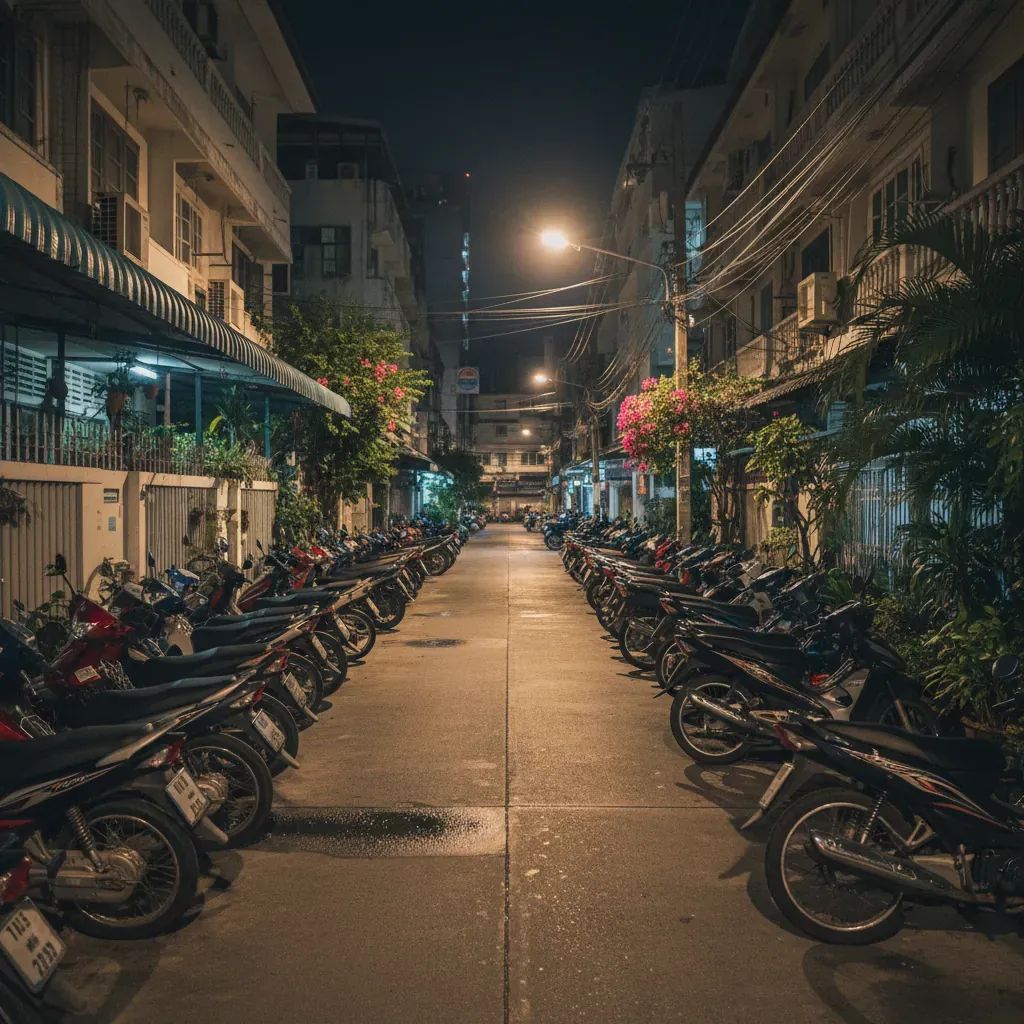
The fire began shortly before noon in a wood-frame residential area where narrow lanes—most measuring under three meters across—complicated access for emergency vehicles. What started as a localized blaze in two adjoining structures consumed a four-story mixed-use building containing fabric storage, transforming the initial incident into a multi-block emergency within minutes. Cloth bales acted as accelerant, intensifying flames and extending suppression timelines.
The Bangkok Fire and Rescue Department deployed multiple crews, while the Thailand Royal Army's 2nd Division mobilized volunteer support for traffic management and logistics coordination. Fire department engineers subsequently assessed neighboring structures for collapse risk before permitting residents to approach recovery operations.
Officials have not yet confirmed the fire's origin, though preliminary investigation points toward electrical failure—the predominant cause across Bangkok's informal settlements. Final determination remains pending from the Thailand Building Inspection Authority.
Understanding the Pattern Behind Phraram 6
This marks the third significant fire in the Phraram 6 corridor within seven years. In February 2018, an electrical short circuit devastated Ban Khrua Tawantok community just lanes away, destroying multiple wooden homes in a neighborhood where infrastructure dates to the mid-20th century. April 2024 brought another incident traced to unattended electrical equipment in a mixed-construction residence nearby.
These recurring incidents are not coincidental. Investigators consistently identify the same structural vulnerabilities: aging electrical systems operating beyond design capacity, reliance on wood and composite materials predating modern fire-resistance standards, and layout configurations that prevent standard-sized fire engines from reaching incident zones quickly. The Building Inspection Authority has formally classified these neighborhoods as high-risk, yet retrofit requirements remain voluntary for pre-1990 structures.
Bangkok records approximately 1,200 structural fires annually, with residential areas accounting for the majority. The concentration of fires in communities like Phraram 6 reflects a geographic and socioeconomic reality: older, lower-income neighborhoods lack the financial resources for proactive modernization.
How Relief and Recovery Operates in Bangkok
The Thailand Ministry of Interior has directed the Bangkok Metropolitan Administration and the Department of Disaster Prevention and Mitigation to accelerate victim support under existing disaster relief protocols. Displacement compensation follows a standardized formula: households that lose primary residences receive between ฿10,000 and ฿50,000, with amounts calibrated to documented damage and household size.
Displaced families are currently housed at Wat Sarabuea School, where the Bangkok Social Welfare Department coordinates meal service and temporary sleeping arrangements. Officials have not announced a timeline for transition to permanent housing, indicating shelter operations will persist "as needed." Additional support through the Bangkok Community Welfare Fund typically covers education assistance, elderly care, and occupational rehabilitation, though fund disbursements frequently require weeks to process.
This bureaucratic infrastructure, while functional, operates slower than the emergency itself. Residents waiting for formal damage assessments often face several weeks of uncertainty while paperwork processes through district and municipal channels. Understanding this timeline helps families plan alternative arrangements rather than relying solely on government recovery schedules.
Bangkok's Fire Prevention Strategy—Progress and Limitations
The city's fire prevention campaign reflects institutional acknowledgment of concentrated risk. Over the past three fiscal years, the Bangkok Metropolitan Administration has distributed approximately 55,000 portable fire extinguishers to at-risk communities—a significant logistical achievement. An additional 17,987 units are planned for 2026 deployment.
Yet equipment distribution addresses symptoms rather than root causes. The Bangkok Governor's Office has proposed expanding the fire hydrant network to position one standpipe every 50 meters in high-risk zones, alongside biannual extinguisher maintenance inspections in public spaces. Budget constraints and jurisdictional complexity, however, have slowed implementation.
A 2025 audit revealed a troubling detail: more than 30% of community-installed extinguishers had expired or suffered improper maintenance, rendering them ineffective during emergencies. The issue is not merely availability but stewardship—communities must maintain equipment with discipline and knowledge that not all possess.
The city's most significant structural challenge remains unresolved: narrow alleyways in pre-modern communities create "fire alleys" where flames can leap between adjacent structures faster than crews can position equipment. Some urban policy advocates propose mandatory sprinkler systems and intentional firebreak corridors, but such measures face resident resistance due to concerns about displacement costs and already-stretched housing budgets.
What Residents in High-Risk Areas Can Do Now
Understanding Bangkok's fire landscape is essential for anyone living in older neighborhoods. Residents should immediately verify three elements: working smoke detectors, accessible exit routes, and landlord responsibility for electrical inspections.
Concrete precautions merit daily attention: Check electrical outlets and extension cords for visible wear or heat damage—most Bangkok residential fires originate from overloaded circuits. Never leave cooking appliances unattended, and unplug irons, heaters, and chargers when not actively in use. Identify the nearest fire hydrant (red standpipe) and map your evacuation route. For residents with elderly or disabled neighbors, pre-plan assistance logistics.
The Bangkok Fire Department, in partnership with the Thai Health Promotion Foundation and local community organizations, offers free fire-safety training sessions covering extinguisher operation, first-response techniques, and household hazard identification. Residents can request training through their district office—an opportunity many overlook despite its direct relevance to survival.
For renters and homeowners in wood-frame structures, upgrading wiring and installing fireproof barriers between units represents costly but meaningful protection, potentially containing a blaze long enough for safe evacuation. Landlords should be pushed to provide documentation confirming electrical system compliance with current standards, particularly in buildings over 30 years old.
The Broader Urban Challenge
The Phraram 6 incident reflects a reality common across Southeast Asian megacities: rapid urbanization historically outpaced safety infrastructure. Legacy neighborhoods now pose disproportionate risk because they were never engineered for contemporary electrical demands or population density.
For expats and long-term residents evaluating housing options, factoring fire risk into neighborhood selection represents prudent planning. Newer apartment blocks in developed areas typically meet modern fire-resistance standards and maintain better access for emergency vehicles. Older, more affordable communities offer cultural richness and lower rent but demand greater personal vigilance.
As investigators complete their assessment of Monday's fire, the incident reinforces an essential principle: in Bangkok's tightly woven neighborhoods, one household's electrical fault can cascade into an entire block's catastrophe. The city's ongoing fire-prevention campaign emphasizes community vigilance—because in these lanes, your neighbor's safety is inseparable from your own. The question is not whether fires will recur in these areas, but whether residents will access the training, equipment, and planning necessary to minimize casualties when they inevitably do.


