Why This Matters
Thailand's Deep South checkpoint network faces a critical security crisis. On the evening of July 22, six armed assailants killed five paramilitary rangers at a rural outpost in Narathiwat, injuring two civilians in what security officials are calling a coordinated militant operation. The incident exposes systemic vulnerabilities in the Thailand government's approach to defending fixed security positions and raises urgent questions about resource allocation, personnel training, and whether current defensive postures can protect both operators and civilians.
• Immediate risk elevation: Expect intensified security operations throughout Narathiwat, Pattani, and Yala provinces over the next 72 hours; checkpoint wait times will increase measurably.
• Equipment theft complicates future threats: Stolen AK-47 rifles and body armor from slain rangers create immediate tactical advantages for insurgents in subsequent operations.
• Regional destabilization signal: The attack's timing—occurring one day after a car bombing at a nearby police facility—suggests either a coordinated campaign or a dangerous spike in militant confidence.
The Bukeh Sami Assault: Anatomy of a Deadly Strike
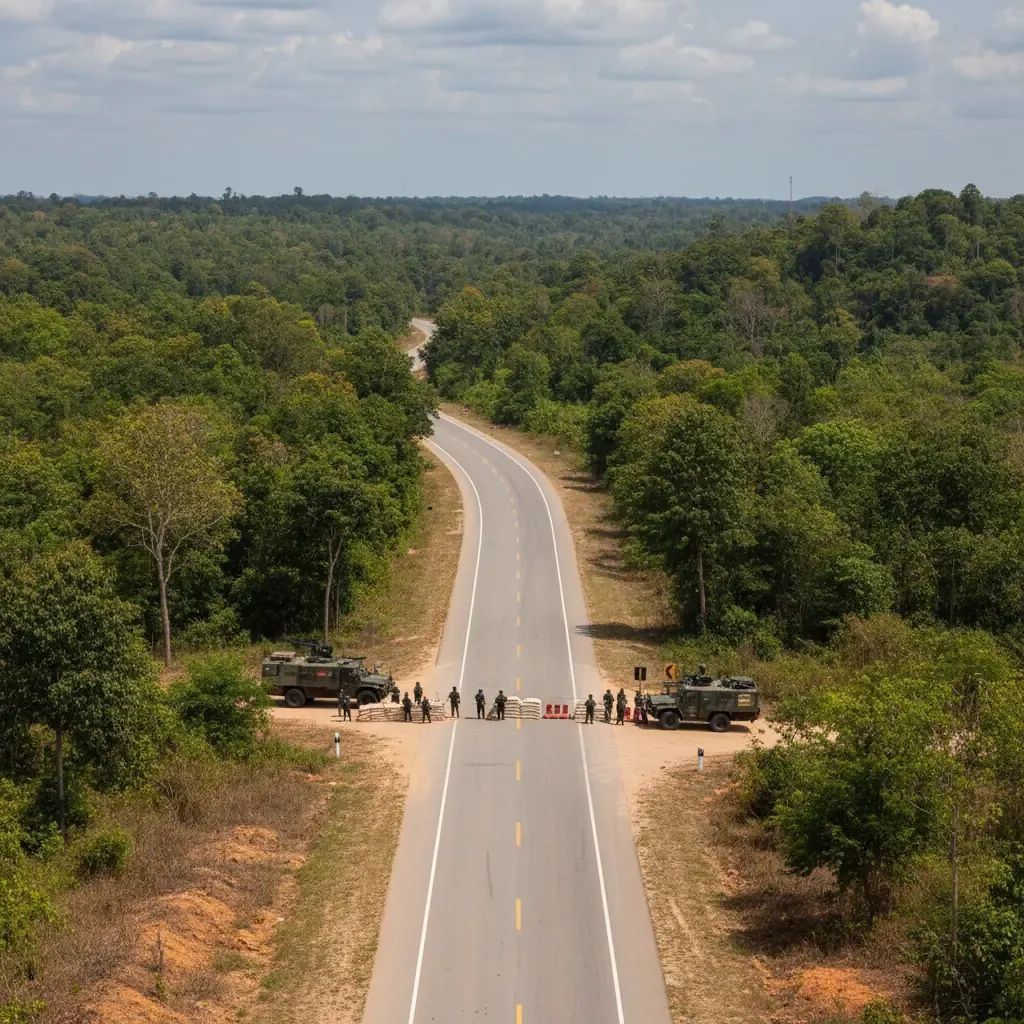
At approximately 7:00 p.m., the security situation at the Bukeh Sami municipal checkpoint in Ra-ngae district deteriorated catastrophically. Six individuals in black tactical gear arrived in a black four-door Nissan pickup truck and launched an assault combining automatic rifle fire with multiple pipe bomb detonations. The checkpoint, staffed by personnel from Ranger Company 4509 (a paramilitary unit subordinate to Thailand's Internal Security Operations Command), lacked the defensive depth or warning systems to repel a coordinated multi-method attack.
The five rangers who died—Sergeant Major First Class Theerayut Somakerd, Ranger Volunteer Sakiriya Jena, Ranger Volunteer Wimon Dabthong, Ranger Volunteer Nattasit Kaewsena, and Ranger Volunteer Salahuding Pi—were caught in an initial barrage before they could mount an organized response. Two civilians sustained injuries, including a 10-year-old boy. The attackers then deliberately stripped the fallen rangers of three AK-47 rifles, three ballistic vests, and three mobile phones before fleeing north along Highway 4055 toward Dusongyo subdistrict.
Escape, Evidence Destruction, and Investigation Response
The perpetrators' operational discipline was evident in their planned withdrawal. Roughly 21 kilometers from the checkpoint, in Sako subdistrict of Sri Sakhon district, authorities discovered the black Nissan abandoned and deliberately torched—a tactic consistent with professional insurgent tradecraft aimed at destroying forensic links.
Thailand's Internal Security Operations Command Region 4 activated immediate containment protocols: roadblocks sealed major and secondary routes; Thai Royal Police forensic units combed the checkpoint for bomb fragments, spent ammunition, and tire impressions. CCTV analysis from surrounding villages is underway.
The theft of military-grade weapons and electronic devices signals intent to sustain operational capacity. Security analysts flagged the stolen mobile phones as particularly troubling—these devices may contain contact lists, operational schedules, or intelligence regarding other checkpoint locations and personnel rotations. The Narathiwat Provincial Governor and senior military commanders descended on the scene to personally coordinate response efforts, an indication of how seriously Bangkok treats the breach.
Context: Why Checkpoints Remain High-Risk Targets
Thailand's Deep South security infrastructure consists of an estimated 1,000-plus fixed and mobile checkpoints distributed across the three southernmost provinces. These posts serve multiple functions: narcotics interdiction, insurgency suspect detention, movement intelligence, and civilian reassurance. Yet the very static nature and predictable staffing patterns that enable these functions also create systematic vulnerability.
Ranger units and volunteer forces, while drawn from local communities, often lack the training intensity, equipment sophistication, and situational awareness protocols of regular Thai military units. The Bukeh Sami checkpoint exemplifies this gap: a modest facility in contested territory, manned by personnel operating on routine schedules well-known to insurgent networks. When attackers strike checkpoints, they typically achieve tactical surprise and inflict outsized casualties.
Insurgent groups have evolved their methodology. Early-2000s attacks relied on crude improvised explosive devices and small-arms ambushes. Recent operations—including the Bukeh Sami incident and the preceding car bombing at Tanyong Police Station—demonstrate coordinated use of vehicle-borne explosives and disciplined escape planning. This tactical maturation translates to higher lethality and greater challenge for conventional checkpoint defenses.
The Broader Insurgency Picture: Escalation or Anomaly?
The checkpoint assault occurred approximately 24 hours after a car bomb detonated outside the old Tanyong Police Station, wounding a security officer. That explosion marked the 68th vehicle-borne bomb attack attributed to southern insurgents since 2005—a cumulative toll that underscores how the conflict has shifted from localized skirmishes toward sophisticated, remotely coordinated operations.
Since 2004, the three southernmost provinces have experienced more than 7,000 deaths across all combatant and civilian categories. Deaths peaked in 2005-2008 and have declined in absolute terms since, yet relative to population size and infrastructure present, casualty rates among security personnel remain substantial. The Bukeh Sami incident—killing five rangers in a single evening—represents a significant operational success by insurgent standards and likely signals either heightened group confidence or a deliberate campaign to reassert military pressure ahead of stalled peace negotiations.
No insurgent faction has publicly claimed responsibility for the checkpoint attack. The Barisan Revolusi Nasional (BRN), Thailand's largest and most organizationally coherent militant movement, rarely issues formal statements.
What This Means for Residents and Travelers
For those living in or transiting through Narathiwat, Pattani, and Yala, the July 22 checkpoint assault represents a tangible, immediate escalation in ambient risk. Thailand's Ministry of Foreign Affairs and multiple embassies maintain standing travel advisories against non-essential movement to the region, citing persistent threat of sudden violence. This advisory reflects genuine tactical volatility.
Practical implications for residents and business operators:
Security Posture: Expect heightened checkpoint activity over the coming weeks. Wait times at remaining checkpoints will increase measurably, and staff will conduct more rigorous vehicle inspections and personal screening. Travelers should carry identification documents and avoid traveling during evening hours (roughly 5 p.m. onward), when visibility constraints historically correlate with elevated attack risk.
Economic Friction: Business operations in the Deep South already face elevated insurance premiums; some international insurers exclude conflict-related casualty coverage entirely. The region's combined GDP per capita is roughly 50% of the national average, and persistent insecurity continues to deter foreign direct investment, tourism development, and labor mobility. Incidents like the Friday checkpoint assault create ripple effects: supply chain disruptions, delayed shipments, and temporary closure of checkpoint-adjacent commercial activity.
Accountability and Trust: Repeated militant successes against checkpoints erode public confidence in security forces. Civilians caught in crossfire incidents develop skepticism toward official narratives and grow less likely to report suspicious activity to authorities. This dynamic weakens counterinsurgency effectiveness over time.
Government Response and Policy Considerations
Thai government officials have condemned the checkpoint assault as a serious security threat. Government messaging indicates a dual strategy: continued military suppression of militant activity alongside sporadic peace negotiations with insurgent-linked groups. This approach reflects Bangkok's strategic dilemma of balancing security operations with dialogue initiatives.
The Emergency Decree, granting security forces expansive powers in designated zones, remains in effect across portions of the Deep South. However, Bangkok has gradually contracted the geographic footprint of the decree in recent years, suggesting policymakers wish to normalize governance rather than perpetuate military emergency rule. The Bukeh Sami incident will likely spark renewed calls to expand emergency protocols.
Historical Context: Underlying Grievances
Thailand's three southernmost provinces were historically part of the Malay sultanate of Pattani before annexation by Bangkok in the early 20th century. The resident population is predominantly ethnic Malay Muslim, linguistically and culturally distinct from the Buddhist Thai majority elsewhere. Longstanding grievances cited by insurgent groups include language suppression in schools, economic marginalization, and historical security force conduct concerns.
These structural tensions predate the 2004 insurgency resurgence and are unlikely to dissipate through checkpoint construction alone. Successive Thai governments have attempted military suppression, administrative reform, and negotiated settlement; conflict termination remains elusive.
What You Should Do Now
For residents: Review your checkpoint travel routes and timing. Avoid evening travel (5 p.m. onward) through contested areas when possible. Keep identification documents accessible. Maintain situational awareness regarding local security bulletins.
For businesses: Contact your insurance provider immediately to confirm coverage terms regarding conflict-related incidents. Audit supply chain dependencies and identify alternative routing options. Brief staff on updated safety protocols and checkpoint procedures.
For travelers: Monitor Thailand's Ministry of Foreign Affairs advisories and local embassy updates before traveling to the region. If already in the area, plan transportation during daylight hours and allow extra time for checkpoint processing.
Looking Ahead: Escalation Risk and Policy Uncertainty
The timing of the Bukeh Sami checkpoint attack and the preceding Tanyong car bombing suggests either a coordinated campaign or a period of heightened insurgent operational confidence. Either scenario poses strategic risks: if coordinated, additional attacks may follow in rapid succession. If autonomous, the spike signals that deterrence measures are failing.
Thailand's security establishment faces a critical juncture. Checkpoint fortification and personnel rotation can marginally improve defensive posture, but will not resolve underlying drivers of conflict. Simultaneously, peace talks remain stalled and comprehensive reform appears limited.
For residents of the Deep South, this situation translates into protracted ambient insecurity—not constant acute crisis, but persistent friction. The Bukeh Sami incident serves as a reminder that periodic violence will likely continue until deeper structural issues are addressed. Stay vigilant, plan accordingly, and stay informed through official channels.