
Northern Thailand Faces Major Narcotics Sweep: What Residents Should Know
The Thailand Royal Police Region 5 has dismantled five coordinated trafficking operations across Chiang Rai, Lampang, and Phrae provinces, confiscating over 21 million methamphetamine tablets and 320 kilograms of crystal methamphetamine in late March 2026. Ten suspects were arrested in connection with the operations. The enforcement actions, announced on March 23, 2026, represent the latest phase of intensified drug interdiction in Thailand's northern border regions.
What This Means for Northern Residents
The coordination of simultaneous operations across three provinces signals an escalation in enforcement strategy. Residents in these regions should anticipate several practical impacts on daily life:
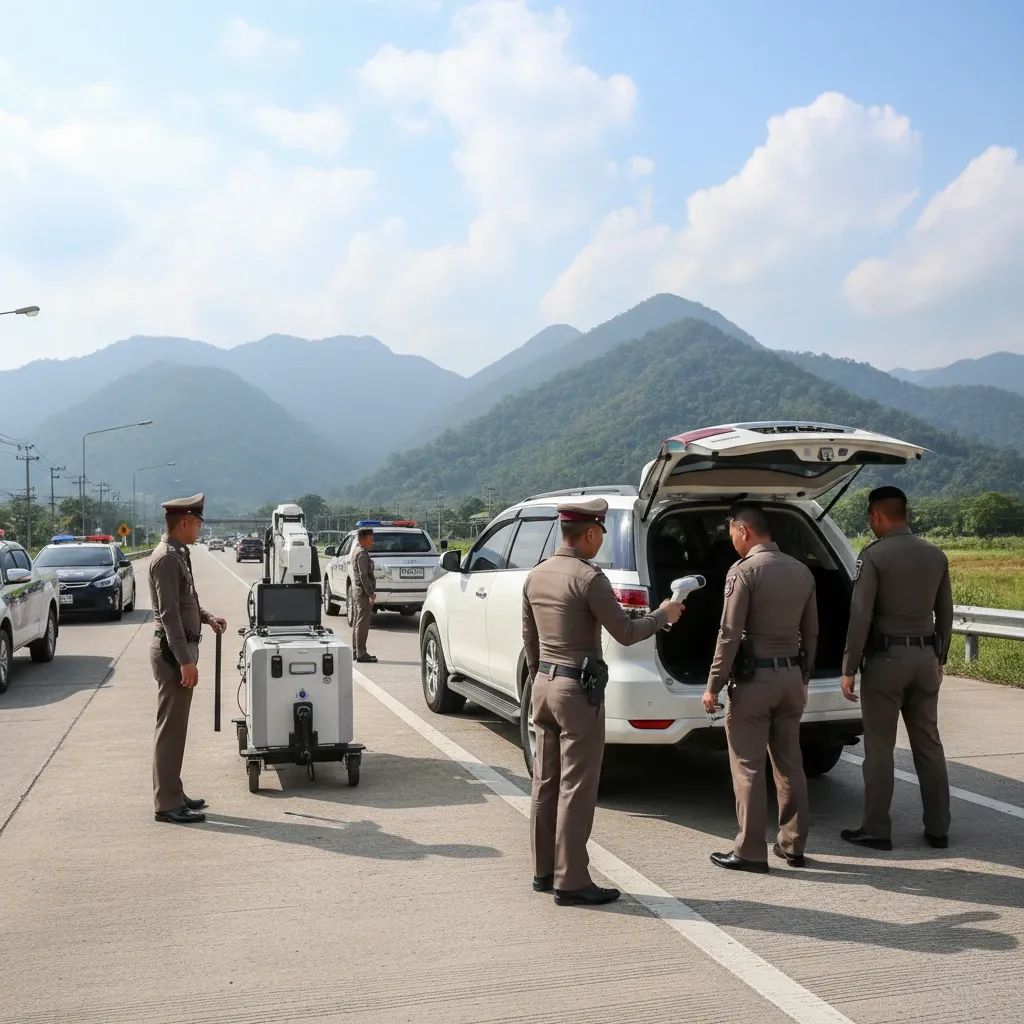
Checkpoint intensity will increase. Enhanced security measures at provincial boundaries—particularly along major transit routes linking Chiang Rai, Lampang, and Phrae—mean longer delays for routine travel. Commuters, business travelers, and logistics operators should budget additional time for vehicle inspections at checkpoints.
Community involvement in enforcement will expand. Local authorities are actively encouraging residents to report suspicious activities. Districts in border zones are implementing neighborhood awareness initiatives, which will likely increase as enforcement strategies evolve.
Border zone populations will experience heightened security presence. Increased patrols, checkpoint operations, and enforcement activity will become more visible in daily life for residents in Chiang Rai, Lampang, and Phrae provinces.
The Operational Details
Police operations unfolded simultaneously across three provinces in early March 2026. Chiang Rai Province saw multiple interdiction actions resulting in significant pill seizures. Lampang Province became a critical enforcement location, with the 320-kilogram crystal methamphetamine seizure marking a major confiscation for the region. Phrae Province yielded additional arrests and seizures of methamphetamine tablets.
The timing of simultaneous operations across all three provinces prevented suspects from receiving advance warning, disrupting trafficking logistics and forcing criminal networks to adapt their operational patterns.
The Broader Context: Myanmar Production and Thailand's Response
Myanmar remains the primary source of methamphetamine flowing into Thailand. Production capacity in Shan State—facilitated by ongoing internal political fragmentation since the 2021 military coup—continues to supply regional trafficking networks. Intelligence reports suggest that production and distribution networks have adapted to enforcement pressure by developing redundancies: backup suppliers replace intercepted shipments, and traffickers continue diversifying smuggling routes and concealment methods.
Thailand's law enforcement response has expanded beyond traditional street-level interdiction. Provincial Police Region 5 now deploys advanced technology including aerial surveillance, mobile scanning equipment at checkpoints, and digital forensics capabilities targeting online drug marketplaces. Interagency coordination has improved through data-sharing platforms linking police, customs, military intelligence, and provincial authorities.
Prosecution strategy increasingly targets higher-level syndicate organizers, financiers, and logistics coordinators rather than focusing primarily on couriers and street operatives. The ten suspects arrested in the recent operations are being questioned about their roles within larger trafficking networks.
National Context: Rising Enforcement vs. Persistent Supply
Law enforcement agencies continue reporting high seizure volumes across Thailand. The northern provinces account for a disproportionate share of national drug seizures, reflecting both geographic proximity to production zones and concentrated enforcement resources in border regions.
However, a fundamental reality persists: Myanmar's production capacity continues to supply regional demand despite Thailand's sustained interdiction efforts. Criminal networks have absorbed periodic losses as an operational cost rather than an existential threat. Whether current enforcement intensity will translate into measurable reductions in drug availability remains uncertain.
What Comes Next
Residents of northern Thailand should expect enforcement efforts to remain intensive. The Office of the Narcotics Control Board (ONCB) and regional police have committed to sustained interdiction operations. Additional checkpoints, community surveillance initiatives, and expanded treatment and prevention programs targeting vulnerable populations—particularly youth and migrant workers—will likely continue.
For residents, this represents a visible increase in government presence and security infrastructure in daily life. Movement across provincial boundaries will face greater scrutiny. Community participation in enforcement will be increasingly encouraged.
As long as demand persists in Thailand and neighboring countries and production capacity in Shan State remains active, the fundamental economic dynamics driving the narcotics trade will remain intact. Traffickers will continue adapting routes, concealment methods, and distribution networks in response to enforcement pressure. The enforcement-trafficking cycle will likely intensify further rather than resolve in the near term.


