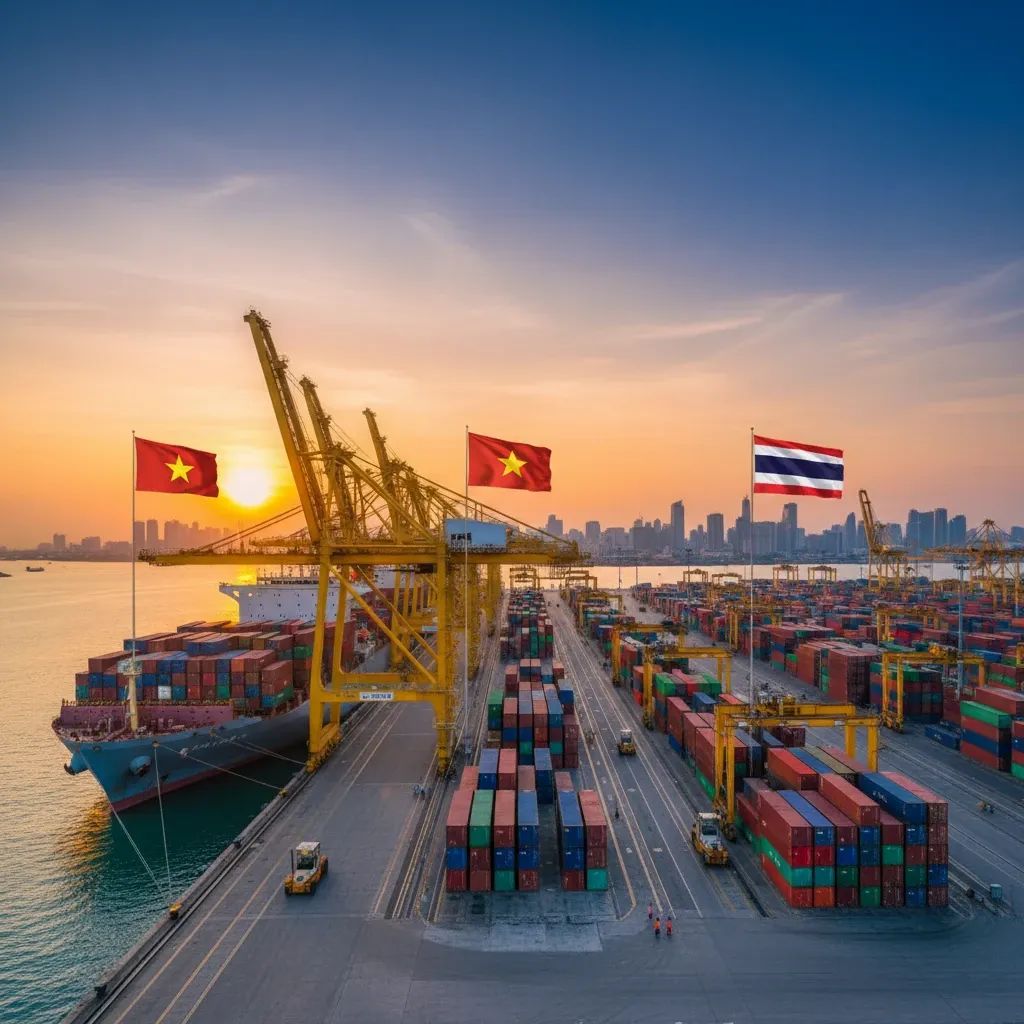
Thailand is pursuing a formal trade agreement with the European Union, with hopes that such an agreement could attract European investment and manufacturing expansion. In mid-July 2026, Prime Minister Anutin Charnvirakul convened over 40 senior executives from major European corporations at Government House to discuss potential economic collaboration between Thailand and Europe.
Why This Matters
• Tariff reductions and trade access: The EU-ASEAN regional trade framework, which entered force in April 2026, has already eliminated duties on a majority of goods across the region. A bilateral Thailand-EU agreement could provide additional protections and market access for sectors like automotive components, pharmaceuticals, and processed foods.
• Potential employment opportunities: European firms have expressed interest in expanding operations in sectors including semiconductors, life sciences, renewable energy, and digital services. These sectors typically offer higher wages and demand skilled, English-speaking professionals.
• Regulatory alignment: Thailand's pursuit of OECD membership, supported by European business leaders at the July meeting, would require Thailand to adopt international standards in areas like tax compliance, labor enforcement, and environmental regulation—affecting both foreign operators and local workers.
Thailand's Strategic Positioning
The July 16 meeting reflects Thailand's effort to position itself as an attractive investment destination for European companies. Prime Minister Anutin emphasized Thailand's focus on high-value sectors including semiconductors, artificial intelligence, renewable energy, digital infrastructure, and agriculture.
Representatives from multiple European industries attended, including pharmaceuticals, automotive, financial services, power generation, agribusiness, information technology, hospitality, and consumer products. The EU-ASEAN Business Council and European Association for Business and Commerce organized the session.
European executives acknowledged Thailand's geographic advantages as a potential supply-chain hub for ASEAN markets. Several indicated ongoing or planned capacity expansion, particularly in life sciences manufacturing, financial technology infrastructure, and automotive assembly. However, they emphasized that investment decisions would depend on Thailand following through with promised regulatory reforms.
Where FTA Negotiations Stand
Thailand and the EU are in ongoing trade negotiations to establish a bilateral free trade agreement. The EU-ASEAN regional framework provides a foundation, but bilateral discussions are addressing sector-specific issues that require direct negotiation between the two parties.
Key areas under discussion include agricultural market access, rules of origin for manufactured goods, intellectual property protection, digital trade provisions, and food safety standards. Both sides are working toward resolution of these technical issues.
Potential Impact on Thailand's Residents
For people living and working in Thailand, a completed FTA could have several economic implications:
Consumer prices: European-origin goods could potentially become more affordable if tariffs are reduced, though the extent depends on importers' pricing decisions and market competition.
Employment opportunities: European companies expanding in Thailand typically seek professionals with regulatory compliance expertise, digital infrastructure knowledge, supply-chain logistics experience, and manufacturing management skills. These positions often offer competitive compensation.
Workplace standards: Thailand's pursuit of OECD membership would require strengthened labor standards compliance and more consistent workplace safety enforcement, which could affect hiring practices and workplace conditions across industries.
Tax transparency: OECD accession would require Thailand to adopt international standards for tax administration and beneficial ownership disclosure, potentially affecting how expatriate workers and foreign investors manage tax obligations.
Sector Interest Areas
Based on the July meeting, European interest appears concentrated in several industries:
Life sciences and pharmaceuticals: European firms view Thailand as a potential hub for medicine production serving ASEAN markets, particularly if intellectual property provisions facilitate technology transfer.
Automotive manufacturing: Thailand is being considered as a regional assembly base, particularly for components and potentially electric vehicles, given existing manufacturing capacity.
Financial technology: European fintech companies are interested in accessing Thailand's banking and insurance markets through clearer regulatory pathways.
Renewable energy and sustainability: European clean energy firms are evaluating investment opportunities, though these depend on signals about Thailand's environmental policy commitment.
Agriculture and food processing: European food companies seek improved market access for Thai agricultural products, while Thailand seeks reciprocal tariff treatment.
Next Steps
Technical working sessions between Thai and EU officials are planned for the remainder of 2026, with both sides aiming for continued progress on negotiations. The outcome of these discussions will determine investment timelines and economic impacts for Thailand's residents and business community.
For residents tracking opportunities, monitoring government policy announcements, Board of Investment incentive packages, and infrastructure investment announcements will provide early indicators of which sectors Thailand's government is prioritizing.