
Myanmar's deposed leader Aung San Suu Kyi has been transferred from military prison to house arrest in Naypyidaw, marking her first change in detention status since the 2021 coup that triggered the country's ongoing civil war.
The Myanmar junta relocated the 80-year-old former civilian leader on May 1, 2026, reducing her original 33-year sentence to 18 years. The timing coincided with Kason Full Moon Day, a major Buddhist holiday. For residents across Thailand's border provinces and observers tracking Myanmar's five-year conflict, the move raises urgent questions about her actual condition and the junta's broader intentions.
Why This Matters
• Diplomatic gesture, not reform: The transfer signals the junta's desire for international re-engagement, but her 18-year sentence remains intact, meaning no genuine freedom has been granted—only a change in custody location.
• Communication blackout continues: Her legal team has been denied in-person contact since December 2022. Unconfirmed reports suggest health deterioration including low blood pressure, dizziness, and heart complications, yet no independent medical verification exists.
• Thailand's exposure: With over 176,000 Myanmar refugees already sheltered in neighboring countries and displacement projections climbing toward 4 million internally, the lack of political progress in Myanmar directly affects regional stability, cross-border security, and humanitarian resources across Thai frontier zones. Border residents in provinces like Mae Hong Son and Tak face heightened security alert status, while importers dependent on Myanmar trade routes through Mae Sot and Ranong checkpoints confront ongoing supply chain volatility.
The Government's Framing Versus Reality
State television footage released after the transfer showed the former Nobel Peace laureate seated at a table wearing traditional dress, flanked by military and police officials. Yet the military provided no timestamp, location specifics, or date confirmation for the photograph. Her son, Kim Aris, immediately stated that her relocation does not constitute freedom when communication remains restricted and her sentence persists.
The junta's official statement described the action as demonstrating "state kindness" and "humanitarian concern." International observers, however, characterized it as calculated public relations during a period when the military faces mounting criticism over controversial elections and territorial losses. ASEAN, Myanmar's regional bloc, had excluded the junta from summit participation for years, creating diplomatic isolation the government seeks to remedy.
Proof of Life Concerns Intensify
Her son launched a formal campaign in April demanding verifiable evidence of her current health and whereabouts after no confirmed information emerged for five years. Since her last documented court appearance in May 2021, officials have restricted all independent access to the detained leader. Unverified 2024 and 2025 reports suggested serious medical deterioration, but the military refused to permit medical examinations or release health records.
Her legal representatives planned to visit her residence on May 3, 2026—potentially marking their first face-to-face encounter since December 2022. They intended to deliver medicine, food supplies, and conduct their own assessment of her physical and psychological state. The outcome of that meeting would likely determine whether family members and international observers accept the official narrative or intensify demands for her unconditional release.
Why the Timing Matters: Political Calculation
The sentence reduction and transfer occurred amid the junta's heaviest territorial losses since the 2021 coup. Pro-democracy forces aligned with ethnic armed groups control approximately 42% of Myanmar's territory, according to conflict monitoring organizations, while military forces hold only 21%. The People's Defense Forces, backed by groups like the Arakan Army and Myanmar National Democratic Alliance Army, continue advancing toward the commercial hub of Mandalay.
By making a symbolic gesture toward Suu Kyi, the newly inaugurated President Min Aung Hlaing signaled flexibility ahead of 2026 regional diplomacy. Simultaneously, the junta launched aggressive conscription drives and reorganized its military hierarchy to prepare counter-offensives across Sagaing, Magway, Kayah, and northern Shan regions. Military analysts noted that the Suu Kyi transfer occurred alongside intensified battlefield operations across multiple fronts.
The Civil War's Accelerating Toll
March 2026 recorded significant civilian casualties in the five-year conflict, with conflict monitoring organizations documenting deaths through airstrikes and artillery bombardment. The military has systematically targeted schools, hospitals, displacement camps, and civilian infrastructure. Death tolls now exceed 96,000 across all parties, with substantial civilian losses documented by humanitarian organizations.
A devastating 7.7-magnitude earthquake in March 2025 compounded the humanitarian crisis, killing 3,745 and injuring over 5,000 in a healthcare system already crippled by warfare. The military's deliberate use of landmines has rendered vast agricultural zones unusable and blocked humanitarian access routes, contributing to Myanmar's ranking among nations with the highest landmine casualty rates.
The National Unity Government, the shadow administration formed by ousted lawmakers, continues coordinating resistance efforts while demanding Suu Kyi's unconditional release alongside 20,000 other political detainees still imprisoned by the junta.
What This Means for Thailand Residents
Thailand's border stability remains directly connected to Myanmar's trajectory. The country hosts approximately 150,000 Rohingya fleeing recent violence, while 176,000-182,000 Myanmar nationals shelter across the region. Projections suggest that figure could climb significantly by year-end.
For residents in Thailand's border provinces—particularly Mae Hong Son, Tak, and Ranong—the implications are immediate and tangible:
• Cross-border trade volatility: Commerce through Mae Sot has fluctuated with territorial control shifts, directly affecting prices for jade, teak, and agricultural products in Thai markets. Supply chain disruptions impact wholesale costs that eventually reach Thai consumers.
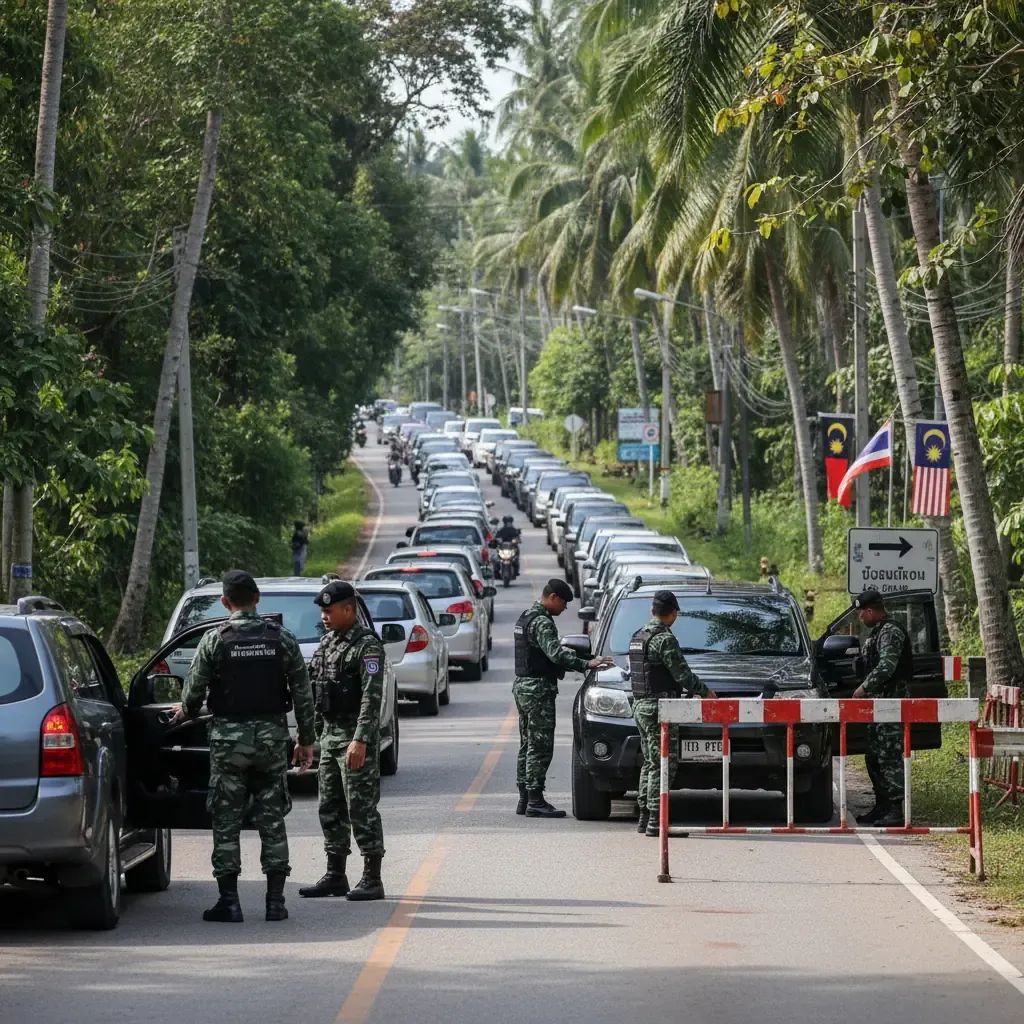
• Security alert protocols: Thai military installations in frontier provinces maintain heightened alert status amid artillery exchanges and territorial shifts. Residents near border checkpoints should monitor travel advisories and cross-border commerce restrictions.
• Immigration and visa monitoring: Thailand's immigration system continues managing refugee pressure. Border residents should remain aware of policy adjustments affecting cross-border movement and work permits for Myanmar nationals.
• Investment uncertainty: Any Thai businesses with Myanmar operations or supply chain dependencies face sustained volatility because no faction currently controls sufficient territory to guarantee stable operations.
Neither the junta's gesture toward Suu Kyi nor the military's battlefield challenges signal imminent resolution. Thailand's immigration system continues absorbing refugee pressure, while security planners manage ongoing risks of displaced persons and security issues across the porous frontier.
International Response: Skepticism Dominates
UN Secretary-General António Guterres characterized the sentence reduction through official channels, diplomatic language that stopped short of endorsing the junta's actions. Behind cautious international framing lies widespread skepticism.
Amnesty International and Human Rights Watch described the transfer as a public relations effort designed to legitimize military rule and secure international cover for elections widely criticized as rigged and anti-democratic. The National Unity Government rejected the announcement entirely, reiterating demands for unconditional release of all 20,000 political prisoners currently held by the regime.
The documented reality remains: moving a prisoner from a cell to a house does not constitute political reform when the sentence persists, communication is forbidden, and thousands of others remain indefinitely detained.
The Long Arc: From Democratic Promise to Detention
Suu Kyi spent 15 years under house arrest during prior military regimes between 1989 and 2010. Her National League for Democracy triumphed in elections during 2015 and 2020, returning Myanmar to quasi-civilian governance. Yet a constitution reserved 25% of parliamentary seats for the military and granted veto power over amendments—provisions the Tatmadaw exploited when it rejected the 2020 landslide and seized power in February 2021.
The Spring Revolution resistance movement emerged in response, evolving from street protests into an armed insurgency that now challenges the military across multiple fronts. Opposition groups coordinate through the Spring Revolution Alliance and National Unity Government, though discipline and supply logistics remain strained after five years of conflict.
Her charges—spanning corruption, election violations, official secrets breaches, and pandemic protocol violations—have drawn universal condemnation from international legal observers as politically motivated prosecutions designed to permanently exclude her from political life.
The Geometry of Stalemate
The junta controls only 21% of territory while rebel and ethnic forces hold 42%, with contested zones comprising the remainder. The Arakan Army dominates Rakhine State following recent developments, though ceasefire agreements were reached in certain regions in late April 2026. Battles continue in Sagaing, Magway, and Mandalay approaches as pro-democracy forces consolidate gains.
Over 15 million Myanmarese—nearly one-third of the population—face acute food insecurity due to military blockades, displacement, and agricultural disruption. Humanitarian organizations report severe access restrictions, with the junta imposing bureaucratic obstacles and denying entry to opposition-held zones.
Suu Kyi's relocation to house arrest reflects Myanmar's broader condition: a nation where nominal gestures substitute for substantive reform, where the conflict grinds forward without resolution, and where the status quo persists. Her legal team's visit in early May 2026 may reveal her actual physical condition for the first time in years. Until then, the internationally recognized symbol of Myanmar's democratic aspirations remains without independent verification of her wellbeing, while the country she once led faces continued instability that directly affects Thailand's border security and residents' daily lives.


