
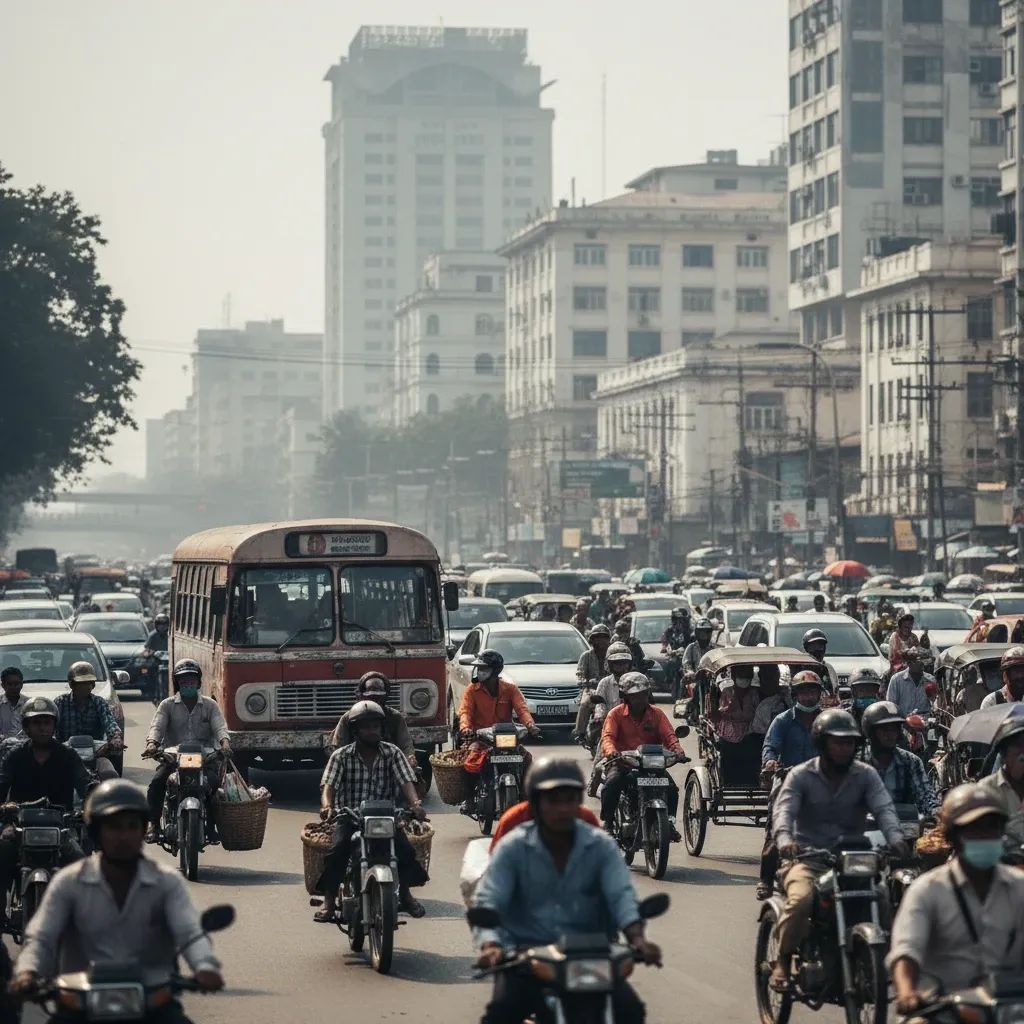
Myanmar's military government has relocated former democratic leader Aung San Suu Kyi from prison to supervised house arrest in Naypyidaw, the capital. The 80-year-old's sentence was reduced from 33 years to 18 years following a prisoner amnesty tied to Buddhist observances. For Thailand, which shares extensive border regions and humanitarian concerns with Myanmar, this development carries immediate implications for refugee management, regional diplomacy, and the stability of cross-border communities.
Why This Matters
• Border implications: The Thailand-Myanmar frontier has absorbed thousands of displaced people since the 2021 coup. Current estimates suggest over 85,000 Myanmar refugees reside in Thai border provinces. Any political shift in Myanmar directly influences refugee flows into provinces like Tak, Mae Hong Son, and Chiang Rai, affecting provincial resources and security operations. Key trade checkpoints at Mae Sod and Mae Sai continue operating at reduced capacity due to instability.
• Proof-of-life concerns: Suu Kyi's legal team has not confirmed direct contact since December 2022. Her son Kim Aris publicly questions both her health status and whether international observers can verify her actual conditions under house arrest.
• Economic connectivity: Infrastructure projects worth billions, including cross-border trade corridors, remain frozen pending political clarity. The East-West Economic Corridor, which would connect Thailand to Myanmar and beyond, remains suspended. Even modest signs of governance reform could unlock market access worth hundreds of millions annually for Thai businesses.
The Detention Timeline and Its Legal Architecture
Suu Kyi has endured detention continuously since the Myanmar Armed Forces dismantled her government on February 1, 2021. Over subsequent months, military prosecutors constructed charges including election fraud incitement, corruption allegations, telecommunications law violations, and state secrecy breaches. By late 2022, her sentence reached 33 years—a term that international observers widely characterize as engineered to eliminate her political viability.
The first formal reduction occurred in 2023 when amnesty proceedings cut her term to 27 years. In April 2026, the junta announced prisoner releases connected to Buddhist holidays, reducing her obligation by approximately one-sixth. Her current obligation stands at roughly 18 years, though the junta maintains discretion over application of remaining terms.
The Myanmar Armed Forces officially framed the house arrest transfer as a humanitarian gesture, citing protection from Myanmar's extreme heat (temperatures routinely exceed 40°C). Yet the timing suggests additional motivations linked to international and regional pressures against the regime.
Family Isolation and Unverified Health Claims
Details about Suu Kyi's actual physical condition remain closely guarded. Reports from 2024 and 2025 alleged she suffered from low blood pressure, dizziness, and cardiac complications, but no independent medical verification has been possible. Her youngest son, Kim Aris, has received only sporadic, informal updates and has not maintained direct communication with his mother in years.
A photograph released this week by Myanmar state media represents the first widely distributed public image of the former leader in approximately three years. Aris challenged the photograph's reliability, suggesting it may have been captured years earlier and released strategically. He continues demanding verifiable evidence—what international humanitarian organizations call "proof of life"—confirming his mother's current well-being and her capacity to communicate freely.
Her legal representatives have been excluded from access since late 2022, preventing any independent assessment of her medical status or genuine terms of confinement.
Practical Consequences for Thailand and Its Neighbors
The implications ripple across Thailand's administrative and economic landscape in concrete ways:
Northern provinces absorb refugee pressure: Tak Province has shouldered particular strain since 2021. Current refugee camps house approximately 35,000 people, with informal settlements adding thousands more. Administrative capacity, school enrollment, healthcare resources, and job competition have all intensified. The provincial hospital in Tak has expanded medical services specifically to handle refugee healthcare demands. Political movement in Myanmar directly shapes how many people seek Thai territory and for how long.
ASEAN diplomatic calculation: The Association of Southeast Asian Nations has maintained a complex position toward Myanmar. Thailand's Ministry of Foreign Affairs released a statement welcoming the sentence reduction and expressing optimism about "further constructive measures leading toward her eventual release." This rhetoric signals Bangkok's preference for incremental engagement, a posture that influences the bloc's collective stance and affects how Thai businesses operate in the region.
Trade corridor stagnation: The East-West Economic Corridor connecting Thailand, Myanmar, Laos, and Vietnam remains suspended. Mae Sod and Mae Sai border checkpoints operate at reduced capacity. Foreign investors withhold capital commitments; Thai businesses defer cross-border expansion. A credible political opening could unlock market access worth hundreds of millions annually for Thai enterprises, yet continued political imprisonment freezes that opportunity. Thai traders currently face increased operating costs and delayed shipments due to unpredictable border conditions.
Cross-border security operations: Thailand's security apparatus monitors ethnic armed organizations along the Myanmar frontier. Stability in Myanmar's capital suggests negotiation spaces may open; continued repression suggests fragmentation will persist. Military planners must prepare for multiple scenarios, affecting troop deployments, intelligence sharing arrangements, and operational readiness along the border region.
Impact on Thai nationals: Thai citizens and long-term residents working in Myanmar face ongoing uncertainty. Some international schools and businesses have implemented contingency evacuation plans. Travel advisories from Thailand's Ministry of Foreign Affairs recommend heightened caution near the Myanmar border.
Understanding the Junta's Strategic Calculation
The military regime's decision reflects convergence of structural pressures. Beijing maintains Myanmar as a critical strategic asset and has reportedly encouraged gestures that could stabilize the country and protect Chinese infrastructure investments. Internally, ethnic armed organizations and pro-democracy movements have regained territorial footholds, stretching military logistics and forcing reassessment. Externally, the junta's isolation deepens—Western governments maintain sanctions, the United Nations calls for prisoner releases, and regional bodies restrict participation.
Moving Suu Kyi to house arrest permits the regime to claim moderation without ceding power. It generates international oxygen for legitimacy while maintaining her exclusion from political participation. The strategy functions as controlled concession rather than genuine reform.
Echoes of History and Present Ambiguity
Suu Kyi experienced house detention under previous Myanmar military regimes between 1989 and 2010, totaling more than 15 years confined within her family compound in Yangon. Her current legal circumstance differs structurally—the junta constructed formal trials and sentencing, complicating future release efforts without appearing to acknowledge judicial error.
Critically, even confined to house arrest, she remains legally severed from her political party, the National League for Democracy, which the junta dissolved. She cannot communicate with party members, engage in political activity, or participate in governance discussions. These conditions preserve the military's objective of eliminating her as a political entity regardless of her physical location.
The specific location, security arrangements, visitor protocols, and communication access under house arrest remain undisclosed. This opacity feeds legitimate skepticism about whether the arrangement represents substantive change or strategic performance designed to ease international pressure.
The Immediate Road and Broader Implications
Scheduled meetings between Suu Kyi and her legal team remain unconfirmed. Previous commitments regarding access have been withdrawn without notice. Should contact proceed, lawyers will conduct preliminary health assessments and clarify confinement terms.
For Thailand, the calculus demands careful attention. Border humanitarian workers require predictable conditions; business interests contemplate reopened Myanmar markets; security officials prepare for scenarios ranging from gradual political transition to escalated civil conflict. The Thai Cabinet and military leadership have adopted cautious neutrality, balancing ASEAN solidarity with pragmatic border administration.
Thai residents near the border should monitor official advisories from provincial authorities and international organizations for updates on refugee movements and travel conditions. Those with business interests in Myanmar should consult with their industry associations regarding contingency planning.
An 80-year-old woman moved from one form of detention to another in Myanmar's capital reverberates across regional politics, international diplomacy, and humanitarian operations. Her situation tests whether Myanmar's generals will negotiate genuine political settlement, whether regional diplomatic pressure can compel meaningful concessions, and whether the international system will accept staged gestures as substitute for accountability. For now, Suu Kyi remains constrained—her sentence lighter, her confinement less visible, her freedom still measured in years rather than achieved in reality.


