
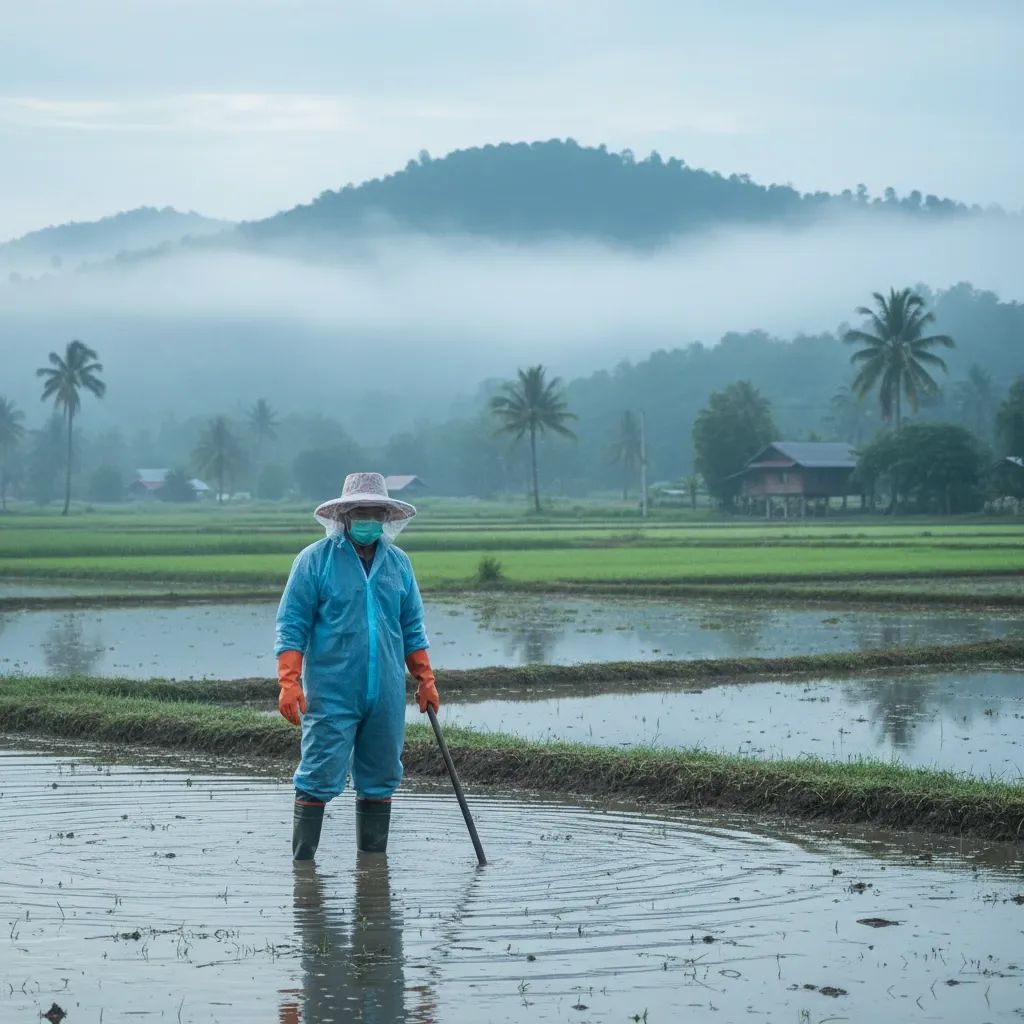
The Thailand Ministry of Public Health has confirmed 732 melioidosis infections and 23 deaths nationwide between January 1 and mid-April 2026, with the bacterial disease proving especially lethal for those over 50 and patients with chronic conditions. The fatality rate hovers around 30-35% in general hospitals, making early recognition and treatment a matter of survival.
Why This Matters
• Geographic spread: While the Northeast remains the epicenter, cases now appear in the lower North, East, and South regions—no longer confined to traditional hotspots.
• High-risk demographics: Farmers, outdoor workers, and anyone with diabetes, kidney disease, or liver conditions face severe complications if infected.
• Treatment urgency: Delayed diagnosis pushes mortality above 40%; prompt intravenous antibiotics can save lives, but require 3-6 months of follow-up oral medication to prevent relapse.
• Seasonal exposure: Rice planting season and the current rains amplify contact with contaminated soil and standing water, precisely where Burkholderia pseudomallei thrives.
Northeast Provinces Bear the Brunt
Health Region 9—encompassing Nakhon Ratchasima, Buriram, Surin, and Chaiyaphum—reported 129 cases and 8 deaths through April 17. Nakhon Ratchasima recorded the steepest toll: 31 infections and 4 fatalities. Chaiyaphum logged 16 cases with 3 deaths, while Buriram saw 48 infections and 1 death. Surin counted 34 cases but, so far, no deaths.
In Health Region 7, which includes Khon Kaen, 68 infections and 2 deaths have been documented. Deputy government spokesperson Lalida Periswiwatana emphasized that most patients are over 50, an age bracket already contending with elevated diabetes prevalence and diminished immune resilience. The overlap of age, chronic disease, and agricultural livelihoods creates what epidemiologists describe as a "perfect storm" for transmission.
Thailand's Northeast has always been melioidosis country—wet paddy fields, seasonal flooding, and red laterite soils form ideal reservoirs for the bacterium. Yet the 2026 case count suggests intensification rather than containment, with annual infections climbing from roughly 3,500 in 2022 to above 4,000 in 2023 and holding steady this year despite heightened awareness campaigns.
What This Means for Residents
If you farm, garden, fish in ponds, or work construction in rural areas, melioidosis is not a distant threat—it is in the soil beneath your feet and the puddles you wade through. The bacterium enters through cuts, abrasions, or inhalation of contaminated dust; ingestion of tainted water also poses risk. Symptoms mimic common infections: high fever, muscle aches, cough with phlegm, and breathing difficulty. Skin abscesses or wounds that fail to heal can signal localized infection, while septicemia—bloodstream invasion—triggers shock and organ failure within days.
Diabetes patients carry the highest risk. Elevated blood sugar impairs white-cell function, allowing Burkholderia pseudomallei to proliferate unchecked. Kidney disease, liver cirrhosis, chronic lung conditions, thalassemia, and any immune-suppressing therapy compound vulnerability. If you fit these profiles and develop fever persisting beyond 48 hours, seek hospital care immediately. Delay often proves fatal.
Standard treatment begins with intravenous ceftazidime or a carbapenem (meropenem, imipenem) for 10-14 days, sometimes extending to eight weeks in severe cases. Once stable, patients transition to oral co-trimoxazole—a combination of trimethoprim and sulfamethoxazole—for three to six months. Skipping or shortening this eradication phase invites relapse, though a 2024 Northeast study found recurrence in only 2% of compliant patients.
Hospital Preparedness and Diagnostic Hurdles
University hospitals achieve mortality rates of 10-20%, while provincial general hospitals sit at 30-35%—a gap explained by faster laboratory confirmation and ICU capacity. A 2022 survey across 111 hospitals identified 4,407 culture-confirmed melioidosis patients, of whom 1,219 died in-hospital, yielding a 27.7% case-fatality rate. Digital surveillance by the Thailand Department of Disease Control logged 4,157 cases and 133 deaths in 2024, translating to a reported 3.2% fatality rate—yet experts caution that figure understates reality because many rural deaths escape formal reporting and delayed diagnoses miss the window for culture.
Diagnosis remains a bottleneck. Melioidosis symptoms overlap with pneumonia, tuberculosis, and dengue; only blood or tissue culture definitively identifies Burkholderia pseudomallei, and results take days. Physicians in high-incidence zones now treat empirically when risk factors align—recent soil exposure, diabetes, fever plus respiratory distress—buying time until lab confirmation arrives.
Community hospitals and health-promotion units (Tambon Health Stations) have ramped up case-detection protocols, instructing staff to flag any patient over 50 with unexplained fever and agricultural exposure. Rapid-access pathways to ceftazidime infusions can cut mortality, but availability varies: remote districts sometimes lack stocks, and referrals to provincial centers delay treatment by critical hours.
Prevention in Practice
Public-health messaging across the Northeast stresses physical barriers and hygiene. Farmers entering flooded paddies should wear rubber boots and gloves; a study in Ubon Ratchathani—the province with the highest 2023 incidence—found that consistent boot use reduced infection risk by more than half. After fieldwork, wash hands and feet with soap immediately; do not wait until evening. Open wounds demand antiseptic cleaning and waterproof dressing before any soil contact.
Drink only boiled or bottled water. Rainwater catchments, well water, and even municipal taps in rural areas can harbor the bacterium. Uncooked vegetables rinsed in contaminated water also pose ingestion risk; blanching or cooking eliminates the threat.
For diabetics, tight glucose control is non-negotiable. Hemoglobin A1c above 7% correlates with worse outcomes in melioidosis cohorts. Regular clinic visits, medication adherence, and dietary discipline directly influence survival if infection occurs. Similarly, heavy alcohol use and smoking undermine lung and liver defenses; cessation programs are now bundled into melioidosis education drives in endemic provinces.
The Rainy-Season Calculus
April through October—rice-planting and monsoon months—historically concentrate infections. This year's early rains have already swelled case numbers, and the Thailand Meteorological Department forecasts above-average precipitation through June across the Northeast plateau. Flooded fields mean prolonged skin contact with mud; gusty storms aerosolize soil particles, raising inhalation risk even for those indoors near agricultural zones.
Construction sites face similar hazards. Excavation, foundation digging, and road grading in laterite soils release bacterial spores; migrant laborers, often unaware of melioidosis, work barefoot or in sandals, sustaining cuts from rebar, stones, and machinery. Occupational-health inspectors in Nakhon Ratchasima and Khon Kaen have begun distributing free boots and first-aid kits at large sites, while billboards in construction zones illustrate wound-cleaning protocols.
Remaining Gaps and Future Outlook
Despite decades of research—Thailand's melioidosis mortality dropped from 60-70% before ceftazidime adoption in 1989 to today's 30-35%—the disease still kills one in three hospitalized patients. A November 2022 cohort study in the Northeast found 25% died within one month and 34% within a year, underscoring the bacterium's tenacity and the challenge of managing co-morbidities.
Vaccine development remains distant. Burkholderia pseudomallei evades immune memory through antigenic variation, and no candidate has progressed beyond Phase II trials. Prophylactic antibiotics for high-risk groups—a strategy floated in scientific circles—faces resistance concerns and cost barriers in a middle-income health system already stretched by dengue, leptospirosis, and emerging vector-borne threats.
Public-health authorities pin hopes on behavioral change and surveillance. The Thailand Disease Control Department is piloting a smartphone app that alerts farmers to rainfall thresholds correlated with spike periods, suggesting rest days or extra protective gear. Community health volunteers in Surin and Buriram distribute laminated cards listing symptoms in Isan dialect, aiming to bypass literacy gaps and encourage early hospital visits.
Provincial governments have earmarked budgets for free diagnostic cultures at district hospitals, removing the out-of-pocket cost—often 1,200-1,500 baht—that deterred low-income patients from confirmatory testing. Expanding this program nationwide could narrow the reporting gap and improve treatment timeliness.
Practical Takeaways
• If you work outdoors regularly: Invest in knee-high rubber boots (200-400 baht) and waterproof gloves. Clean cuts immediately with antiseptic and cover with waterproof bandages.
• Diabetics and chronic-disease patients: Avoid fieldwork during floods if possible; if unavoidable, wear full protective gear and monitor for fever daily.
• Parents and caregivers: Do not let children play barefoot in puddles or mud during the rainy season, especially in rural areas.
• Fever lasting 48+ hours: Go to the nearest hospital with laboratory facilities. Mention any recent soil or water exposure to the attending physician.
• Employers: Provide boots, gloves, and on-site handwashing stations for agricultural and construction workers; budget for immediate clinic visits if workers report fever.
Melioidosis will not vanish from Thailand's landscape—the bacterium is endemic, woven into the ecology of rice culture and monsoon rhythms. What can change is the speed of recognition, the consistency of protection, and the willingness to treat every persistent fever in a farmer as a medical urgency rather than a passing ailment. The 23 deaths so far this year represent not just statistics, but preventable losses in families and villages that can ill afford them.


