
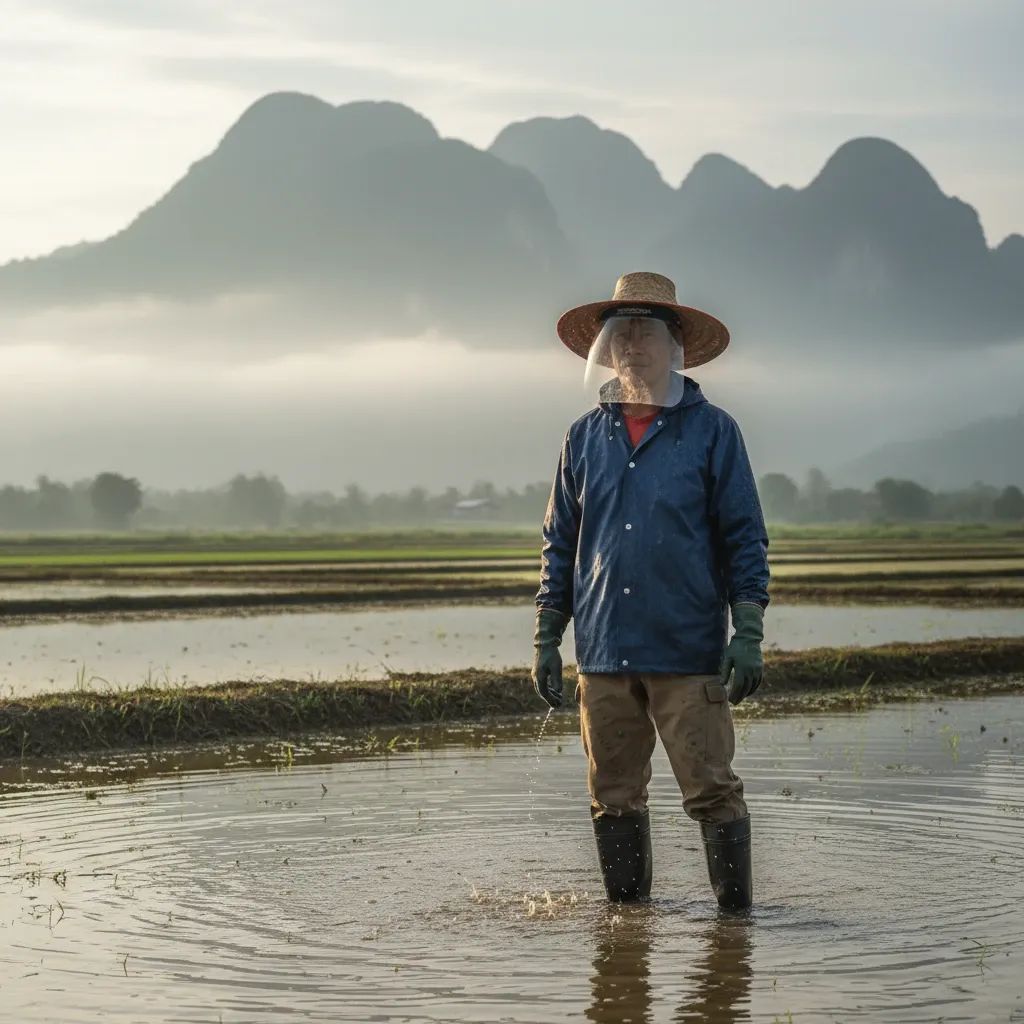
Thailand's Ministry of Public Health has issued urgent warnings to agricultural workers in Chiang Rai and across the northern provinces as the 2026 rainy season intensifies, marking a critical period for melioidosis—a bacterial infection nicknamed "soil fever" that has already claimed 23 lives nationwide this year and infected more than 730 people between January and mid-April.
The disease, caused by the bacterium Burkholderia pseudomallei lurking in wet soil and stagnant water, poses an especially grave threat to rice farmers, field laborers, and anyone whose work brings them into prolonged contact with mud and irrigation channels. With monsoon rains now swelling paddies and softening earth across the northern provinces, health authorities are racing to prevent what could become a deadly outbreak among the country's most vulnerable rural workforce.
Why This Matters
• Infection surge: Thailand recorded 732–772 cases in the first four months of 2026, with fatalities concentrated among diabetics and workers over 50.
• Peak danger period: The rainy season (May–December) dramatically increases bacterial spread in soil and water.
• High-risk occupation: Farmers account for the majority of infections due to barefoot fieldwork and open wounds exposed to contaminated mud.
• Rapid progression: Untreated cases can deteriorate into septic shock and death within 24–48 hours.
The Silent Imitator in the Paddies
Melioidosis has earned its reputation as a "master of disguise" among infectious diseases. Early symptoms—high fever, body aches, persistent cough—mirror common flu or pneumonia, leading many patients to delay seeking care until the infection has spread to internal organs. The bacterium thrives in Thailand's tropical clay soils, particularly in the north and northeast, where rice cultivation dominates the landscape.
The pathogen enters the body through three primary routes: open cuts and abrasions on skin softened by hours of submersion in paddy water; inhalation of dust particles kicked up during plowing or storms; and ingestion of untreated water from natural sources. For farmers who spend dawn-to-dusk shifts bent over in flooded fields, often without protective footwear, the cumulative exposure can be catastrophic.
Thailand's Disease Control Department reports that approximately 90% of melioidosis fatalities involve patients with underlying diabetes, a condition that compromises the immune system's ability to fight the aggressive bacterium. Chronic kidney disease, liver disorders, thalassemia, and immune deficiencies similarly elevate risk, making the aging agricultural workforce—many in their 50s and 60s—particularly vulnerable.
What This Means for Chiang Rai Residents
While national statistics dominate health bulletins, Chiang Rai province faces unique exposure patterns. The region's extensive rice terraces, combined with its mountainous terrain that channels rainwater into valley basins, create ideal breeding grounds for Burkholderia pseudomallei. Local health offices reported confirmed cases during the 2025 season, and officials expect numbers to climb as the 2026 monsoon intensifies through July and August.
Farmers in districts with heavy clay soils—particularly those growing wet-season rice—should treat the coming months as a high-alert period. The bacterium can survive in soil for decades, meaning fields that have never shown obvious contamination may still harbor dangerous concentrations, especially after prolonged dry spells followed by sudden heavy rains that disturb settled soil layers.
Urban and semi-urban residents are not immune. Construction workers, gardeners, and anyone engaging in outdoor activities involving soil contact during or immediately after rainstorms face measurable risk. The bacterium can be aerosolized by wind and rain, allowing infection through inhalation even without direct skin contact.
Protecting Yourself: Seven Non-Negotiable Rules
Thailand's Disease Control Department has issued explicit guidelines for high-risk workers and rural communities. Compliance is not optional—these measures represent the only effective defense against a disease with no vaccine and a mortality rate that climbs sharply with delayed treatment.
1. Barrier Protection is Mandatory
Rubber boots extending above the ankle, waterproof gloves, and long trousers form the minimum protective ensemble for any paddy work. The bacterium penetrates skin within minutes of contact with contaminated mud, especially through micro-abrasions invisible to the naked eye. Canvas shoes and rolled-up trouser legs offer zero protection.
2. Immediate Post-Exposure Hygiene
Waiting until evening to wash off field mud multiplies infection risk. Health authorities stress the importance of on-site washing stations at field edges, using clean running water and antibacterial soap to scrub exposed skin within 30 minutes of leaving the paddy. Focus on feet, calves, hands, and forearms—the primary contact zones.
3. Wound Management Protocols
Any cut, scrape, or blister, no matter how minor, must be cleaned with antiseptic solution and covered with waterproof adhesive bandages before fieldwork. Never apply traditional herbal poultices or soil-based remedies to open wounds—a practice still common in some rural communities that directly introduces bacteria into tissue. If an existing wound shows redness, swelling, or discharge, cease fieldwork entirely until it heals.
4. Footwear at All Times
The prohibition on barefoot walking extends beyond paddy fields to village paths, garden plots, and any outdoor surface during the rainy season. Children playing in muddy areas represent a secondary vulnerable population that families must monitor closely.
5. Water and Food Safety
Drink only boiled or commercially bottled water. Avoid raw vegetables washed in untreated water, and ensure all meat and fish are thoroughly cooked. Street food vendors near agricultural areas may inadvertently contaminate produce with soil particles—choose establishments with visible hygiene practices.
6. Dust and Storm Avoidance
Strong winds and heavy downpours can lift contaminated soil particles into the air. Farmers should postpone non-essential outdoor work during storms and use face masks rated for particulate filtration when working in dusty conditions immediately after rain.
7. Diabetic Vigilance
Patients managing diabetes must maintain strict blood sugar control during the rainy season. Elevated glucose levels dramatically impair immune response, transforming a moderate bacterial load into a life-threatening infection. Regular monitoring and medication compliance are as critical as physical protective measures.
Recognizing the Warning Signs
The window for effective treatment narrows rapidly once symptoms begin. Anyone with recent soil or water exposure who develops fever lasting more than 48 hours should seek immediate medical attention, even if other symptoms seem mild. Do not wait for dramatic deterioration.
Secondary warning signals include persistent cough with thick or bloody sputum, chest pain, difficulty breathing, visible abscesses or boils on skin, joint swelling, and unexplained abdominal pain. Melioidosis can manifest as localized skin infection, pneumonia, deep tissue abscesses in liver or spleen, or fulminant sepsis—each requiring specific diagnostic approaches.
When visiting a clinic or hospital, explicitly inform medical staff of your occupation and recent fieldwork. Many rural health centers still lack familiarity with melioidosis presentation, and delays in recognizing the disease allow it to progress to organ failure. Blood cultures and molecular diagnostic tests can confirm infection, but treatment with appropriate antibiotics—typically ceftazidime or meropenem—should begin immediately based on clinical suspicion rather than waiting for laboratory confirmation.
The Treatment Marathon
Surviving melioidosis requires not just acute-phase hospitalization but a grueling 12–20 week course of oral antibiotics, typically co-trimoxazole, to prevent relapse. The bacterium has a notorious ability to hide in tissue and resurface months after apparent recovery. Patients who discontinue antibiotics prematurely face recurrence rates exceeding 20%, often with more aggressive presentation.
Hospital stays for severe cases can extend several weeks, imposing crushing financial burdens on agricultural families already operating on thin margins. While Thailand's Universal Coverage Scheme covers treatment costs at government hospitals, lost income during illness and convalescence can devastate household economies. This economic reality often drives premature return to fieldwork and medication non-compliance—precisely the behaviors that fuel relapse and mortality.
Regional Context and Long-Term Outlook
Thailand ranks among the world's highest-burden countries for melioidosis, alongside Myanmar, Laos, Cambodia, and northern Australia. The disease's endemic nature across Southeast Asia reflects both environmental factors—acidic soils, monsoon climate patterns—and socioeconomic realities that keep millions working in agriculture without adequate protective equipment or healthcare access.
International research collaborations have produced improved diagnostic tools and refined antibiotic regimens, dropping mortality rates from historical highs above 40% to current figures around 10–15% in well-resourced settings. However, rural Thailand's figures remain elevated, particularly in provinces where patients delay seeking care or present to facilities lacking intensive care capabilities.
No vaccine exists, and prospects for immunization remain distant given the bacterium's genetic complexity. Australian health authorities have explored prophylactic antibiotic regimens for high-risk workers during peak exposure periods, but Thailand's health system has not adopted this approach due to concerns about antibiotic resistance and logistical challenges in reaching dispersed farming populations.
Taking Action Now
The Ministry of Public Health's 24-hour hotline at 1422 provides consultation in Thai and can direct callers to the nearest facility equipped for melioidosis diagnosis and treatment. Provincial health offices in Chiang Rai have distributed informational materials to village health volunteers and agricultural cooperatives, but awareness gaps persist, particularly among migrant workers and elderly farmers with limited literacy.
Community-level interventions—shared protective equipment purchases, peer education programs, and mobile health screening during peak planting seasons—represent the most scalable approaches to reducing infection rates. Non-governmental organizations working in rural health have begun incorporating melioidosis awareness into existing programs, but funding remains inadequate relative to disease burden.
For individual farmers, the calculus is stark: a ฿200 investment in quality rubber boots and gloves, combined with disciplined hygiene practices, can prevent a catastrophic illness that destroys livelihoods and kills. As monsoon rains intensify across northern Thailand in coming weeks, that equation deserves urgent attention from everyone whose work or life brings them into contact with the region's rich, wet, and potentially deadly soil.


