
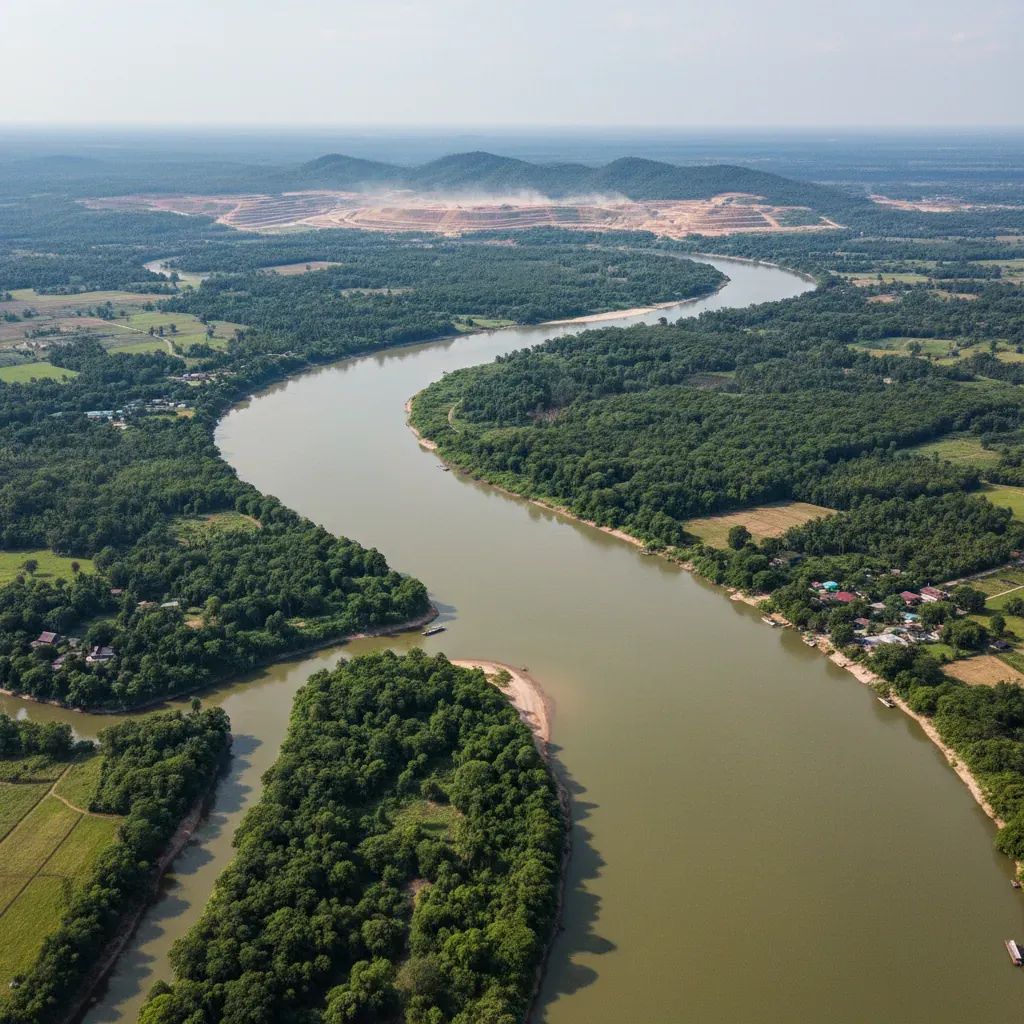
The Mekong River Commission and regional environmental groups have raised concerns about environmental degradation along Southeast Asia's lifeline waterway, warning that continued dam construction and mining operations pose significant risks to communities across the region.
The convergence of hydroelectric infrastructure and rare-earth extraction—primarily in Myanmar's Shan State and Laos—has created environmental pressures threatening millions of people across six nations, including Thai citizens dependent on Mekong tributaries for agriculture, fishing, and drinking water.
Why This Matters
• Health concerns: Contamination has been detected in multiple Thai border provinces, including Chiang Rai and Chiang Mai, where tributaries like the Kok and Sai rivers feed into local water systems.
• Economic impact: Thai fishermen report declining catch volumes along border zones, with some species experiencing population pressures.
• Energy infrastructure: Thailand purchases electricity from Lao dams—including Xayaburi, Pak Beng, and Luang Prabang—creating infrastructure that affects sediment flow and downstream conditions.
• Border considerations: Dam-induced changes to the Mekong's hydrological patterns could have implications for the Thai-Lao international boundary, which follows the river's thalweg under current agreements.
The Mining Concern: Environmental Impact
Reports have documented mining operations across mainland Southeast Asia, many operating with limited environmental oversight. These facilities discharge various pollutants directly into river systems, with contamination potentially affecting downstream communities.
Water quality concerns have been identified in tributaries including the Ruak, Kok, and Sai rivers—all flowing into Thai territory. Agricultural communities report challenges with water use, while local fishermen express concerns about catch quality.
The Thailand Ministry of Natural Resources and Environment has emphasized the need for improved cross-border environmental management and enforcement mechanisms. Activists are calling for strengthened oversight of mining operations and the establishment of collaborative monitoring systems with Myanmar and Laos.
Dam Infrastructure: Environmental Effects
The Mekong region includes multiple hydroelectric dams between China and Vietnam, with Thailand serving as a significant electricity purchaser for Lao projects. These structures affect the river's hydrological patterns, including seasonal water flows and sediment transport that historically supported downstream ecosystems.
Pak Mun Dam, Thailand's own hydroelectric facility, has demonstrated measurable environmental effects on migratory fish species and local fishing communities, forcing occupational transitions for riverside populations.
The Luang Prabang and Pak Lay projects, currently in development stages, will add to these effects. Environmental assessments indicate concerns about how dam operations could concentrate and distribute sediment and contaminants.
What This Means for Residents
For Thais living in Mekong-adjacent provinces, environmental challenges are already evident:
Water availability: Municipalities in Chiang Rai, Nong Khai, and Ubon Ratchathani experience seasonal water flow variations influenced by upstream dam operations. These changes complicate irrigation planning and municipal water treatment.
Food safety: Fish from affected tributaries enter local markets, raising consumer health considerations. Water quality monitoring and testing protocols remain areas of ongoing focus.
Land stability: Changes in sediment transport affect riverbank stability. Communities report erosion concerns related to altered water flow patterns—consequences of upstream infrastructure.
Energy considerations: Thailand's electricity arrangements with Lao hydropower create long-term commitments that complicate efforts to push for river restoration and environmental improvements.
Regional Response and Collaboration
The Mekong River Commission—comprising Thailand, Laos, Cambodia, and Vietnam, with China and Myanmar as dialogue partners—has implemented mechanisms to improve data sharing and coordination on water management. However, ensuring comprehensive participation and transparent information exchange from all parties remains an ongoing challenge.
Thailand's Ministry of Foreign Affairs has pursued initiatives for improved coordination of dam operations through the ACMECS framework, though implementation requires sustained commitment from all participants.
On environmental action days and through joint declarations, Mekong civil society networks have called for:
• Careful assessment of new dam projects and their environmental implications
• Transparent sharing of environmental and health data by governments and stakeholders
• Improved cross-border management of environmental concerns
• Community inclusion in river management decisions
The Save the Mekong Coalition has urged policy review of electricity sourcing and called for comprehensive environmental impact assessments to inform future development decisions.
Regional Environmental Initiatives
Cross-border environmental cooperation initiatives, such as collaborative haze management programs in northern Thailand, demonstrate models for regional partnership. Activists suggest similar frameworks could be adapted for water quality monitoring and pollution management, provided governments commit to participation and coordination.
The Path Forward
Environmental experts emphasize that without concerted regional action, the Mekong faces mounting environmental pressures. Sediment transport changes, contamination concerns, and hydrological modifications are creating cumulative effects on the ecosystem.
For Thailand, the environmental challenges extend to questions of national water security and agricultural sustainability. The country depends on electricity from infrastructure affecting its water supply and consumes fish from tributaries it cannot directly regulate, while watching agricultural land face erosion from upstream engineering decisions made without full Thai participation.
Mekong-dependent agriculture represents a significant portion of rural livelihoods in Thailand. As environmental conditions change and traditional fishing and farming face pressures, rural communities experience economic strain.
Environmental advocates argue that Thailand's role as a major electricity customer for Lao hydropower provides leverage for promoting environmental performance standards and third-party impact monitoring in future energy agreements.
Whether regional governments will implement stronger environmental protections and transboundary cooperation mechanisms remains a critical question for Southeast Asia's shared water resource. The Mekong's ecological future depends on coordinated regional action and sustained commitment to environmental management.


