
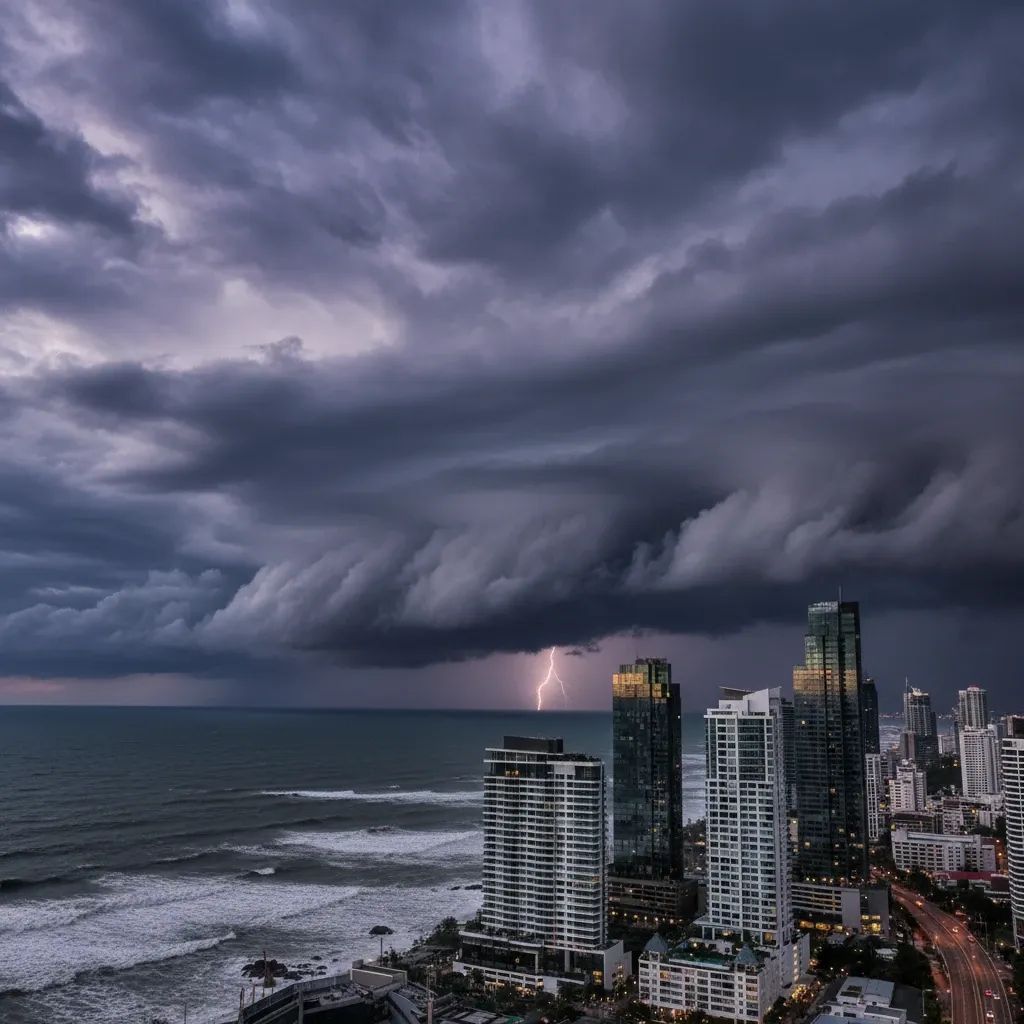
Prepare for significant weather disruption: between March 11 and 13, a major storm system will push northward from Myanmar into Thailand's upper regions, bringing thunderstorms, strong winds, hail, and scattered lightning strikes. The progression will begin in the northern highlands before moving southward through the Central Plains and into Bangkok's metropolitan zone—a sequence that demands immediate preparation from farmers, boat operators, and urban residents alike.
Why This Matters
• Farmers need to act quickly to reinforce fruit orchards and shelter livestock, as hailstorms can damage crops during the harvest season.
• Small-vessel operators must avoid Gulf waters from March 10–15, as wave heights will climb above 2 meters during storm passages, creating navigation hazards across the lower Gulf.
• Bangkok's drainage systems face renewed stress as major rainfall could flood low-lying neighborhoods where infrastructure has already been taxed by earlier March weather events.
Understanding the Meteorological Setup
The Thailand Meteorological Department has identified the atmospheric mechanism driving this week's severe weather. Two components are converging in a way that will produce significant instability. First, a westerly trough originating from Myanmar will advance eastward into northern Thailand on March 11, introducing wind shear and steering currents. Simultaneously, a moderate high-pressure system descending from China will extend across the Northeast, East, and South China Sea, creating a collision zone between cool air aloft and warm, moisture-laden air at the surface.
The critical ingredient is heat and humidity. Northern and western Thailand has experienced elevated temperatures in recent days, with humidity levels remaining high. This combination creates an atmosphere primed for thunderstorm development. When the cool air mass and westerly winds encounter this heated, unstable layer, the result is rapid cloud development, strong vertical wind shear, and organized thunderstorm cells capable of producing hail, lightning, and damaging gusts.
The Thailand Meteorological Department notes that individual storm cells typically persist for 15 to 30 minutes, but their intensity during that window poses genuine risk. Wind speeds within the strongest updrafts can exceed 70 kilometers per hour, and hail can range from small to substantial sizes.
Geographic Progression and Timeline
The storm sequence will unfold across Thailand's landscape. On March 11, the northern region—particularly the mountainous districts of Chiang Mai, Chiang Rai, and Nan—will experience the initial impact. By late March 12, central provinces including Phetchabun, Phichit, and western Nakhon Ratchasima will experience peak activity. The system reaches Bangkok and the surrounding provinces (Samut Prakan, Samut Sakhon, Pathum Thani) during March 13, when atmospheric instability is expected to peak.
The Thailand Meteorological Department emphasizes that the southern region will face a separate pressure system. Strengthening easterly and southeasterly winds will increase moisture transport from the Andaman Sea and Gulf of Thailand into peninsular provinces between March 10 and 15. Lower Gulf waters will transition from 1–2 meter wave heights to sustained heights exceeding 2 meters in storm-affected zones. The Thailand Department of Disaster Prevention and Mitigation has advised mariners to defer all non-essential sailing during this window.
What This Means for Residents
For the agricultural sector, this storm cycle represents a threat to fruit production during the harvest season. Northern Thailand—where longans, mangoes, and durian cultivation dominate—relies on stable weather patterns at this time of year. Farmers in these zones should immediately reinforce tree stakes, erect temporary windbreaks using woven mesh or fabric, and move livestock into sheltered pens. Such preventive measures can help minimize potential losses.
Urban residents in flood-prone zones face drainage challenges. Bangkok's eastern and southern outskirts, including Samut Prakan district, have historically experienced street-level flooding when rainfall intensity surpasses drainage capacity. Significant rainfall—concentrated in isolated storm cells—can overwhelm municipal systems. Residents in ground-floor apartments or homes near drainage channels should move valuables to upper levels and avoid basements and garages during peak storm hours.
The Thailand Department of Disaster Prevention and Mitigation has emergency-assistance protocols in place for weather-related incidents. Residents needing post-storm aid can contact the 24-hour emergency hotline 1784 or the LINE ID @1784DDPM. Real-time weather updates are available through the THAI DISASTER ALERT mobile application and the Thailand Meteorological Department's 1182 weather hotline. Both services provide notifications when warnings are updated or new alerts are issued.
Air Quality: A Secondary but Real Concern
March's atmospheric changes extend beyond rainfall and wind. Weak ventilation has allowed dust, particulate matter, and regional haze to accumulate in northern and central Thailand, including the Bangkok metropolitan area. Moderate to elevated air-quality indices are already present. Those with respiratory or cardiovascular conditions should limit outdoor exposure during calm periods when pollution concentrations are highest. The arrival of rain and strong winds will temporarily improve air quality, though conditions may revert to elevated levels once the system passes as stagnant air settles again.
Residents should monitor the AirVisual application or Thailand Meteorological Department air-quality bulletins before planning outdoor activities during March 10–15.
Seasonal Context and Broader Patterns
Thailand's transition from the dry, hot season into the monsoon regime is showing active storm development. The Thailand Meteorological Department has confirmed that 2026 is tracking with elevated storm activity compared to recent years. The westerly trough mechanism, where mid-latitude wind systems from Myanmar bring atmospheric energy into Thailand's highlands, has been active repeatedly this March. Forecasters anticipate additional significant weather systems before May concludes.
This reflects broader atmospheric patterns. Cold air masses from China are penetrating Southeast Asia more frequently this season. Each incursion, when it meets surface heat and moisture, produces organized thunderstorm activity. Residents should treat this week's advisory as representative of the active weather pattern expected through spring.
Practical Preparation Steps
Local government offices and village-level disaster-response teams have been placed on active standby with equipment and personnel ready for rapid deployment. Residents should monitor daily forecasts from the Thailand Meteorological Department, particularly between 8 AM and 6 PM when warnings are typically updated. Avoid unnecessary outdoor travel during mid-afternoon and early-evening hours—typically 2 PM to 7 PM—when storm activity typically peaks.
Secure outdoor furniture, trash bins, and lightweight structures before March 11. Trim or remove dead or weakly attached branches from trees near homes. Ensure that emergency supplies—water, medications, flashlights, and battery-powered radios—are accessible in case power outages accompany the storm passage. Families with young children or elderly members should establish a safe-room protocol: identify the most structurally sound interior space (away from windows, preferably a bathroom or interior hallway) where household members will shelter if warnings escalate.
Staying Informed and Prepared
Thailand's shift from dry heat to monsoonal moisture requires active monitoring and preparation. Follow Thailand Meteorological Department guidance precisely, secure vulnerable assets now, and stay informed through official channels. Taking these practical steps will help protect lives and property as the storms move through the country.


