
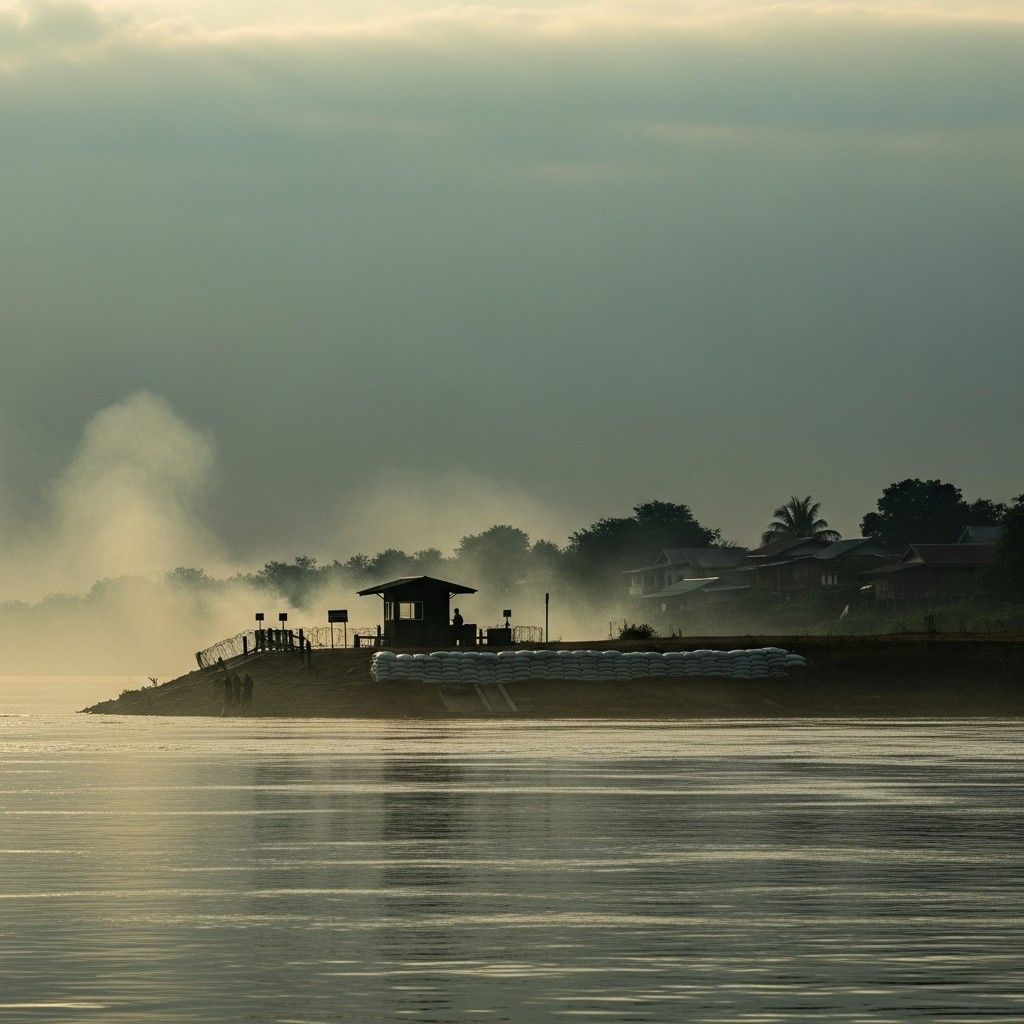
A sudden rumble of artillery shattered the dawn calm along the Moei River this week, reminding families in Mae Sot that the conflict next door in Myanmar is anything but distant. Thai soldiers answered with smoke-filled warning rounds, schools again closed their gates, and shop owners weighed whether to shutter businesses or trust that the fight would stay on the far bank.
Snapshot from Mae Sot
Residents of Tak’s border district woke to reports that five 60 mm mortars fired from across the frontier had landed among Thai homes, damaging property and injuring a Myanmar woman and her young son who had been sheltering in Thailand. The Royal Thai Army’s Task Force Rajamanur replied with four 120 mm smoke shells, a calibrated gesture meant to mark Thai territory without escalating to live explosives. Commanders say calm has returned, yet the grey haze of uncertainty lingers for communities that rely on an open border for trade, schooling and daily life.
What Triggered the Smoke Shells?
Fighting intensified late last week near the Karen town of Myawaddy, where Karen National Union Brigade 6 has been hammering positions held by Myanmar’s 22nd Infantry Division. Heavy weapons, including drones fitted with grenades, have been exchanged almost nonstop since November 30. When one burst overshot its target and struck Ban Mae Kon Ken on the Thai side, the incident crossed an invisible line for Bangkok. Thai rules of engagement permit an immediate, proportionate response to any round that lands on sovereign soil; smoke ammunition was chosen to deliver a visible warning while avoiding casualties across the river.
Inside the Thai Military’s Playbook
Under the Naresuan Force, border units have doubled foot patrols, erected temporary checkpoints on jungle paths and quietly moved additional mortar and UAV teams into elevated positions that overlook the conflict zone. Commanders stress that Thailand remains neutral, yet they have filed new protests through the Thai–Myanmar Border Committee and signalled that any repeat spill-over will be met with live ordnance, not just smoke. Behind the scenes, engineers are also reinforcing riverbank embankments to create safe corridors for possible civilian evacuations.
Daily Life Along the Moei River
For villagers in tambon Mahawan, the soundtrack of distant gunfire is no longer remarkable, but the latest blast shattered a roof and pushed a 68-year-old Thai grandmother to hospital with shrapnel in her thigh. Fear of stray rounds has forced farmers to leave fields untended and stalls at the Mae Sot morning market now close before dusk. Authorities have suspended all unofficial river crossings for seven days; only the First Thai–Myanmar Friendship Bridge remains open, guarded by reinforced checkpoints that search every pick-up truck for weapons or fleeing fighters.
Business and Classroom Disruption
Tak’s chamber of commerce estimates that the week-long shutdown of informal crossings could shave ฿2 billion from border trade if fighting drags on. Lorry convoys carrying fresh produce to Yangon have been rerouted through longer border gates in Mae Hong Son, raising transport costs. Education officials have switched the district’s frontline schools to online learning after unexploded mortar fragments were found on a playground. Teachers distribute printed worksheets to pupils who lack internet, echoing pandemic-era improvisations.
Looking Ahead: Diplomacy versus Deterrence
Bangkok insists it is not a party to Myanmar’s civil war, but the government also cannot allow its northern frontier to turn into an artillery range. Senior diplomats are pressing Naypyidaw to warn frontline commanders against indiscriminate shelling, while the army has quietly approved contingency sites for up to 8 000 displaced civilians should the clash widen. For Thai communities straddling the border, the hope is that smoke signals remain enough to keep live fire at bay; their fear is that the next roar they hear could hold metal instead of vapour.


