
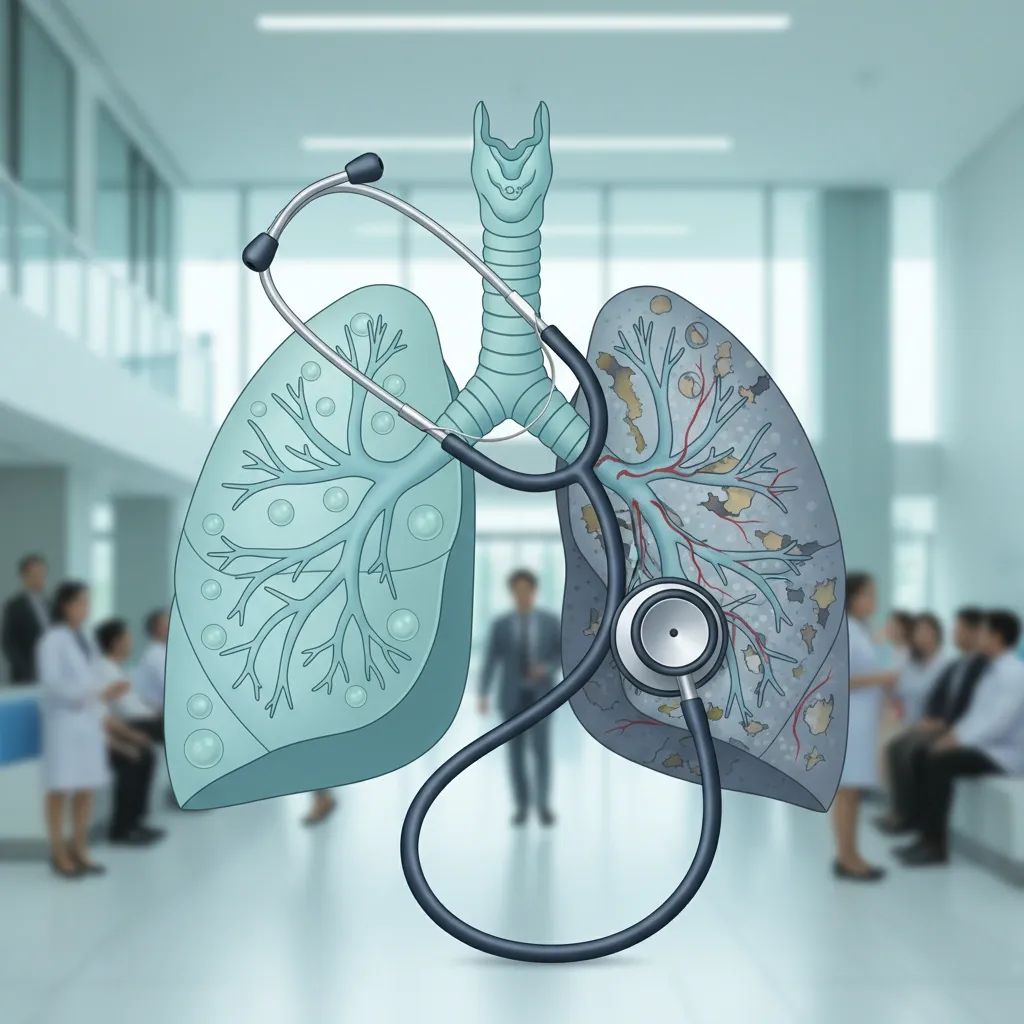
Thailand's Ministry of Public Health has supported ongoing research revealing that antiretroviral therapy (ART), while life-saving, may contribute to accelerated lung aging in people living with HIV—a finding particularly relevant to the estimated 460,000 individuals currently managing HIV infection in the country. Despite viral suppression, emerging evidence shows that chronic lung conditions, including emphysema and chronic obstructive pulmonary disease (COPD), develop at unusually young ages in this population, even among non-smokers.
Why This Matters
• Lung complications persist: Even with successful ART treatment, HIV patients face a significantly higher risk of COPD, lung cancer, and pulmonary hypertension compared to the general population.
• Earlier disease onset: Recent research reveals that HIV proteins disrupt the lung's molecular clock, accelerating inflammatory damage and triggering emphysema at younger ages.
• Thailand's health infrastructure: The National Health Security Office provides universal access to ART, including the TLD regimen (Tenofovir/Lamivudine/Dolutegravir), but long-term pulmonary monitoring remains limited.
• Environmental factors: Air pollution in Bangkok and Chiang Mai may compound lung damage in HIV patients already vulnerable to respiratory decline.
The Paradox of Progress
Antiretroviral medications have fundamentally transformed HIV from a terminal diagnosis into a chronic condition manageable over decades. In Thailand, where the government subsidizes cutting-edge single-pill daily regimens, adherence rates are high and viral suppression is now the norm for most patients under care. Yet this success has unveiled an unsettling reality: lung immunity does not fully recover, even when systemic HIV levels become undetectable.
Alveolar macrophages—the frontline immune sentinels deep within lung tissue—remain compromised in their ability to neutralize common bacteria like pneumococcus. Simultaneously, CD8 T cells accumulate in the alveoli, creating a pro-inflammatory environment that persists long after viral loads drop to zero. This chronic, low-grade inflammation resembles the biological signature of accelerated aging, a process researchers now call "inflammaging."
The implications are clinical and widespread. Pulmonary function tests conducted on HIV-positive patients in their 40s and 50s often reveal patterns typically seen in uninfected individuals 10 to 15 years older. For expats and long-term residents navigating Thailand's healthcare system, this means that respiratory symptoms—persistent cough, shortness of breath during exercise, or recurrent bronchitis—warrant more aggressive investigation than they might in an HIV-negative patient of the same age.
How HIV Proteins Sabotage Lung Health
Recent studies have identified the Tat protein, produced by HIV, as a key disruptor of the lung's circadian rhythm. This internal molecular clock governs everything from mucus clearance to immune cell activity throughout the day and night. When Tat interferes with this system, the result is a cascade: tissue damage accumulates, inflammatory signals intensify, and structural changes characteristic of emphysema begin to take hold—even in patients who have never smoked a cigarette.
Adding to the complexity, residual HIV proteins like gp120 linger in lung tissues despite effective ART. These protein fragments continue to provoke immune activation, perpetuating a cycle of inflammation that standard antiretroviral drugs cannot fully halt. The lungs, unlike blood plasma, appear to serve as a reservoir where viral remnants evade complete clearance.
Research teams in Thailand have noted similar patterns in local patient cohorts, particularly among those who initiated treatment late or experienced periods of non-adherence. However, even individuals who began ART immediately after diagnosis show elevated rates of non-infectious pulmonary complications, suggesting that ART itself may play a contributory role through mechanisms not yet fully understood.
Conflicting Evidence on ART's Direct Impact
The relationship between antiretroviral therapy and lung aging remains scientifically contentious. Some observational studies indicate that ART reduces COPD risk by suppressing viral replication and lowering systemic inflammation. Others, however, suggest the opposite: that long-term ART use correlates with increased airflow obstruction, potentially due to direct lung toxicity or abnormal immune responses triggered by the medications themselves.
A substudy of the Strategic Timing of Antiretroviral Treatment (START) trial found no significant difference in lung function decline between patients who initiated ART immediately versus those who delayed treatment. Yet this finding applied primarily to young, recently diagnosed individuals—a demographic that may not capture the full spectrum of lung aging seen in older or longer-infected patients.
In Thailand's public health system, where most patients receive the TLD regimen or newer formulations like Kocitaf (TAF/FTC/DTG), physicians have reported anecdotal increases in respiratory complaints, though causality remains unproven. TAF, a newer form of tenofovir, delivers lower systemic drug levels but has been associated with elevated blood lipids, which may indirectly affect cardiovascular and pulmonary health over time.
What This Means for Residents
For the hundreds of thousands of people living with HIV in Thailand—including a significant population of expats and migrant workers—the clinical takeaway is clear: lung health requires proactive monitoring, not reactive treatment.
Practical steps include:
• Annual spirometry testing: Request pulmonary function tests even in the absence of symptoms, particularly if you are over 40 or have smoked in the past. Early detection of declining lung capacity can prompt interventions before irreversible damage occurs.
• Smoking cessation: Tobacco use compounds the inflammatory burden exponentially. Thailand's Tobacco Control Act provides access to cessation programs, many covered under the Universal Coverage Scheme.
• Air quality vigilance: During peak pollution seasons—typically December through March in northern regions and year-round in urban Bangkok—consider using N95 masks or indoor air purifiers, especially if you have existing respiratory symptoms.
• Vaccination protocols: Ensure up-to-date pneumococcal and annual influenza vaccines. HIV patients remain at elevated risk for bacterial pneumonia despite viral suppression.
• Communicating with providers: If respiratory symptoms emerge, explicitly request evaluation beyond standard chest X-rays. High-resolution CT scans and bronchoscopy may be necessary to detect early emphysema or interstitial lung changes.
The Road Ahead
Research into pulmonary complications among people living with HIV continues to accelerate, with intensified focus on long-term ART effects. Clinical trials are now exploring adjunct therapies aimed at reducing residual inflammation, including anti-inflammatory agents and antioxidants, though none have yet achieved regulatory approval for this specific indication.
Environmental cofactors are also under scrutiny. Ongoing studies are examining whether Bangkok's air pollution—characterized by high particulate matter (PM2.5) concentrations—disproportionately harms HIV patients with pre-existing lung dysfunction. Preliminary data suggest that exposure to urban air pollution amplifies inflammatory markers in this population, potentially hastening the onset of COPD and other chronic conditions.
For clinicians in Thailand, the challenge lies in balancing the undeniable benefits of ART with an emerging recognition that viral suppression alone does not guarantee full immunological recovery. The Thai Red Cross Anonymous Clinic and major teaching hospitals like Siriraj and Chulalongkorn have begun piloting comprehensive pulmonary assessment protocols, though these remain limited to tertiary centers.
Navigating the System
Accessing specialized pulmonary care in Thailand varies by insurance status. Patients under the Universal Coverage Scheme (UCS) receive ART at no cost, but advanced diagnostics like high-resolution CT scans may require referral queues or out-of-pocket expenses. Those with Social Security Scheme coverage or private insurance typically face shorter wait times but should verify that pulmonary function tests and specialist consultations are explicitly covered.
Expats holding Thailand Elite Visa or long-term resident visas often rely on private hospitals, where pulmonary specialists are readily available but consultations can range from ฿2,000 to ฿5,000 per visit, with imaging and testing adding several thousand baht more. For cost-conscious patients, community health centers affiliated with university hospitals offer a middle ground: shorter waits than public facilities, with fees substantially lower than private clinics.
The Bottom Line
The life-extending power of antiretroviral therapy is indisputable, but the lungs of people living with HIV appear to age faster than the rest of the body—a phenomenon that persists even with perfect medication adherence and undetectable viral loads. For Thailand's HIV-positive population, this means that respiratory health must be treated as a long-term priority, not an afterthought. Proactive monitoring, environmental awareness, and open dialogue with healthcare providers can help mitigate risks that would otherwise go undetected until symptoms become severe. As research continues to unravel the complex interplay between HIV, ART, and pulmonary aging, the most prudent course is vigilance paired with early intervention.


