
Medicine in Thailand: A Stable Present, Uncertain Future
Thailand's Ministry of Public Health says medicine supplies remain stable through mid-2026, but health officials are taking proactive steps to prepare for potential disruptions linked to Middle East tensions. While pharmaceutical supplies are currently adequate, the ministry has shifted into contingency mode, mobilizing supply chains and negotiating import logistics in anticipation of possible disruptions. For residents and expatriates in Thailand—especially those managing chronic illness—this means a gradual transition in how medicines reach you, not a sudden shortage.
Why This Matters
• Prescription dispensing windows are shrinking: Patients accustomed to receiving 3-4 months of medication are increasingly being offered 1-2 month supplies to prevent hoarding and ensure equitable distribution across the healthcare system.
• Imported medications face longer acquisition timelines: Drugs sourced from Europe, North America, or the Middle East carry compounded logistics delays; switching to Thai-manufactured generics now avoids crisis switching later.
• Telemedicine and home delivery are scaling rapidly: Hospitals are expanding remote consultation and pharmacy delivery services not out of convenience, but necessity—these systems reduce clinic crowding and stabilize prescription refill pipelines during supply volatility.
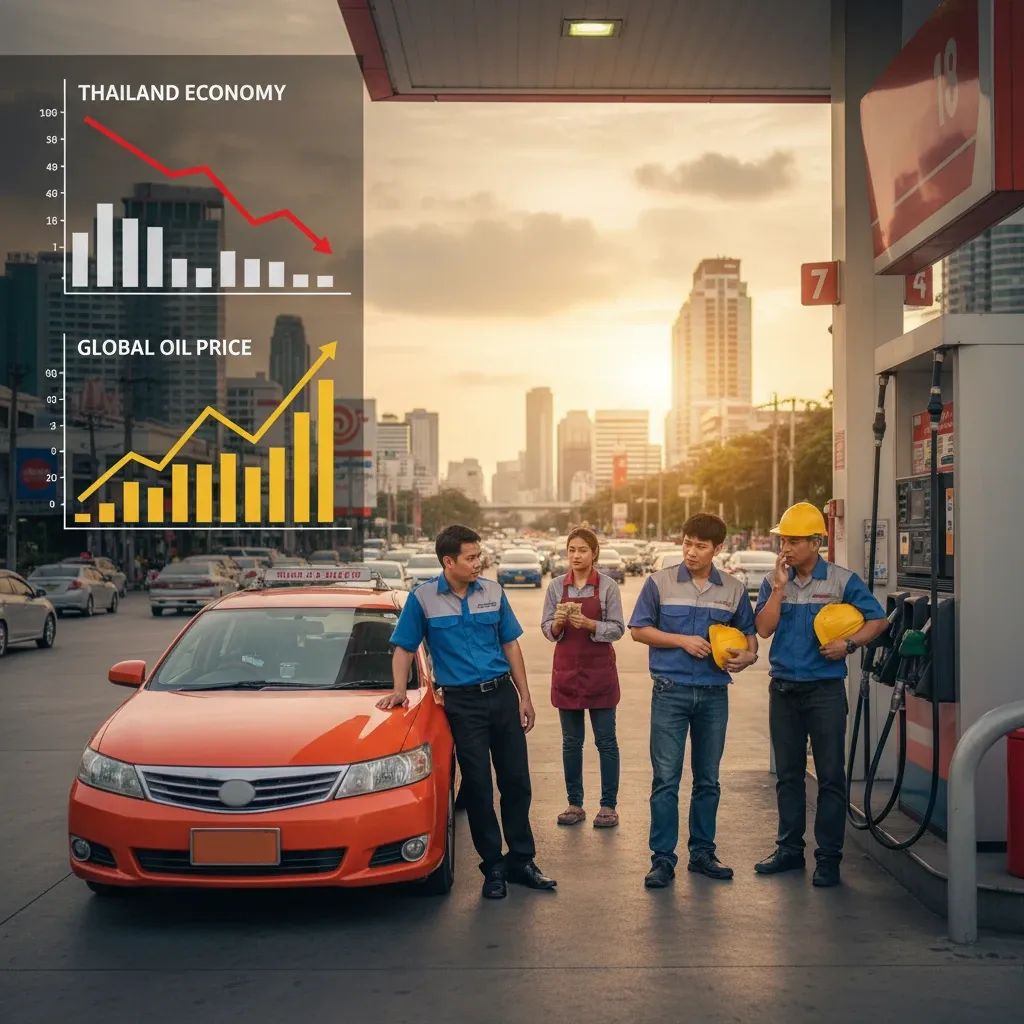
• Transportation inflation is trickling into pharmacy prices: Logistics costs tied to geopolitical rerouting are projected to potentially add 5-8% to basic medicine costs over the next 6-12 months.
The Fragile Dependency Chain
Thailand's pharmaceutical infrastructure reveals a paradox. Domestic manufacturers produce roughly 90% of the nation's essential medicines, but those factories depend almost entirely on imported active pharmaceutical ingredients (APIs) shipped through the Strait of Hormuz, a chokepoint that channels global trade through one of Earth's most volatile regions. When tensions escalate there, shipping costs spike within days and delivery windows extend from weeks to months.
Dr. Ekachai Piansriwatchara, Deputy Permanent Secretary of the Thailand Ministry of Public Health, has emphasized that the government is implementing procedural adjustments to anticipate potential disruption. Health authorities are monitoring essential medications for inventory tracking, including anticoagulants, psychiatric medications, chronic disease treatments, and dialysis solutions—all drugs upon which patients depend without interruption.
Current Stockpile Status
Current stockpiles average 3-4 months across most essential drugs, with psychiatric medications reaching six-month reserves in some cases. This buffer exists through deliberate policy and institutional memory from past supply shocks. The real issue isn't immediate scarcity; it's the compounding effect of transportation delays, inflation, and logistics rerouting when crises extend beyond weeks.
Case Studies in Supply Fragility: Warfarin and Dialysis Fluids
Anticoagulant medications illustrate the vulnerability. Warfarin, prescribed to stroke survivors and patients with atrial fibrillation, has historically been sourced from Israeli pharmaceutical companies. When regional tensions erupted, the Thailand FDA discovered it had limited alternative suppliers. The response was swift: accelerated regulatory approval for warfarin from Indian, Chinese, and European producers, with contingency stocks already positioned in regional distribution networks. The episode underscores a crucial principle: single-source pharmaceutical dependencies are vulnerabilities wearing the mask of cost efficiency.
Dialysis presents a distinct challenge. Both peritoneal and hemodialysis fluids require specialized medical-grade plastic containers for sterile storage. These containers are imported primarily from Southeast Asian manufacturing hubs, themselves vulnerable to shipping disruptions. The Thailand FDA is now pursuing two parallel strategies: establishing a container recycling and sterilization program allowing reuse of existing gallons, and approving alternative packaging formats producible or sourceable domestically. Neither solution is rapid, but both acknowledge adaptation as preferable to crisis paralysis.
Government Response: A Three-Horizon Strategy
The Thailand Cabinet has constructed contingency planning across three temporal windows, each with distinct mechanisms and objectives.
Immediate phase (3-4 months): The government is enforcing rational medicine utilization across the healthcare system—discouraging hospitals from over-ordering and preventing hoarding cascades. The ministry has greenlit price negotiations at district and national levels, with authority to impose temporary price controls if market distortions emerge. Hospitals receive explicit instructions not to stockpile beyond operational requirements, a discipline that feels counterintuitive during uncertainty but is essential to prevent localized shortages that undermine equitable distribution.
Medium-term phase (6+ months): The ministry is advancing a "one province, one hospital" resource-sharing model, consolidating medicine inventories at regional hubs to reduce duplication and optimize allocation efficiency. Simultaneously, telemedicine adoption is being aggressively scaled, targeting an expansion from 10% to 30% of total outpatient consultations. This shift serves multiple purposes: reducing patient travel, streamlining prescription refills, and creating real-time consumption data trails that allow authorities to track utilization patterns and adjust supply accordingly.
Long-term phase (12+ months): The government is elevating domestic pharmaceutical manufacturing investment from aspirational policy to funded priority. Over 40 new drugs are being added to the National List of Essential Medicines, a bureaucratic expansion with material consequences—listed drugs receive preferential procurement, price regulation, and public subsidy. Additionally, the government has requested that domestic pharmaceutical manufacturers temporarily suspend or reduce exports, a nationalist move prioritizing local supply during the uncertainty window but carrying reputational costs for Thailand's pharmaceutical export reliability.
What This Means for Residents and Expatriates
For foreigners and long-term residents in Thailand—concentrated in Pattaya, Chiang Mai, and Bangkok—the practical implications require deliberate action now, while supply chains remain stable.
Prescription cycles are contracting. The shift from 3-4 month dispensing to 1-2 month intervals means more frequent pharmacy visits or reliance on delivery services. This adjustment enables health systems to monitor consumption trends and prevent individual hoarding, which in crisis situations creates cascading shortages.
Actionable Steps for Patients
Residents relying on regular prescriptions should implement several practical measures immediately, while supply chains remain stable:
Identify your medication's origin. Ask your pharmacist or clinic which of your regular prescriptions are manufactured in Thailand versus imported. Imported drugs from the Middle East, Europe, or North America face longer logistics windows and heightened exposure to geopolitical disruption. If an equivalent Thai-manufactured generic exists, initiating a switch now allows your body to adapt while supplies remain abundant, avoiding forced switching during crisis.
Confirm your pharmacy's delivery infrastructure. Ask whether your regular pharmacy or hospital offers home delivery of chronic disease medications and what lead times they require. Some facilities deliver within 48 hours; others take a week. Understanding this timeline prevents last-minute prescription emergencies and allows you to plan refill requests strategically.
Enroll in hospital telemedicine programs. Registration typically takes 15-30 minutes online. Early enrollment ensures you're in the system before demand surges and allows you to familiarize yourself with the platform when clinics are uncrowded. Telemedicine can reduce clinic congestion and enable remote prescription refills during supply volatility.
Resist the urge to stockpile. The government has explicitly discouraged over-purchasing. Individual patients stockpiling creates artificial scarcity, disrupts equitable distribution, and can trigger hoarding cascades. Avoiding the temptation to buy extra is a civic responsibility with material consequences for others.
Request a medication review with your physician. If you're managing multiple prescriptions, a routine consultation to assess whether all medications are necessary, whether doses can be optimized, or whether cheaper domestically produced generics are available can reduce your exposure to supply disruptions and cost increases.
Context: Supply Chain Fragility Is Now Institutional Knowledge
Middle East tensions have not yet directly interrupted pharmaceutical shipments to Thailand, but the proactive planning reflects institutional memory from recent crises. COVID-19 destroyed illusions of supply chain resilience. When lockdowns began in early 2020, pharmaceutical exports from China and India halted abruptly, creating shortages of basic antibiotics, blood pressure medications, and insulin across Asia within weeks. Health systems that had viewed supply chain diversification as an expensive luxury discovered it was a necessity.
Thailand's current response represents maturation: anticipate potential risks, plan methodically, communicate transparently. The government is not predicting catastrophe; it is acknowledging that risks remain possible and that preparation is more efficient than crisis management.
The deeper vulnerability is structural. Thailand manufactures medicines domestically, but that manufacturing depends entirely on imported active pharmaceutical ingredients, nearly all originating from China, India, and Europe. Shifting this dependency will require years of investment in chemical engineering capacity, regulatory infrastructure, and skilled labor. The government's long-term investment in domestic API production is strategically sound, but returns will take years to materialize.
Regional and Global Context
Malaysia introduced mandatory price disclosure requirements for medicines in May 2025, requiring private clinics and hospitals to publish rates publicly. The policy has actually suppressed price increases by enabling patient comparison shopping—a regulatory mechanism Thailand is monitoring closely for potential adoption. Indonesia launched three innovation initiatives designed to accelerate pharmaceutical manufacturing independence and reduce import reliance, signaling regional recognition that pharmaceutical self-sufficiency is now a security priority. South Korea extended early-warning requirements for drug supply disruptions from 60 to 180 days, giving manufacturers and health agencies substantially more lead time to anticipate and respond to shortages.
The Association of Southeast Asian Nations (ASEAN) convened a nine-country pharmaceutical regulatory summit in May 2025, bringing together health officials from Indonesia, Malaysia, the Philippines, Singapore, and Thailand to coordinate responses. While formal regional stockpiling agreements remain under discussion, the forum signaled a tectonic shift: Southeast Asia is recognizing that pharmaceutical security is a collective challenge rather than a national one.
The Realistic Outlook
As of late March 2026, Thailand's pharmaceutical supply remains stable, and the government's transparent, tiered response has prevented panic or disruption. The emphasis on short-term price negotiations, medium-term telemedicine expansion, and long-term domestic production represents a measured approach to external risk. For expatriates, retirees, and long-term residents—particularly those managing chronic conditions—supplies are adequate, backup plans exist, and regulatory mechanisms are adapting in real time.
The shift to shorter prescription cycles and expanded digital health infrastructure represents an adjustment, not a crisis. It aligns with global trends toward remote healthcare and can actually reduce the friction of managing chronic medicine long-term. For residents comfortable with modestly more frequent pharmacy visits or home delivery services, the practical impact is minimal.
The situation underscores a fundamental reality for anyone living abroad: your health security is bound to global supply chains you cannot directly control. Oil prices, container shipping costs, regulatory timelines in distant countries, and geopolitical tensions all reverberate in your pharmacy. The antidote is not panic—it is staying informed, maintaining regular contact with healthcare providers, understanding where your medications originate, and resisting hoarding behavior. These are the most effective tools residents have for navigating pharmaceutical uncertainty.


