
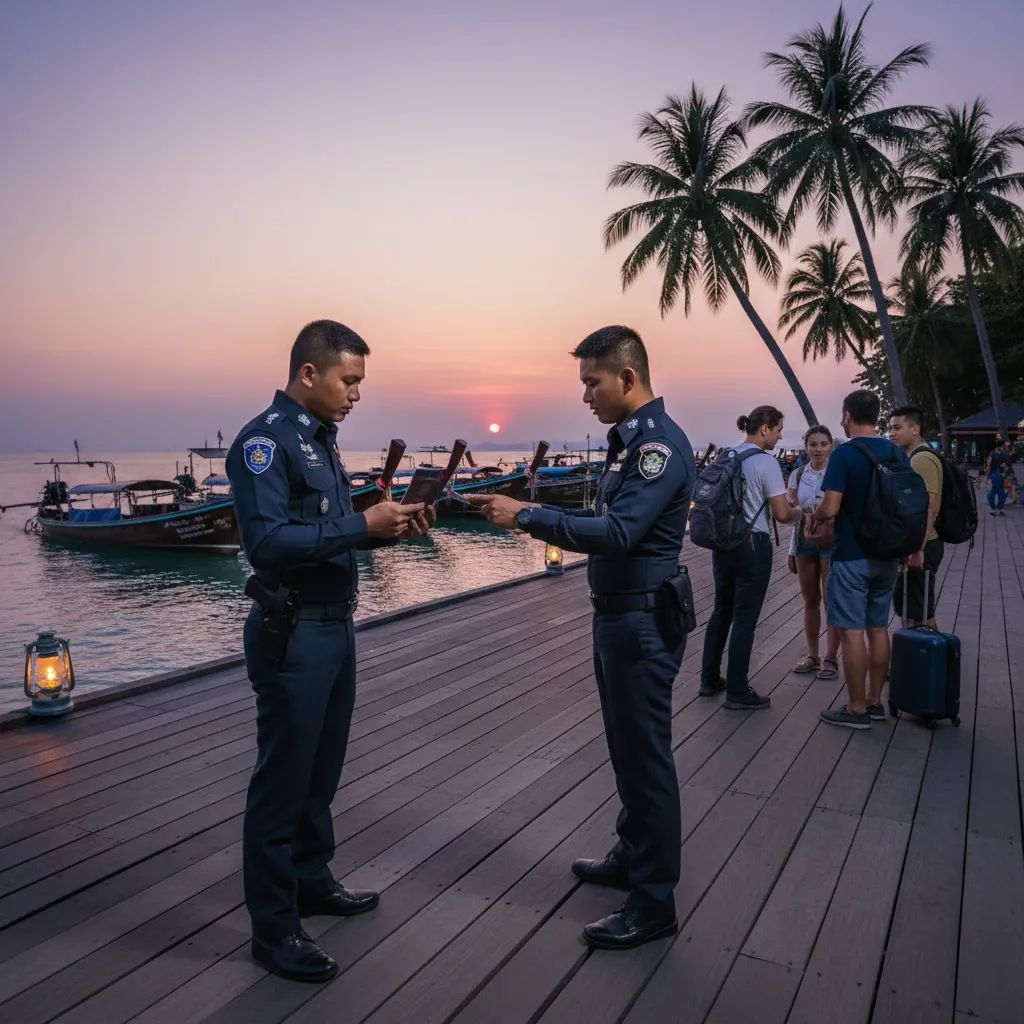
The Thailand Tourist Police Bureau has broken up a sleek ‘click-and-collect’ drug service on Koh Phangan, a move that removes more than ฿50 M in party drugs from the island just weeks before the next Full Moon party.
Why This Matters
• Beach-goers face tighter checks – expect more ID scans around pier landings and bars.
• Restaurant owners now under scrutiny – premises doubling as nightlife venues will see unannounced inspections.
• Digital footprints get riskier – WhatsApp Business and similar apps are being monitored; deleting chats will not shield buyers.
• Property rentals on alert – villa landlords may be held liable if tenants use homes as drop sites.
How the Operation Unfolded
Under the Valentine–Chinese New Year safety push, plain-clothes officers posed as tourists on the island’s west coast. After several dummy orders were placed through a Hebrew-language WhatsApp Business account, investigators watched a black sock stuffed behind a beachside boulder get swapped for cash. When the courier arrived on a Honda ADV 350, officers moved in.
A rapid search of the bike’s panniers, a daypack and two false-bottom suitcases produced cocaine, ketamine, MDMA crystals, Labubu-shaped ecstasy tablets, LSD blotters, heroin and psilocybin mushrooms. Total street value: just over ฿50 M (≈US$1.4 M), equivalent to half the annual budget of Koh Phangan Municipality.
Police named the suspect as Shai Alfasi, 42, an Israeli national who has run the popular Lola bar-restaurant on Hat Hin Kong since 2023. Investigators say he relied on an automated ‘disappearing message’ setting to erase negotiations within five minutes, complicating evidence gathering.
The Digital Playbook: From Tel Aviv to the Tropics
• Drop-off model – no direct meeting between seller and buyer; a geotagged photo does the talking.
• “Leave cash, take goods” – customers replace narcotics with banknotes inside the same sock.
• Auto-delete chats – mirroring privacy features common in Israeli fintech apps, conversations vanish quickly.
Cyber-crime analysts in Bangkok note that the workflow resembles darknet escrow services but is executed entirely on a mainstream messaging platform. Ironically, Israel’s global reputation for cyber-security innovation – think cutting-edge encryption start-ups in Tel Aviv – provided some of the very features traffickers tried to exploit. Thai officers say they have liaised with Israeli tech consultants in past cases to trace metadata, underscoring the two nations’ growing law-enforcement cooperation.
Wider Pattern on Koh Phangan
Official records show at least 7 foreign suspects booked on drug charges since early January, with seizures ranging from vape-grade THC to designer psychedelics. Authorities believe most transactions target short-stay holiday-makers chasing the island’s sunset-to-sunrise party circuit.
Surat Thani provincial officials insist the crackdown is not aimed at any single nationality. “We welcome Israeli travellers – their festivals and technology fairs contribute strongly to the local economy,” one tourism officer told us. “But the same zero-tolerance line applies to everyone.”
What This Means for Residents
Expect spot checks at ferry terminals – carry a copy of your passport or Thai ID to avoid delays.
Cash-only villa rentals face vetting – owners may need to register foreign tenants with police within 24 hours.
Phone searches can occur with probable cause – deleting chat logs will not prevent a digital forensics scan.
Hospital bills may climb for drug-related ER visits – insurers have begun flagging Koh Phangan as a ‘high-risk party zone,’ which can raise premium quotes for expats.
Business Community Reaction
Beach-bar operators are hurriedly installing extra CCTV and adopting e-payment only policies to distance themselves from cash-based contraband. “We’ve enjoyed a healthy market from Israeli backpackers who love our vegan menus and surf schools,” said a Mae Haad café owner. “One rogue player shouldn’t tarnish that bond.”
Tour agencies that specialise in Israeli heritage routes in Thailand are likewise stressing compliance. Several have begun circulating Hebrew advisories reminding guests that drug penalties here include 40-year jail terms and asset forfeiture.
Next on the Enforcement Agenda
• Full Moon Party, 13 March – 200 additional uniformed and plain-clothes officers will patrol Haad Rin.• QR-code vendor licensing – Surat Thani officials plan to roll out scannable permits for every pop-up cocktail cart, mirroring schemes in Phuket’s Patong district.• Cross-border intel sharing – Thai narcotics units expect to hold a joint webinar with Israeli cyber-crime experts on tracking ‘ephemeral messaging’ by mid-April.
Bottom Line for Expats & Investors
The arrest underscores a simple truth: digital anonymity is shrinking fast in Thailand. Whether you run a smoothie stand, rent out pool villas or simply attend island raves, compliance costs are likely to rise – but so too is overall safety. Meanwhile, the long-standing Thai–Israeli friendship in trade, tourism and tech remains strong, buoyed by swift cooperation in cases like this.
For residents, the actionable takeaway is clear: keep personal documentation handy, vet tenants diligently, and think twice before forwarding that party-chat link. Authorities have shown they can follow a disappearing message all the way to a hidden sock – and back again.


