
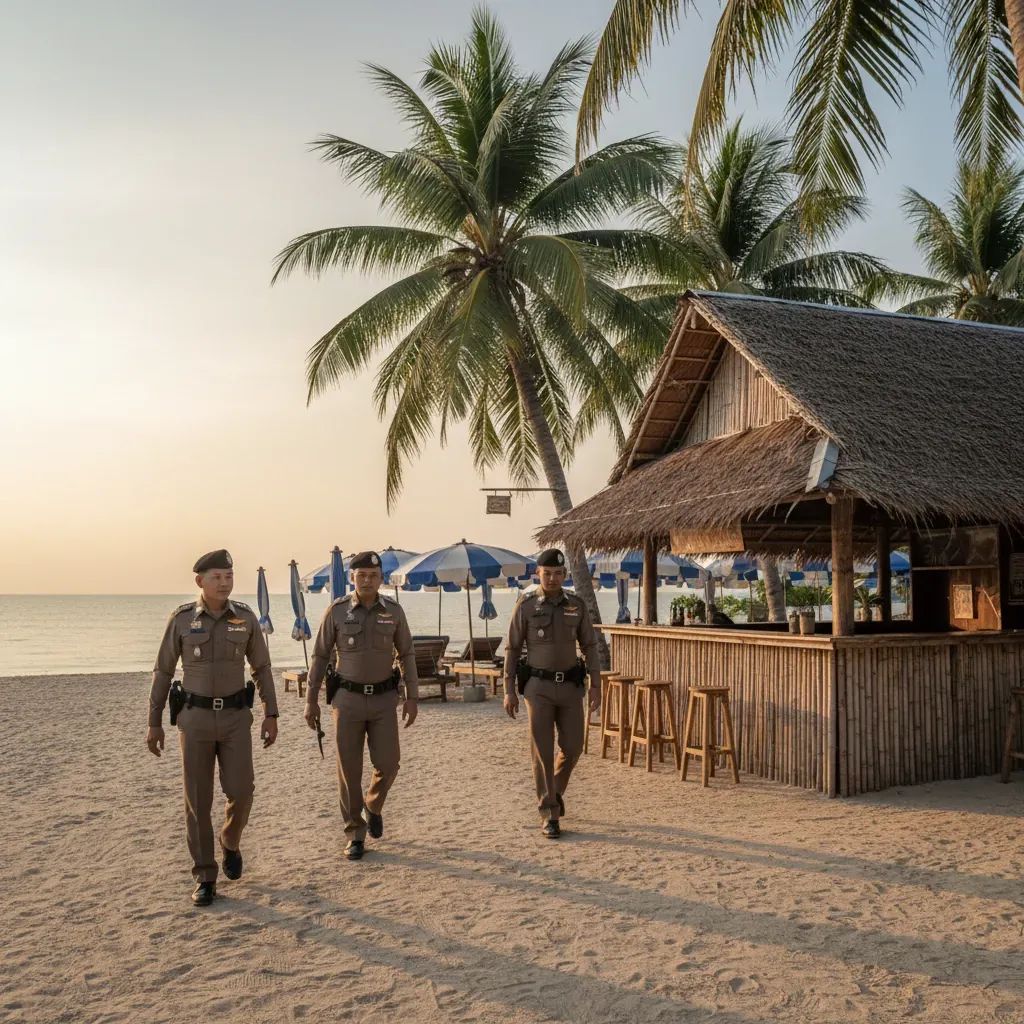
The Thailand Provincial Police Region 8 has pressed 35 criminal counts after raiding 25 venues on Koh Phangan, a move that signals stiffer scrutiny of foreign-run businesses in tourist zones and could reshape how expats invest, hire and even party on the island.
Why This Matters
• Immediate compliance sweeps are now on the radar for every bar, café and villa in the Gulf of Thailand.
• Fines can reach ฿50,000–฿800,000 per offence, and licences may be revoked without appeal.
• Thai nominee structures—often used to skirt the 49% foreign-ownership cap—have become an explicit police target.
• Unreported foreign workers must be declared within 15 days or both employer and employee risk deportation and blacklisting.
What Sparked the Crackdown?
The island’s post-pandemic boom lured a surge of digital nomads, cannabis entrepreneurs and boutique hoteliers. Local officials say the investment rush also invited a wave of shadow ownership, where foreigners front operations through Thai proxies. Combine that with an influx of undocumented Myanmar staff and Koh Phangan became, in the words of one Surat Thani official, a “live case study” for the government’s 2024-2030 National Security Strategy on transnational crime.
How the Operation Unfolded
Led by Pol. Maj. Gen. Narongrit Dansuwan, roughly 170 officers fanned out across 22 eateries, a souvenir shop and 2 hotels at dawn on 22 January. Immigration agents scanned passports on-site, labour inspectors tallied work-permit numbers, and district administrators compared shareholder lists against the Commerce Ministry database. Within hours:
• 12 Myanmar nationals were detained for visa or work-permit breaches.
• 1 vendor was caught selling unlicenced cannabis products.
• 5 companies were cited for nominee shareholding.
• 8 employers allegedly placed foreigners in jobs reserved for Thais.
• 4 firms missed the 15-day worker-reporting rule.
• 2 hotels lacked proper registration under the Hotel Act B.E. 2547.
The Legal Fault Lines
Thailand limits foreign ownership in most service businesses to 49%, but many investors try to vault that ceiling with silent-partner agreements. The Commerce Ministry now cross-checks tax filings, land deeds and even electricity bills to spot proxy behaviour. Equally risky is hiring foreigners in the 40+ “protected occupations” reserved for Thai citizens—anything from tour guiding to selling souvenirs. Penalties include jail terms up to 5 years or fines that can wipe out a high-season’s profit.
What This Means for Residents
• Thai employees may see more openings as rogue operators shed illegal staff, yet a sudden labour vacuum could push wages higher during Songkran.
• Expats running cafés or yoga studios must audit their cap-table and labour roster immediately; an unannounced inspection is now the norm, not the exception.
• Landlords renting to businesses without proper hotel licences risk being charged as accomplices.
• Local suppliers could gain market share if foreign owners exit, but short-term turbulence is likely—expect some venues to close before the Full-Moon Party.
Will Other Tourist Hotspots Be Next?
Officials in Phuket, Pattaya and Chiang Mai tell our newsroom that joint task forces are already drafted. The Tourism Police has a mandate to deliver at least two multi-agency sweeps per quarter through 2027 under the Third National Tourism Development Plan (2023-2027).
Voices From the Ground
Chonpat Onkaew, a long-time resort manager, sees a silver lining: “Cleaning out the bad actors helps legitimate operators justify premium rates to guests who care about ethics.” In contrast, Phanom Namsai, a beach-club owner, warns that abrupt raids can “scare away repeat Europeans who hate holiday uncertainty.” Labour economist Dr. Pawinee Yuphasuk adds that nominee crackdowns could nudge property prices down 5-10% as foreign demand recalibrates.
Staying Compliant: A Quick Checklist
Verify shareholder ratios—foreign stakes above 49% require Foreign Business Licences.
Register all staff with the Department of Employment within 15 days of hire.
Cross-check job descriptions against the protected-occupation list every quarter.
Secure hotel or cannabis licences before accepting a single guest or sale.
Keep digital copies of work permits and visa stamps on-site for spot inspections.
The Road Ahead
For islanders, the message is clear: legal paperwork now rivals beach ambience as a survival tool. Expect more pop-up checkpoints, tighter land-title audits and a possible revision of the work-permit fee schedule later this year. Investors with clean books should see little disruption; anyone else might find the tide going out faster than the next ferry to Surat Thani mainland.


