
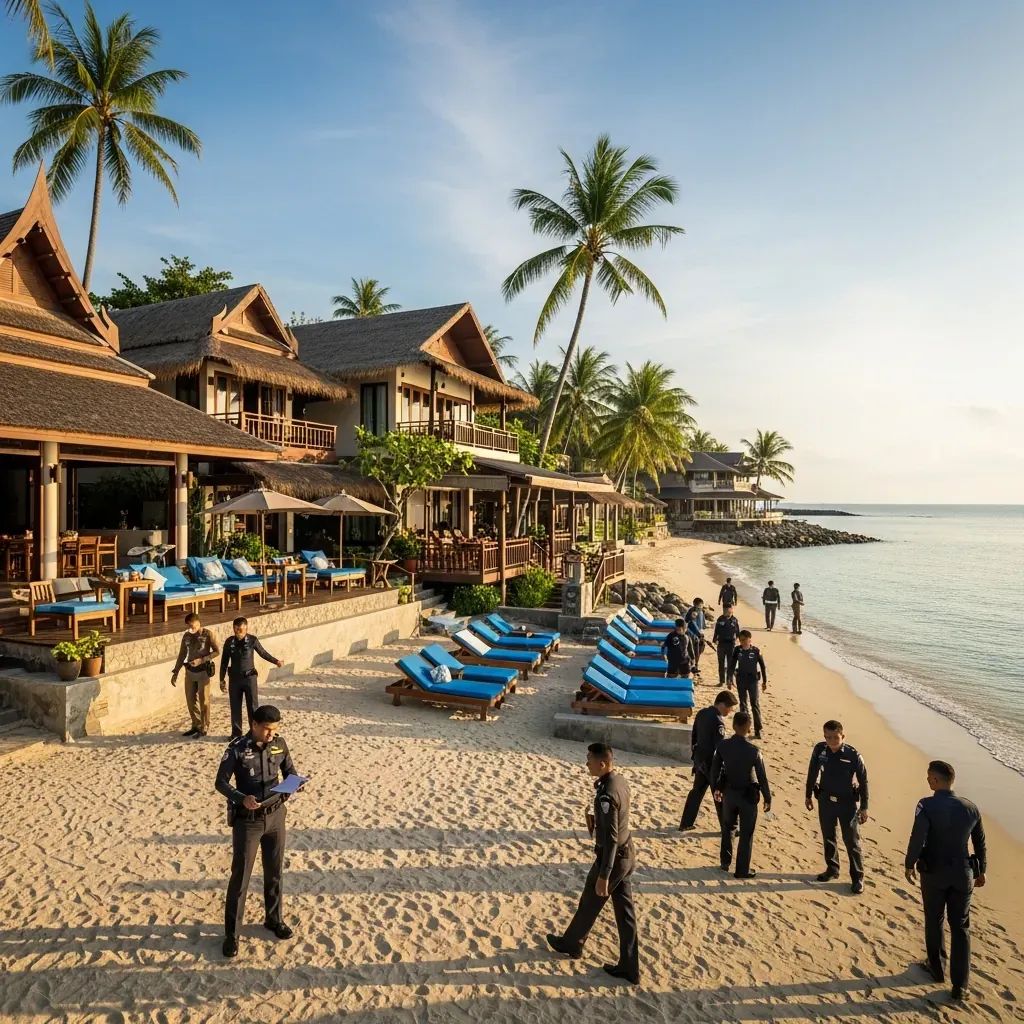
Koh Phangan’s postcard-perfect beaches were momentarily overshadowed last week when a 170-strong task force fanned out across the island, pulling the plug on dozens of allegedly illegal foreign-run ventures. For residents on the mainland and beyond who rely on the Gulf of Thailand’s tourist traffic for jobs and income, the sweep carries wider implications than a single day of police action.
At a Glance
• 25 premises searched – from beach-front cafés to boutique hotels.
• 35 suspects and companies charged under immigration, labour and nominee business laws.
• 12 Myanmar workers detained for overstaying or working without permits.
• 5 firms accused of hiding foreign ownership behind Thai shareholders.
• Operation forms part of the 2024-2030 national strategy to choke off transnational crime in tourist hubs.
Why the Crackdown Matters Beyond the Island
Authorities say Koh Phangan’s booming party scene has become a magnet for foreign investors who sidestep Thai ownership rules, under-the-table employers who undercut local wages, and cartel-style drug networks. Region 8 Police stress that unchecked violations could spread to nearby destinations such as Samui and Tao, threatening Thailand’s ambition to rebuild tourism on a fair-play footing.
For Thais watching from Bangkok, Chiang Mai or Phuket, the message is clear: the state intends to shield local livelihoods, protect tax revenues, and maintain the country’s reputation as a safe holiday spot—a prerequisite for the Tourism Authority’s target of 40 M visitors a year.
Inside the Raids: What Investigators Found
Teams armed with court warrants descended on 22 restaurants, a souvenir outlet and two hotels. Officers say they uncovered a familiar pattern: foreign owners funnelling cash through shell companies while paying Thais a small fee to sign as majority shareholders. Under Section 4 of the Foreign Business Act, that arrangement constitutes a criminal nominee structure carrying penalties of up to 3 years’ jail.
Elsewhere, labour inspectors found kitchen staff without work permits, receptionists registered as “tourists”, and a Myanmar chef whose visa expired six months ago. One suspect allegedly sold cannabis tinctures without the Health Ministry licence now required since the plant’s partial decriminalisation in 2022.
Economic Ripple Effects for Thai Workers
Labour analysts say the sweep could open positions previously walled off by illegal hires, though employers may struggle in the short term to replace deported staff. The National Economic and Social Development Council estimates that 1 in 5 service jobs on the island were filled by undocumented migrants in 2025. By enforcing rules, officials hope to push wages upward, especially in kitchen, housekeeping and tour-guide roles legally reserved for Thai nationals.
How the 2024-2030 Strategy Changes the Game
Under the new national blueprint, Police Region 8 has set up a dedicated Cross-Border Crime Centre with access to real-time immigration records, business-registry data and land-office deeds. The aim is to dismantle nominee chains before they entrench, rather than wait for tip-offs. Employers who fail to report a foreign hire within 15 days now face up to ฿100,000 in fines and a three-year ban on hiring abroad.
The strategy also directs the Labour Ministry to run mobile registration clinics so legitimate businesses can regularise staff without navigating the bureaucracy of Surat Thani’s provincial office. Authorities hope the carrot-and-stick mix will cut demand for people-smuggling syndicates that profit from high visa-run fees.
Voices from the Island
Somkiat Kongpaiboon, a second-generation dive-shop owner, says the raids level the playing field: “It’s hard to compete when a foreign-backed bar can dodge taxes and import workers at rock-bottom pay. Now at least we’re on the same terms.”
Not everyone is cheering. A resort manager, speaking anonymously, worries that abrupt deportations will leave beds unmade during the peak Full Moon Festival: “We support the law, but give us time to recruit Thais. Otherwise guests will head to Bali.”
What Happens Next
Police have already dispatched audit teams to Samui, Phuket and Chiang Mai, signalling that Koh Phangan was a pilot, not a one-off. Investigators are cross-checking land titles, shareholder lists and work-permit databases to flag anomalies automatically. The Tourism Authority plans a public dashboard showing how many rogue operators have been shut down—an attempt to reassure travellers that the crackdown targets scofflaws, not holidaymakers.
For Thai readers, the headline is simple: expect tighter scrutiny of foreign-linked ventures, quicker action on immigration breaches, and, officials hope, more jobs and fairer competition in the country’s most lucrative industry. Whether that promise materialises will be measured not in arrest tallies, but in the pay packets of waiters, boat crews and market vendors from Krabi to Chiang Rai.


