
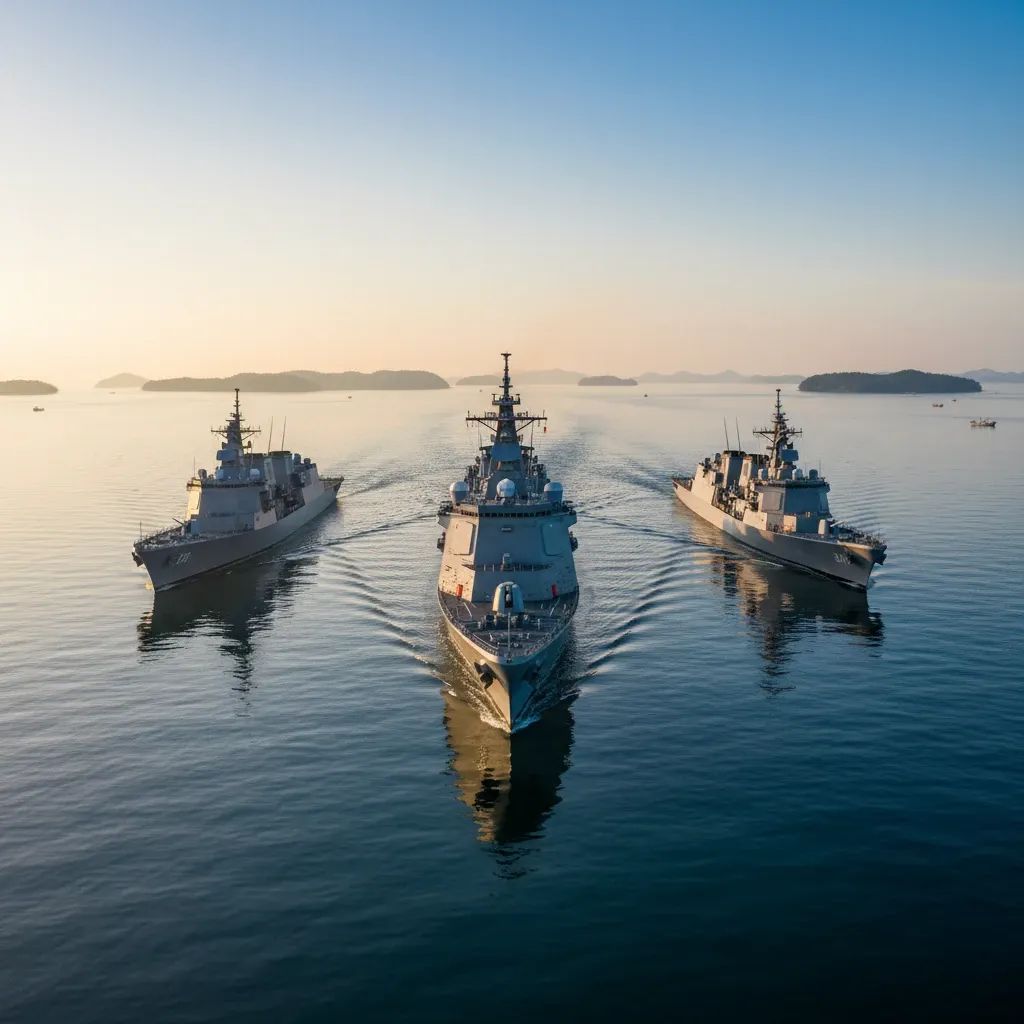
Tokyo has fundamentally reshaped its military doctrine, abandoning nearly eight decades of export restraint and committing ¥9.04 trillion (about 1.82 trillion baht)—nearly half of Thailand's entire annual national budget of 3.48 trillion baht—to defense in fiscal 2026, a strategic pivot that will reshape weapons availability, alliance structures, and security calculations across Asia and directly influence procurement options for Thailand and its neighbors.
Why This Matters
• Defense procurement shifts: Thailand may soon access advanced Japanese naval systems and missile platforms previously unavailable, diversifying supplier options beyond traditional sources.
• Regional arms flows realign: The Philippines is acquiring decommissioned Japanese frigates and missile systems by 2027, fundamentally altering South China Sea maritime capabilities.
• Constitutional breakdown in practice: Japan has effectively dismantled an export regime that stood for 79 years, signaling the nation's transition from pacifist restraint to active military market participation.
• Strategic uncertainty rises: China and some ASEAN members view Japan's expansion with alarm rooted in historical occupation, while others seek closer defense ties with Tokyo.
The Numbers Behind Tokyo's Military Surge
Japan's Cabinet approved spending that exceeds the previous fiscal year by 3.8%, a figure that masks the broader trajectory: this marks the 12th consecutive year of increased defense allocations. Prime Minister Sanae Takaichi's government is executing a five-year plan to reach 2% of GDP in military expenditure—a threshold Japan has now achieved ahead of schedule, matching NATO-level commitment by a non-alliance member.
The bulk of funding targets offensive and defensive capabilities that would have triggered constitutional debate a decade ago. Over $6.2 billion flows toward standoff missiles, including the domestically developed Type-12 surface-to-ship missile with a 900-kilometer range. Another $1 billion supports joint development of a next-generation fighter jet with the United Kingdom and Italy, due for deployment in 2035 with accompanying AI-operated drone swarms. The Izumo-class helicopter carriers continue their transformation into light aircraft carriers capable of launching F-35B stealth jets—vessels that blur traditional distinctions between defensive and offensive platforms.
New naval construction includes Taigei-class submarines, upgraded Mogami-class frigates, and Awaji-class minesweepers integrated into a layered coastal defense architecture called SHIELD (Synchronized, Hybrid, Integrated, and Enhanced Littoral Defense). Additionally, Japan is acquiring five wide-area unmanned aerial vehicles for the Ground Self-Defense Force, marking the phased replacement of manned attack helicopters with robotic systems.
How Japan Rewrote Its Export Rules
What happened in Tokyo's policy offices represents an equally dramatic shift. The National Security Council finalized revisions to the "Three Principles on Transfer of Defense Equipment and Technology," effectively scrapping restrictions that have governed Japan since 1967. The prior framework permitted only five categories of exports: rescue equipment, transport, warning systems, surveillance gear, and minesweeping apparatus. None qualified as lethal weapons.
The new guidelines, set for formal adoption this month, divide equipment into "weapons" and "non-weapons" based on lethality. Non-weapons face no export restrictions. Lethal weapons—destroyers, missiles, advanced electronic systems—require National Security Council screening and are limited initially to 17 countries possessing classified defense information-sharing agreements with Tokyo. The revised framework also includes a controversial provision permitting weapons exports to nations engaged in armed conflict if Japan determines its own security interests warrant such sales.
This represents a fundamental departure from post-war pacifism. Yet the machinery of change proved subtle. Rather than amending Article 9 of Japan's constitution, which renounces war and prohibits maintaining "war potential," the government reinterpreted constitutional obligations through bureaucratic revision. The constitution remains formally unchanged. Its practical substance has been hollowed through incremental policy shifts.
Opposition parties have protested the shift from prior approval to retrospective parliamentary notification. Critics argue this arrangement bypasses democratic safeguards and risks enabling Japan to fuel regional conflicts. The government dismisses such concerns, citing what officials describe as the "severest and most complex security environment in the postwar era"—a reference to North Korea's missile tests, China's military modernization, and Russian aggression.
Manila and Warsaw as Early Beneficiaries
The Philippines emerges as the likeliest immediate customer for Japanese military hardware. Defense analysts expect Manila to acquire three Abukuma-class destroyer escorts scheduled for Japanese decommissioning in 2027. These vessels, designed for anti-submarine warfare and coastal patrol, would substantially enhance Philippine Navy capacity to monitor the contested South China Sea.
Discussions extend to Type 03 surface-to-air missile systems. In April 2026, Japan deployed its Type 88 surface-to-ship missile system during Balikatan war games conducted near South China Sea waters—essentially a live demonstration of capabilities now available to Philippine forces. Two key agreements enable this cooperation: the Reciprocal Access Agreement, effective since September 2025, and the Acquisition and Cross-Servicing Agreement signed in January 2026, both permitting logistical support including fuel and ammunition sharing.
Poland has signaled parallel interest in Japanese technology, particularly anti-drone and electronic warfare systems, as Warsaw seeks to diversify suppliers amid strain on US production caused by the Ukraine conflict.
These early exports signal broader market ambitions. Japanese defense manufacturers including Mitsubishi Electric and Toshiba are already expanding production capacity and recruitment pipelines to meet anticipated demand. The shift reflects not merely geopolitical calculation but industrial strategy—reducing reliance on US defense supply chains strained by multiple global conflicts.
What This Restructuring Means for Thailand
For people living in Thailand, Japan's military reorganization introduces both opportunities and complications that warrant close attention. The Royal Thai Navy's modernization efforts, historically constrained by budget limitations, may now incorporate Japanese platforms and systems previously unavailable. Japan has already deployed five coastal surveillance radar systems in the Philippines in March 2026; similar arrangements could extend to Bangkok, potentially affecting maritime security monitoring in Thai waters.
Thai defense industries engaged in supply chains, logistics, and after-sales support may find commercial opportunities as Japanese manufacturers expand regional operations. Defense contractors in Rayong and Chonburi provinces involved in component manufacturing, electronics production, and maintenance services could benefit significantly from increased capacity investments as Japanese companies establish regional hubs. Small and medium-sized enterprises specializing in precision parts and technical support may see new partnership possibilities with Japanese defense suppliers over the coming 18-24 months.
Thailand's Defense Ministry has not yet publicly commented on potential procurement interests, though defense analysts note that the Thai Navy's aging fleet of frigates and patrol vessels may benefit from Japanese alternatives to traditional suppliers. The government's upcoming defense white paper, expected mid-2026, may signal Bangkok's position on diversifying suppliers and its strategic response to Japan's policy shift. For expats and Thai citizens alike, closer Japan-Philippine military ties could mean increased joint naval exercises in nearby waters, potentially affecting maritime traffic patterns and regional security dynamics.
Yet the strategic picture grows more volatile. Japan's enhanced strike capabilities and willingness to export advanced weapons introduce variables into South China Sea tensions. Thailand has historically sought to balance relationships with major powers—maintaining ties with both Washington and Beijing—without becoming entangled in their competition. Japan's emergence as an independent military-industrial pole complicates this delicate balancing act. How Bangkok navigates this new dynamic will significantly impact Thailand's ability to maintain its traditional pragmatic approach to great power relations.
Moreover, Thailand's ASEAN membership creates conflicting pressures. The association's founding principle emphasizes neutrality and amity among member states. Japan's military resurgence and expanded arms exports risk undermining this equilibrium. Defense analysts warn that perceived Japanese hegemonic ambitions, though framed as defensive, could destabilize the informal cooperation framework that has underpinned Southeast Asian security for decades. Thailand, as a founding ASEAN member and diplomatic leader, may find itself navigating calls for stronger regional positions while preferring its traditional stance of non-alignment.
Regional Fault Lines Emerge
China's Foreign Ministry has issued sharp rebukes, accusing Tokyo of exposing "sinister intentions" to revive militarism and posing fundamental threats to regional peace. Beijing's criticism reflects both strategic concern over enhanced Japanese strike capabilities and deeper historical wounds. Beijing frames Japan's policy shift as abandonment of post-war pacifism, evidence of militaristic drift.
Several Southeast Asian nations harbor similar unease rooted in World War II occupation. Indonesia, Malaysia, and Singapore, having endured brutal Japanese wartime rule, view Tokyo's recalibration with what scholars describe as "utter suspicion." These countries fear that Japan's "neo-militarism," if unchecked, could evolve into hegemonic behavior rather than genuinely defensive posturing, potentially destabilizing regional cooperation frameworks built on mutual restraint.
Conversely, Vietnam—possessing strong partnerships with the US, Japan, and India—sees Japanese military advancements as helping restore balance against China's South China Sea assertiveness. The Philippines explicitly welcomes closer defense ties with Tokyo. Australia selected Japan as partner for an 11-ship warship development program worth approximately $7 billion USD, Japan's largest military export deal to date.
Thailand occupies uncertain middle ground. As a longstanding US ally that has also maintained pragmatic engagement with Beijing, Bangkok faces pressure from multiple directions. Closer Japanese defense cooperation offers procurement diversification and potential new partnerships. It simultaneously threatens to entangle Thailand in great power competition it has historically avoided. Thai government officials will need to carefully calibrate any response to avoid appearing to favor one great power over another—a challenge that previous governments have managed through studied ambiguity and quiet diplomacy.
The Constitutional Paradox
Inside Japan, the policy shift has ignited constitutional controversy. Article 9 remains formally unchanged—renouncing war and prohibiting "war potential." Yet through reinterpretation and incremental policy revision, its pacifist core has been systematically dismantled.
Protesters across Japanese cities argue the government's military expansion fundamentally betrays post-war identity. Critics contend that transformation from a nation eschewing arms exports to one actively marketing lethal weapons represents, functionally if not formally, abandonment of Japan's foundational international commitments. The government appears unmoved, insisting that strategic imperatives override constitutional squeamishness.
This domestic debate matters beyond Japan's borders. Thailand and other nations must assess whether Japan's military evolution signals stable strategic partnership or potential liability. The answer remains unclear, dependent on how Tokyo manages its expanded military role and whether constraints on weapons proliferation prove adequate to prevent regional destabilization.
For Thailand's defense planners and investors, Japan's pivot offers tactical advantages—new procurement options, industrial opportunities, potential supplier diversification. Strategically, it introduces new uncertainties into an already complex regional security environment. Thai policymakers and citizens alike should monitor developments in the coming months as Japan's defense exports accelerate and regional security dynamics continue their ongoing transformation.


