
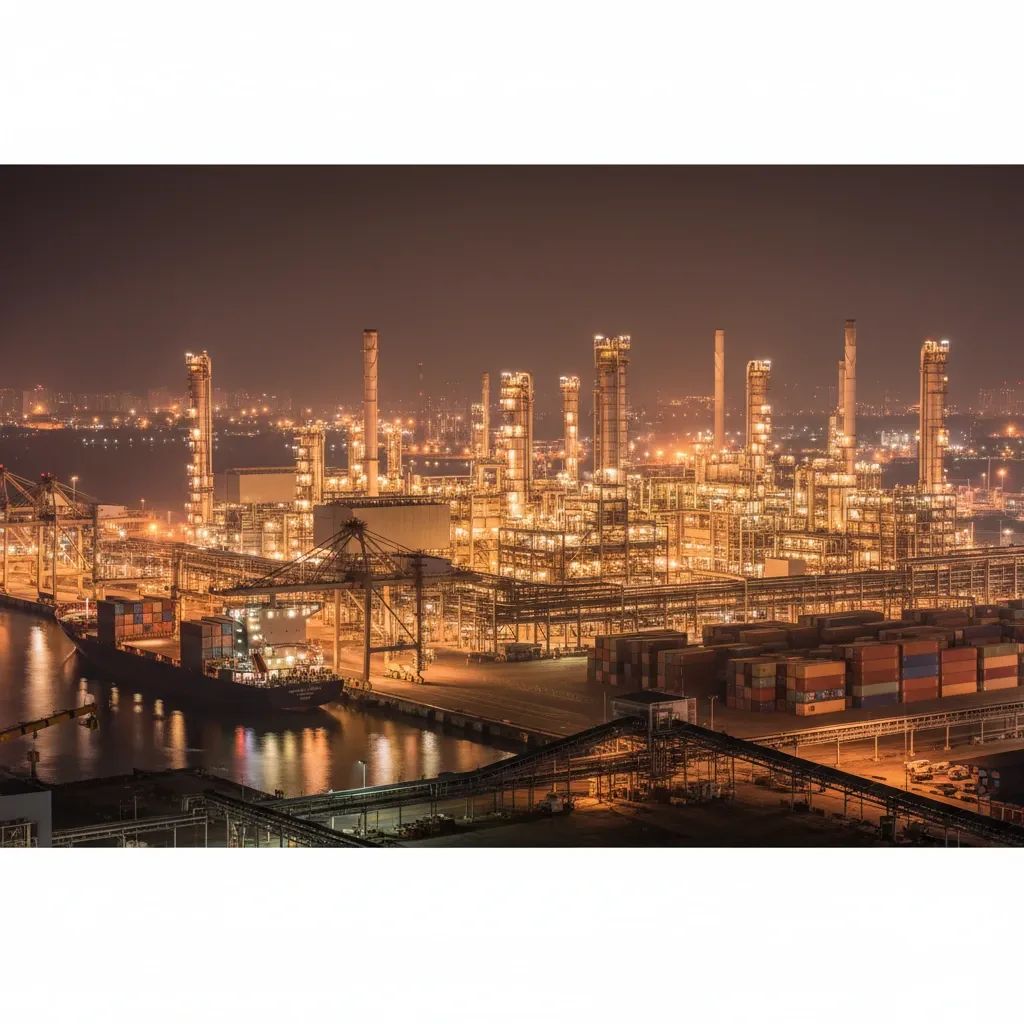
The Japan Bank for International Cooperation (JBIC) will channel $10 billion to Southeast Asian governments as preventive financial support during Middle East tensions, a package that Japanese Prime Minister Sanae Takaichi confirmed will take the form of primarily state-backed loans aimed at securing alternative oil supplies and strengthening energy resilience across the region.
Why This Matters
• Supply security buffer: The package covers roughly 1.2 billion barrels—equivalent to a full year of ASEAN crude imports—providing governments with flexibility to diversify procurement sources.
• Thailand's structural exposure: Thailand sources 59% of its crude from the Middle East; this loan helps Bangkok secure alternative supplies and protect its cross-subsidy oil fund.
• Supply chain protection: Japan depends on Southeast Asia for petroleum-derived dialysis components and medical gloves; stable energy supplies there ensure stable supplies for Japanese markets.
• Loan structure: Recipient governments will negotiate repayment schedules with Tokyo-backed institutions, making this financial aid rather than grants.
The Regional Energy Landscape
Southeast Asia's reliance on imported crude creates structural vulnerability to geopolitical shocks, and Tokyo's financial commitment reflects recognition of this systemic risk. The region imports approximately 3 million barrels per day, with more than half originating from Middle Eastern fields.
The Philippines faces the highest vulnerability. Manila imports 98% of its crude from the Gulf, operates without a strategic petroleum reserve, and relies instead on commercial stocks that deplete quickly during supply disruptions. Without diversified procurement options, barrel price increases would widen the archipelago's current account deficit and raise fertilizer costs, pressuring farmers already operating on thin margins.
Vietnam shows similar structural fragility. Over 80% of its crude originates in Kuwait, and domestic reserves cover barely 20 days of consumption. Hanoi's government has cut fuel taxes to stabilize pump prices, but that approach depletes fiscal resources and leaves the country exposed if tensions extend beyond a short timeframe.
Indonesia operates under a paradoxical constraint: it drills oil yet imports more than it produces. Fuel subsidies anchor the state budget, which assumes crude at $70 per barrel in 2026. Price increases beyond that threshold cost Jakarta approximately $400 million in additional subsidy outlays, threatening credit ratings and fiscal stability.
Thailand functions as a refining hub for Laos and Cambodia, economies with minimal domestic refining capacity. Supply tightness in Bangkok ripples through the lower Mekong corridor. Thailand's cross-subsidy oil fund can buffer short-term shocks, but prolonged disruptions accelerate government borrowing and threaten the current account surplus that has anchored baht stability.
Singapore holds strategic reserves sufficient for 200 days, yet its role as Asia's refining and trading nexus means price volatility affects the city-state's manufacturing costs and trade volumes.
Tokyo's Strategic Calculus
Japan's $10 billion commitment reflects enlightened self-interest—supply chain insurance. Thai and Malaysian factories produce the bulk of the sterile gloves, IV tubing, and dialysis plastics that Japanese hospitals depend on daily. Disrupted Southeast Asian production translates directly into shortages for Japanese healthcare systems.
The JBIC framework enables recipient governments to procure crude from alternative sources, including the United States, reducing regional structural dependence on Gulf exporters. That diversification supports Japan's energy security: if Southeast Asian buyers lock in long-term contracts with North American producers, it eases competition for Middle Eastern cargoes that Tokyo requires.
Takaichi's announcement reflects a shift in Japanese foreign economic policy toward immediate energy security. While the Asia Energy Transition Initiative (launched separately in 2021) focuses on long-term decarbonization through renewable projects and technology transfers, this new package addresses near-term resilience—maintaining refinery operations and preventing fuel rationing that could shutter factories and transport networks.
Potential Impact on Thailand Residents (Mitigated Scenarios)
Without this loan package, Thailand residents could face several scenarios that this aid is designed to prevent:
Fuel price pressure: The Thai government's oil fund smooths retail fuel price swings under normal conditions, but a sustained supply disruption could force subsidy cuts or increased government borrowing. This loan provides the procurement flexibility to avoid such situations.
Food and transport costs: Diesel and gasoline increases feed into food prices, as Thailand's logistics network relies heavily on road freight. By securing stable crude supplies through diversified sources, this loan helps prevent cost-of-living pressures at supermarket shelves and restaurants.
Foreign residents and expats would face secondary effects only if supply disruptions occur despite this aid—higher electricity bills if power plants pay premium fuel prices, increased manufacturing costs for consumer goods, or currency volatility if the baht weakens from oil import pressures. This loan package aims to prevent those scenarios.
Business owners in energy-intensive sectors—hospitality, logistics, manufacturing—benefit from the stability this loan provides. Japan's financial support extends Thailand's procurement options, reducing worst-case risk even if Middle East tensions persist.
Regional Support Comparison
Japan's decisive action contrasts with other major economies' approaches. China's Belt and Road Initiative continues funding energy infrastructure across Southeast Asia, but Beijing prioritizes long-term power plant and grid investments rather than emergency procurement liquidity.
South Korea channels energy aid through development programs emphasizing renewable technology—valuable for transition but insufficient for immediate fuel security.
The United States promotes market-based energy solutions under its Indo-Pacific Strategy, without announcing comparable emergency financing for the region's oil procurement needs.
Tokyo's state-backed credit deployment at scale reflects both Japan's energy vulnerability—it imports nearly all its energy—and its recognition that Southeast Asian stability underpins Japanese economic security. The $10 billion package positions Japan as the primary financial responder to energy security challenges.
What Comes Next
The JBIC will negotiate individual loan agreements with Southeast Asian governments over coming weeks, tailoring terms to each country's fiscal capacity and energy needs. Disbursement speed is critical: faster funding enables countries to lock in long-term supply contracts at favorable terms, maximizing the package's effectiveness.
Thailand's Energy Ministry will likely pursue multi-month supply contracts with U.S. shale producers, a shift that could reshape Asia's crude trade patterns if sustained. For residents, the outcome depends on whether this loan maintains supply stability or whether escalating Middle East tensions outpace the financial support.
Japan's intervention provides resilience rather than certainty. The loan package strengthens the region's ability to weather energy disruptions and prevents worst-case supply scenarios, but it does not fundamentally alter Southeast Asia's structural dependence on imported energy or its exposure to geopolitical shocks originating far from the region.


