
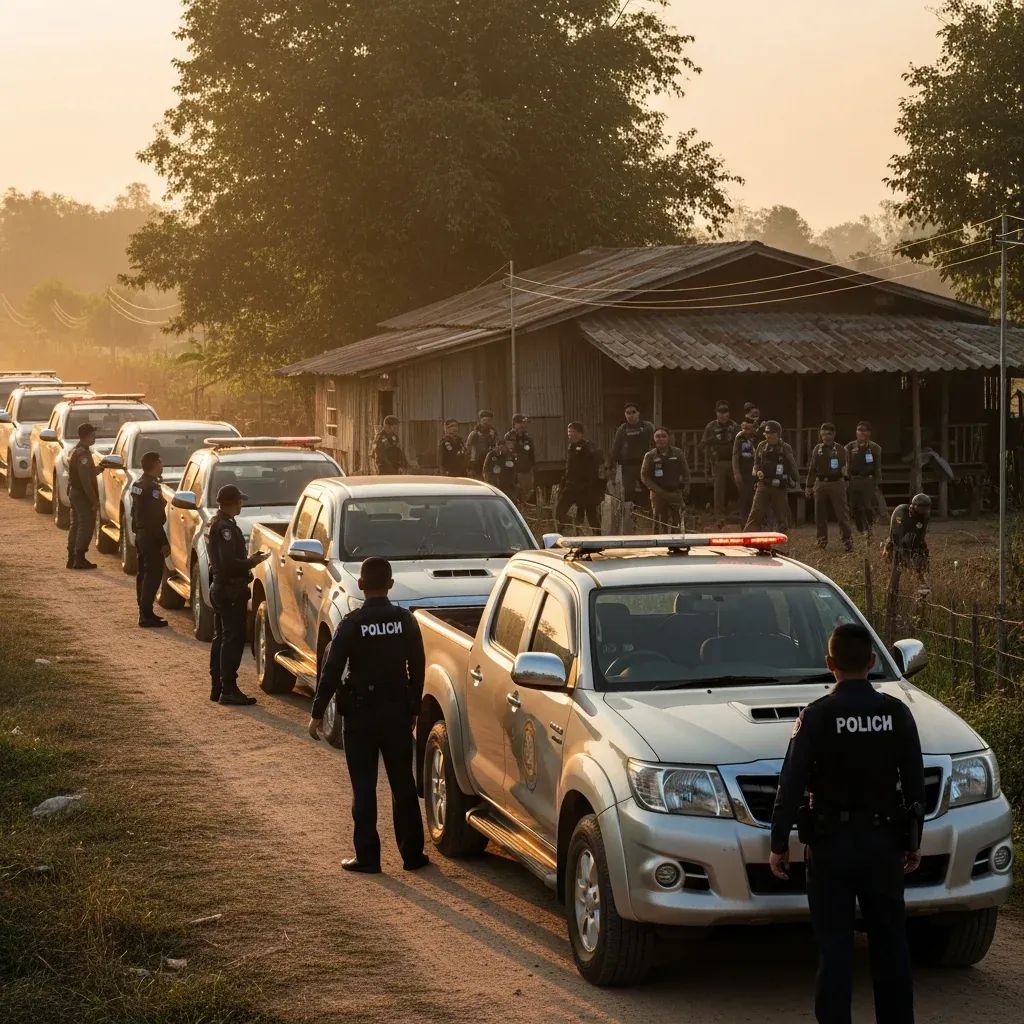
Hat Yai Police Rescue 16 Bangladeshi Migrants From Human Trafficking Network
Police and immigration officers rescued 16 Bangladeshi men from a locked rental room in Hat Yai on March 18, after the men had spent three days without food, water, or contact with the outside world. They had been waiting for smugglers who never returned. The rescue marked another intervention in Thailand's ongoing trafficking crisis along the southern border.
What Happened
The men were discovered by authorities during a routine inspection. Each had paid approximately 96,000 baht to brokers in Bangladesh for promised passage to Malaysia. Upon arrival in Thailand, they were confined to a room in Hat Yai while smugglers arranged onward transport. When contact ceased, neighbors alerted police.
Why Hat Yai
Located 40 kilometers from the Malaysian border, Hat Yai has become a transit point for trafficking networks. The city's position on Highway 4—connecting Phuket's coastal entry points to Malaysia—combined with available rental housing, makes it a logical staging ground for smuggling operations.
Provincial authorities acknowledged trafficking vulnerabilities in an enforcement review convened on February 16, 2026, citing inconsistent victim identification, inadequate interviewing procedures, and allegations of official involvement in smuggling operations.
Immediate Implications for Thailand Residents
For business owners: Thailand's 2017 Royal Decree on Foreign Workers' Employment imposes fines up to 800,000 baht and imprisonment up to five years for hiring undocumented labor. Recent enforcement trends suggest authorities are moving toward prosecution. Restaurants, hotels, and farms relying on informal labor networks face particular exposure.
For border province residents: Trafficking networks often overlap with other illegal enterprises including drug trafficking and weapons smuggling, creating broader security concerns in transit zones.
Legal status of victims: Undocumented migrants identified as trafficking victims receive temporary work permits and shelter while assisting investigations. Those not classified as victims face detention and repatriation, a process that may take weeks or months.
The Financial Mechanism
The 96,000-baht fee represents the structure of debt bondage. Brokers in Bangladesh market Malaysian jobs at two to three times domestic wages, then add processing fees, document costs, transport, and unspecified charges. By the time a worker reaches Malaysia, they are already indebted before their first paycheck.
Malaysia's labor market context: Foreign workers comprise approximately 20% of Malaysia's total workforce, concentrated in palm oil extraction, semiconductor manufacturing, rubber processing, domestic service, and construction. This structural reliance on migrant labor—often undocumented—sustains demand for trafficking networks.
Thailand's Anti-Trafficking Framework
Thailand maintains specialized task forces and coordination with neighboring countries. However, implementation challenges remain:
• Victim identification gaps: Officers trained in criminal investigation often lack trauma-informed interviewing skills. Language barriers and migrant fears of deportation result in systematic under-identification.
• Recruitment fee enforcement: Thai labor law caps placement fees at 5,000 baht, but Bangladeshi brokers charge 96,000 baht with no cross-border enforcement mechanism.
• Absence of legal pathways: Thailand maintains labor agreements with Cambodia, Myanmar, and Laos, but no equivalent framework exists for Bangladeshi workers. This legal void channels migration into trafficking networks.
Support Available After Rescue
Rescued migrants typically receive assistance from international organizations:
• UNHCR: Legal status guidance and repatriation options
• International Labour Organization: Counseling on labor rights and wage recovery
• UNICEF: Assistance for minors
• Foundation for Rural and Highland Community Development: Shelter facilities in border areas
However, resource constraints limit coverage. The 16 men rescued on March 18 will likely face repatriation within weeks with no recovery mechanism for lost payments.
Regional Context
Bangladesh, Malaysia, and Thailand remain on the U.S. State Department's Tier 2 trafficking watchlist, indicating acknowledged effort but shortfalls in victim protection and trafficker prosecution. International monitors have recommended transparent, rights-based migration pathways that eliminate recruitment fees and allow workers to change employers without deportation risk.
An estimated 900,000 Rohingya in Cox's Bazar refugee camps lack legal work status in Bangladesh. Smuggling networks market Malaysia as an escape route, exploiting camp conditions and limited livelihood options. Unlike Bangladeshi economic migrants, Rohingya cannot appeal to home country embassies for assistance, making them particularly vulnerable to trafficking networks.
What Residents Should Know
• Report suspected trafficking to Thai police or contact the Foundation for Rural and Highland Community Development
• Verify worker documentation through official labor department channels before hiring
• Understand that hiring undocumented workers carries significant legal penalties
• Be aware of heightened enforcement in border provinces including Songkhla, Satun, and Krabi


