
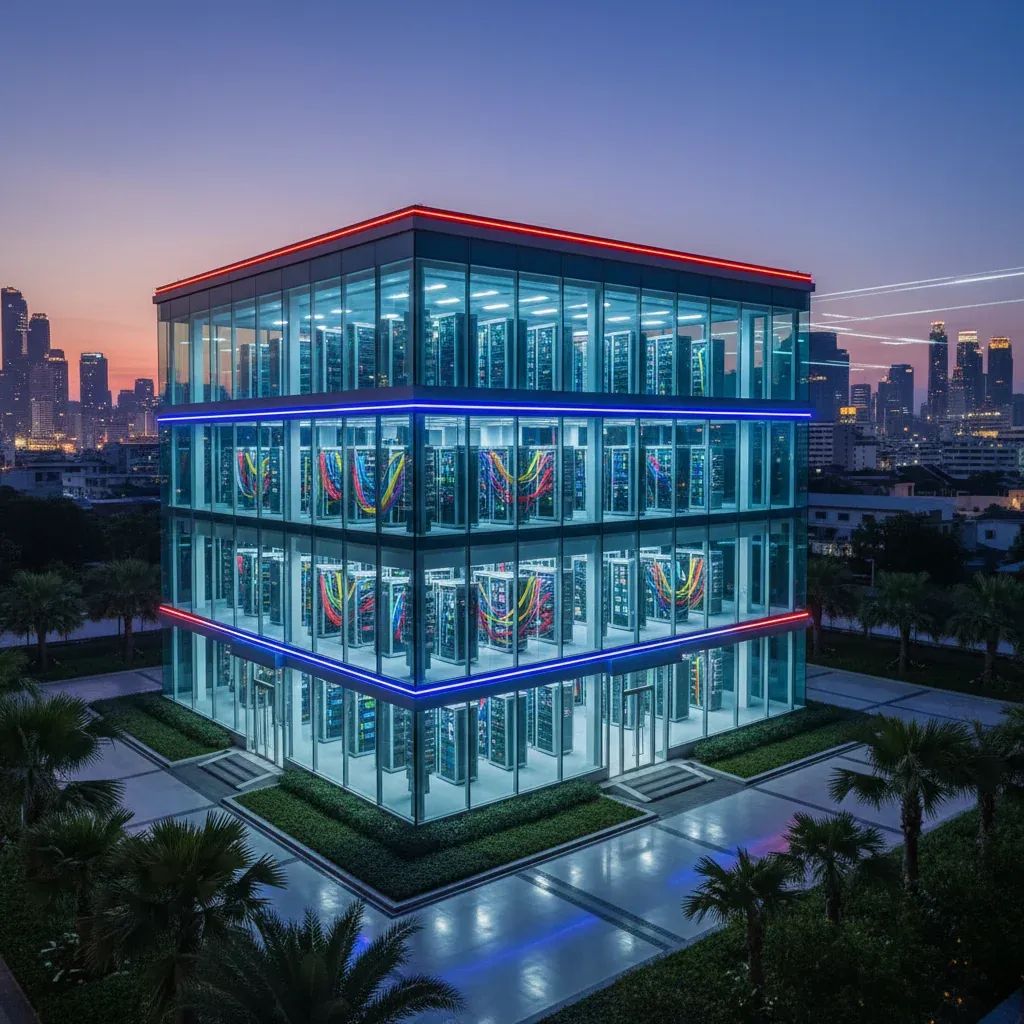
The Thailand Ministry of Commerce is reassessing how it evaluates imports from China as the world's manufacturing giant undergoes a historic shift from cheap, mass-produced goods to cutting-edge technology and premium products—a transformation that could reshape consumer choices and industrial competitiveness across Thailand in coming years.
Why This Matters
• Chinese imports now span from budget basics to premium tech, competing directly with Japanese and Korean brands in Thailand's mid-to-high-end markets.
• Thailand's trade deficit with China persists, driven partly by an influx of both low-cost and high-value Chinese goods that challenge local manufacturers.
• Manufacturing costs are evolving: Freight rates and logistics continue to be key factors affecting landed costs for Thai importers.
• Quality perception is evolving: China's push for innovation means Thai buyers must re-assess product standards across electronics, EVs, and smart home devices.
From Factory Floor to Innovation Hub
For decades, "Made in China" signaled affordability and ubiquity—textiles, furniture, consumer electronics that filled homes worldwide. That narrative is changing. China controls a significant share of global manufacturing, yet the composition has fundamentally shifted. The country is no longer content to be the world's assembly line; it increasingly aims to lead in advanced technologies, quantum computing, biomanufacturing, hydrogen power, and next-generation telecommunications—sectors that require intensive R&D and command premium pricing.
This pivot matters for Thailand-based retailers and manufacturers. Chinese exports increasingly include AI-enabled products and electric vehicles. Advanced manufacturing exports like robotics and precision equipment represent the high-value frontier China has spent years building through investment in R&D and technological advancement—now representing a growing share of Chinese exports.
What This Means for Thai Importers and Consumers
Thailand imports a significant portion of its total foreign trade value from China, making it one of the kingdom's largest trading partners. This relationship is undergoing concurrent shifts: rising quality, persistent price competitiveness, and product category evolution.
Quality Upgrade
The Thailand Revenue Department and trade associations should note that Chinese manufacturers are increasingly moving beyond commodity products. Government policy and market competition emphasize branding and quality control, particularly in EVs, smartphones, home appliances, and health-and-beauty products. For Thai buyers, this means due diligence—requesting samples, verifying supplier credentials, reading third-party reviews—is more critical than ever. The gap between a certified factory and a substandard operation can be the difference between premium margins and a warehouse full of unsellable stock.
Consumer expectations within China itself have driven part of this change. Domestic buyers increasingly demand natural ingredients, premium materials, and smart functionality—forcing manufacturers to meet higher standards or lose market share at home. That discipline flows through to export products.
Price Dynamics
Despite quality improvements, Chinese goods retain a cost advantage that remains difficult for Thai producers to match. Pricing pressures vary by sector and product category, but overall Chinese exports remain price-competitive. Logistics costs, including sea freight, remain an important factor in determining final landed costs for Thai importers.
However, Thailand's trade dynamics with China reflect broader patterns: the kingdom exports agricultural products and industrial components while importing finished machinery, electronics, and technology. As premium Chinese brands expand into market segments once dominated by Japanese and South Korean firms, Thai businesses face margin pressure and intensified competition.
Product Categories on the Rise
Thai consumers and businesses are increasingly engaging with several Chinese product families:
• Smart home devices: Minimalist designs, app-based controls, and automation features are gaining market traction.
• Health and beauty: Natural-ingredient cosmetics and skincare at accessible price points compete with established Western brands.
• Mobile accessories: Wireless earbuds, power banks, and protective cases remain popular as connectivity technology evolves.
• Compact appliances and IoT gear: Portable air purifiers, mini coffee makers, smart plugs.
• Robotics and emerging technologies: Consumer-grade robots and drones, with growing interest in advanced applications.
The Geopolitical and Supply Chain Context
China's transformation is not occurring in a vacuum. The so-called "China+1" strategy—where multinational firms add manufacturing capacity in Vietnam, Thailand, or India to diversify risk—has gained momentum since the late 2010s when trade tensions and pandemic disruptions exposed supply chain vulnerabilities. The reality is nuanced: most companies practice hybrid sourcing rather than full decoupling.
Vietnam has captured market share in labor-intensive categories—garments, footwear, furniture, electronics assembly—thanks to competitive wages and favorable trade agreements. Vietnam's manufacturing capacity, particularly in electronics assembly and processing, continues to grow. However, Vietnam lacks China's depth: integrated supply chains, rapid prototyping, and infrastructure for complex, high-volume production. For many products, the practical approach is hybrid sourcing.
Taiwan remains indispensable in high-tech supply chains, especially semiconductors. Yet Taiwanese manufacturers face mounting competition as Chinese firms expand into Southeast Asia—including Thailand—to produce technology components and optimize global operations. Taiwan's semiconductor expertise continues to drive significant export demand, but its export dominance faces long-term pressure as China invests in self-sufficiency and innovation.
For Thailand, these dynamics present both opportunity and risk. The kingdom can serve as a neutral assembly hub, attract investment seeking geographic diversification, and leverage free-trade zones (FTZ) that allow importers to manage duties and taxes efficiently. Conversely, Thai industries—cement, textiles, apparel, machinery, petrochemicals—may face pressure if unable to compete with the volume, price, and increasingly the quality of Chinese alternatives.
China's Innovation Direction
Beijing has signaled focus on advanced technologies including AI, quantum technologies, biomanufacturing, hydrogen energy, and next-generation networks. These represent areas of strategic importance that could shape future economic competitiveness.
The development of robotics and automation—including robots capable of complex physical tasks in factories, homes, hospitals, and warehouses—could redefine labor markets and manufacturing productivity across Asia if successfully deployed at scale.
Quantum computing represents another frontier, with potential implications for security, encryption, and computational capability. Control over quantum infrastructure could confer economic advantages, and China's R&D investment in this area is significant.
Next-generation telecommunications networks expected to emerge in coming years will integrate communication, computation, and sensing, forming infrastructure for smart cities, autonomous systems, and industrial applications. Standards-setting in these areas will be globally competitive.
Impact on Thai Businesses and Policy
The Thailand Board of Investment (BOI) and Ministry of Commerce must navigate this evolving landscape strategically. Deepening trade ties with China offers access to affordable inputs, advanced machinery, and consumer goods that can improve living standards. However, concentration of trade relationships creates dependency and potential vulnerability.
Thai manufacturers in traditional sectors face competitive pressure. Chinese imports affect domestic market share, while premium Chinese brands compete in electronics, appliances, and automotive. Survival strategies include moving up the value chain (design, branding, services), forming partnerships to access technology, or focusing on niche markets where customization and local knowledge provide advantage.
Thai importers should prioritize strategic supplier management. Supplier vetting is essential: request factory audits, verify compliance certifications (ISO, CE standards), and test samples rigorously. Leverage FTZ facilities to manage cash flow and tax efficiency. Monitor logistics costs and geopolitical developments that could affect supply chain stability.
Consumers benefit from greater product choice and competitive pricing, but should remain discerning. The gap between a well-engineered product and a substandard alternative remains significant. Brand reputation, warranty terms, and after-sales service are reliable indicators of quality.
Regional Dynamics and Market Shifts
Regional trade patterns continue to evolve as countries manage trade relationships and pursue economic diversification strategies. Thailand, as a regional trade hub with established free-trade zones and manufacturing capacity, remains positioned as an important part of broader Asia-Pacific supply chains.
The Bottom Line for Thailand
China's evolution from "world factory" to increasing emphasis on advanced technology is real and ongoing. For Thailand, the implications are significant: more sophisticated Chinese products will compete across price segments, supply chain interdependencies will likely deepen, and technology gaps—particularly in emerging areas—will require sustained domestic investment in education, R&D, and infrastructure.
Thai policymakers, businesses, and consumers should approach the evolving trade landscape strategically, recognizing that "Made in China" represents a broad spectrum from commodity products to sophisticated technology. Strategic flexibility, rigorous business practices, and forward-looking policy will determine competitive advantage in this changing environment.


