
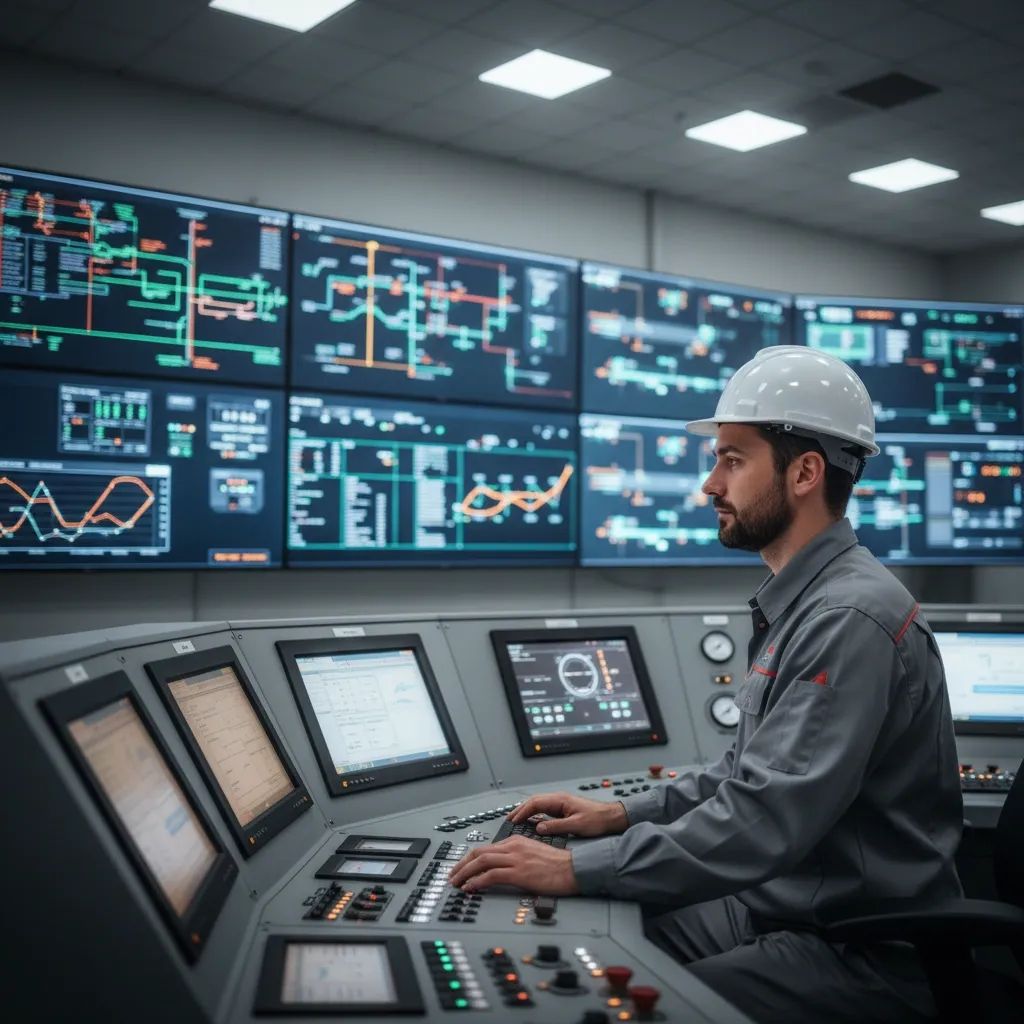
The Thailand Digital Economy and Society Ministry and its regional counterparts are confronting a paradox: artificial intelligence infrastructure could deliver unprecedented growth, yet the same technology risks widening income gaps, straining electricity grids, and forcing smaller firms to the margins. As data centers multiply across Southeast Asia and major economies pour billions into AI systems, the region's capacity to distribute benefits equitably—and power the expansion sustainably—remains uncertain.
Why This Matters
• Energy crunch ahead: Data center electricity demand in Southeast Asia is set to quadruple by 2035, potentially consuming up to 30% of national grid capacity in markets like Malaysia. In Thailand, EGAT (Electricity Generating Authority of Thailand) projects data centers could account for 8-12% of peak demand by 2030—a dramatic spike from less than 1% today.
• Job transformation, not just loss: Only 10% of workers expect full replacement, but 26% anticipate workflows changing substantially, creating a skills race many are losing. Thai workers in manufacturing, logistics, and back-office services face disproportionate exposure.
• Regional divide deepening: Singapore captures the majority of AI venture capital, leaving neighbors like Malaysia and Indonesia battling "brain drain" and relegated to lower-value roles. Thailand currently ranks fifth regionally in AI adoption, with smaller firms significantly lagging Bangkok-based enterprises.
• Geopolitical tightrope: US-China rivalry over semiconductors, cloud infrastructure, and rare earth minerals forces Thailand, Vietnam, and others to navigate between competing technology ecosystems without picking sides.
Grid Limits Threaten Digital Ambitions
The Thailand electricity authority and peers across ASEAN face a collision between AI's hunger for power and aging infrastructure. A single AI-optimized data center consumes as much electricity as 100,000 households, and the region's tropical heat compounds cooling costs. By 2030, data centers could account for 3-4% of peak demand regionwide, with some projections reaching far higher in individual markets.
Thailand's grid dependency remains particularly vulnerable. Currently, 80% of Thai energy supply still comes from fossil fuels—coal, natural gas, and imported fuel oil. When geopolitical shocks hit, such as the February 2026 closure of the Strait of Hormuz, Thailand (importing 65% of its energy needs) faced immediate pressure on generators and fuel costs. EGAT responded by accelerating coal plant operations and delaying renewable transitions, a pattern that will repeat if data center demand surges without parallel infrastructure expansion.
Renewable capacity is expanding, with solar and hydro projects proliferating across Thailand. Yet without massive battery storage and modernized transmission lines, intermittent renewables cannot guarantee the 24/7 uptime AI workloads demand. Transmission expansion in Indonesia, Vietnam, the Philippines, and Thailand runs at roughly half the pace required to meet net-zero pathways by 2030, creating bottlenecks that threaten both digital growth and decarbonization targets.
Nuclear power is returning to the table as a long-term fix. Malaysia has set a 2031 target to bring atomic energy online, explicitly citing surging AI data center requirements. Thailand, after decades of political debate, is also reconsidering nuclear energy as a baseload solution, though public acceptance and capital requirements remain contentious.
Workforce Displacement and the Skills Lag
AI is reshaping jobs faster than training programs can respond. Autonomous agents are eliminating repetitive coordination roles—junior project managers, logistics coordinators, and large swaths of Thailand's business process outsourcing sector (particularly BPO operations in Bangkok, Rayong, and Chiang Mai) face obsolescence as "agentic AI" systems execute multi-step workflows without human oversight.
Yet outright replacement is the minority scenario. Instead, 51% of Southeast Asian workers report AI reducing time spent on repetitive tasks, freeing capacity for higher-value work—if they possess the skills to step into those roles. The problem is an 18-to-24-month skills lag between AI deployment and workforce readiness. Despite 89% AI adoption among Singapore businesses by late 2025, only 30% have launched specific training programs, leaving 62% of employees reporting increased workloads post-adoption rather than productivity gains.
Large corporations are scaling AI nearly three times faster (46% adoption) than small and medium enterprises (15% even in digitally advanced Singapore), which employ the bulk of the region's labor force. In Thailand, this divergence is even sharper—major Bangkok conglomerates and multinational manufacturers operate advanced AI systems, while provincial SMEs struggle with basic digital infrastructure, concentrating productivity gains among a handful of firms while leaving millions in legacy roles vulnerable to eventual automation or wage stagnation.
Women and younger workers face disproportionate exposure. The World Economic Forum projected in early 2025 that while 11 million new jobs would emerge globally by 2030 from AI and information processing, 9 million would disappear—and regional analysis suggests up to 164 million workers in Southeast Asia could see their roles fundamentally altered, with women and youth at highest risk. Thai women, concentrated in textile manufacturing, hospitality technology, and customer service roles, face particular vulnerability.
Anxiety now centers less on job loss and more on erosion of autonomy. Workers increasingly fear over-reliance on AI will degrade critical thinking and professional judgment, reducing them to executors of machine-generated recommendations rather than decision-makers.
Regional Inequality and the Brain Drain
Singapore functions as the region's AI nerve center, attracting the lion's share of venture capital and high-value "orchestrator" roles—data scientists, model architects, governance specialists. This leaves neighboring economies competing for "executor" positions: implementation, maintenance, and lower-margin services.
Thailand is experiencing talent exodus to Singapore, with tech professionals citing higher salaries (30-50% premiums), more advanced projects, and better career acceleration. Meanwhile, Indonesia struggles with a critical shortage of "deep tech" expertise. The result is a bifurcated labor market: a small, highly mobile cohort of AI-literate professionals—55% more likely to switch jobs given their peaking market value—and a "frozen middle" of expensive legacy talent clinging to secure roles, unable or unwilling to reskill.
Freelancing is surging, particularly among Gen Z professionals in Bangkok and Chiang Mai who increasingly operate as one-person AI agencies rather than seeking traditional employment. This atomization of the workforce complicates tax collection, social insurance coverage, and collective bargaining, creating new policy headaches for the Thai government already struggling to manage the transition.
What This Means for Residents: Practical Guide for Thailand
For Thailand-based professionals, the immediate priority is upskilling before the competitive window closes. The Thailand government aims to boost AI literacy for 10 million people and produce 90,000 AI professionals by 2027 through its National AI Strategy. However, individuals cannot wait for public programs to catch up:
Formal Training Options:
• Thailand's NSTDA (National Science and Technology Development Agency) offers subsidized AI courses for Thai citizens
• Digital Economy Promotion Agency (DEPA) runs "Digital Skills for All" programs, with free online modules for prompt engineering and data governance (depa.tech)
• University partnerships: Chulalongkorn, Thammasat, and King Mongkut universities now offer AI certificates and post-graduate tracks
• Thai-language resources: Platforms like Udemy Thailand and Coursera now offer Thai subtitles for core AI courses; local providers like DataRockie and The Ladders specialize in Thai tech talent development
For Small Business Owners:Thailand's Board of Investment (BOI) offers incentives for SMEs adopting AI and automation:
• 5-8 year corporate tax exemptions for companies investing in Industry 4.0 technologies
• Reduced tariffs on AI hardware imports
• Technical support grants through BOI-affiliated consultants
However, the energy cost calculation is pressing. EGAT projects household electricity rates could rise 8-15% by 2028 if data center demand spirals unchecked (from current average of 3-4 baht/kWh to 3.50-4.25 baht/kWh). For a typical Thai household consuming 300 kWh monthly, this translates to 240-540 additional baht annually. Thailand's household debt ratio (66% of GDP, among the region's highest) leaves little cushion. Residents should:
• Invest in home solar systems (government solar subsidy program offers 30-50% rebates for residential installations)
• Monitor Thai Electricity Company rate schedules and demand management programs
• Consider shifting consumption to off-peak hours (currently 22:00-05:00)
For Job Seekers:Prioritize roles that blend domain expertise with AI fluency—areas where human judgment, cultural context, and creative problem-solving remain irreplaceable:
• Healthcare IT and wellness tech: Thailand's aging population drives demand for healthcare automation specialists
• Tourism and hospitality management: AI can handle logistics, but customer experience, cultural mediation, and crisis management require human expertise
• Legal and regulatory consulting: Thai corporate law, Thai labor regulations, and regulatory compliance require human judgment AI cannot replicate
• Complex manufacturing and supply chain roles: While automation handles routine tasks, supply chain optimization across Thai and regional networks demands human strategic thinking
Visa and Work Permit Implications for Expat Residents:
• Thailand's BOI Tech Talent program now offers 4-year renewable work permits for AI specialists and deep tech professionals with competitive salaries (minimum 80,000 baht/month)
• Smart Visa for tech entrepreneurs includes AI/AI-adjacent sectors
• Remote workers should note: Thailand's Long-Term Resident visa (LTR) introduced in 2022 accepts tech professionals earning 1.8 million baht annually without requiring Thailand-based employment
• Expect tightening of remote work visa criteria as Thailand positions itself as a tech hub—local hiring may become more prioritized
Household-Level Preparedness:
• Track electricity consumption and baseline costs now as a comparison point for future rate increases
• Explore government assistance programs: Thai government typically expands "electricity bill subsidies" for low-income households during crisis periods
• Consider joining community solar projects (increasingly available in Bangkok, Chiang Mai, and regional centers)
Geopolitical Maneuvering and Strategic Autonomy
Southeast Asia is caught between US and Chinese technology ecosystems, with limited room for neutrality. Singapore, Malaysia, Vietnam, and Thailand are attempting strategic hedging: courting investment from both superpowers while building indigenous capacity through open-source AI, digital infrastructure, and regional collaboration.
Vietnam has adopted a "Digital Non-Alignment" posture, investing in open-source models and diversifying trade relationships to reduce dependence on any single supplier. The country leverages its role in the "China Plus One" strategy, attracting multinationals seeking production bases outside China while maintaining economic ties with Beijing.
Thailand similarly exploits its geopolitical neutrality, welcoming data center investments from both US and Chinese firms. The government is developing a national master plan covering AI governance, data center investment, and clean energy transition, aiming to become a regional hub without alienating either Washington or Beijing.
Malaysia is championing an ASEAN AI Safety Network to harmonize regulatory approaches and strengthen collective bargaining power vis-à-vis tech giants. Yet all these strategies face limits: reliance on imported semiconductors, cloud computing from US hyperscalers, and foundational models from OpenAI or Chinese labs means true digital sovereignty remains elusive for smaller nations.
The South China Sea dispute and Myanmar's political crisis further complicate regional cooperation. The Philippines, holding the 2026 ASEAN chair, must balance upholding collective principles with advancing national interests, particularly on maritime security. Meanwhile, Myanmar's sham elections and worsening humanitarian crisis drain diplomatic resources and risk splintering ASEAN consensus.
Infrastructure Investment and Policy Gaps
Governments are responding with mixed effectiveness. Singapore has committed over $1 billion to its National AI Strategy 2.0, targeting 15,000 AI practitioners within five years and rolling out training programs for 100,000 workers. Malaysia projects 600,000 job losses in the next three to five years and is prioritizing reskilling to convert disruption into opportunity.
Thailand's Digital Thailand Plan 2.0 emphasizes talent development and infrastructure modernization, with allocated budget of 180 billion baht through 2027. Priority areas include AI skills training, data center infrastructure in designated zones (Eastern Economic Corridor, Bangkok metropolitan area), and renewable energy expansion. However, funding for energy storage and grid modernization lags far behind solar and electric vehicle investments, exposing a structural gap in the investment ecosystem.
Cross-border electricity trade via the ASEAN Power Grid could enhance reliability and integrate renewables, but policy alignment and regulatory reform remain incomplete. Coordinated infrastructure development is progressing slowly, and individual countries continue to prioritize national energy security over regional optimization.
Climate change and extreme weather compound these challenges. Southeast Asia consistently ranks climate as its top concern, with droughts, floods, and typhoons threatening livelihoods and economic security. Thailand's 2023 drought demonstrated grid vulnerability when hydropower capacity plummeted. AI data centers' carbon footprint—driven by fossil-fuel-heavy grids—undermines regional climate pledges and risks triggering backlash from civil society and international partners.
The Path Forward
The region's trajectory depends on three variables: the speed of energy infrastructure modernization, the effectiveness of workforce reskilling, and the capacity for collective action among ASEAN members. If grids cannot scale and workers remain unprepared, AI's benefits will concentrate among a narrow elite, exacerbating inequality and fueling political instability.
Thailand and its neighbors possess structural advantages—rising urbanization, supply chain diversification, robust consumption—but these will not automatically translate into inclusive growth. Targeted support for vulnerable populations, investment in grid flexibility and storage, and aggressive expansion of AI education are non-negotiable.
For individuals and businesses, the window for adaptation is narrowing. The technology is here, the investment is flowing, and the competitive dynamics are set. The question is no longer whether AI will reshape Southeast Asia, but who will capture the gains and who will bear the costs. Thailand residents must act now—upskilling before the talent drain accelerates, understanding energy cost implications before bills rise, and positioning themselves in roles where human expertise remains irreplaceable.


