
The Thailand Oil Fuel Fund now carries a deficit exceeding THB 62 billion, driven by geopolitical tensions in the Persian Gulf and a subsidy mechanism struggling to adapt. Daily diesel compensation of nearly THB 186 million marks a critical juncture for how Thailand manages energy costs amid global supply shocks.
What This Means for Your Wallet Right Now
When you fill your tank in Bangkok today, you're benefiting from state subsidies that are rapidly becoming unsustainable. Diesel B7 currently costs THB 42.90 per liter and Gasohol 91 sits at THB 42.08—rates that undercut your regional neighbors significantly. Drivers in the Philippines pay THB 46.95-87.18 per liter for petrol, while those in Singapore and Indonesia face THB 44.29-117.91 for diesel. That 30-50% discount you enjoy exists because the Oil Fuel Fund absorbs the gap between global market prices and what you see at the pump. That gap is now costing the fund nearly THB 5.6 billion monthly in deficits.
Daily compensation to diesel pumps has surged from surpluses of THB 505 million just weeks ago—the first surplus in four years (February)—to persistent daily deficits. This reversal exposes fundamental fragility in Thailand's subsidy architecture at precisely the moment when geopolitical shocks threaten to break it entirely.
The Crisis Unfolding Thousands of Kilometers Away
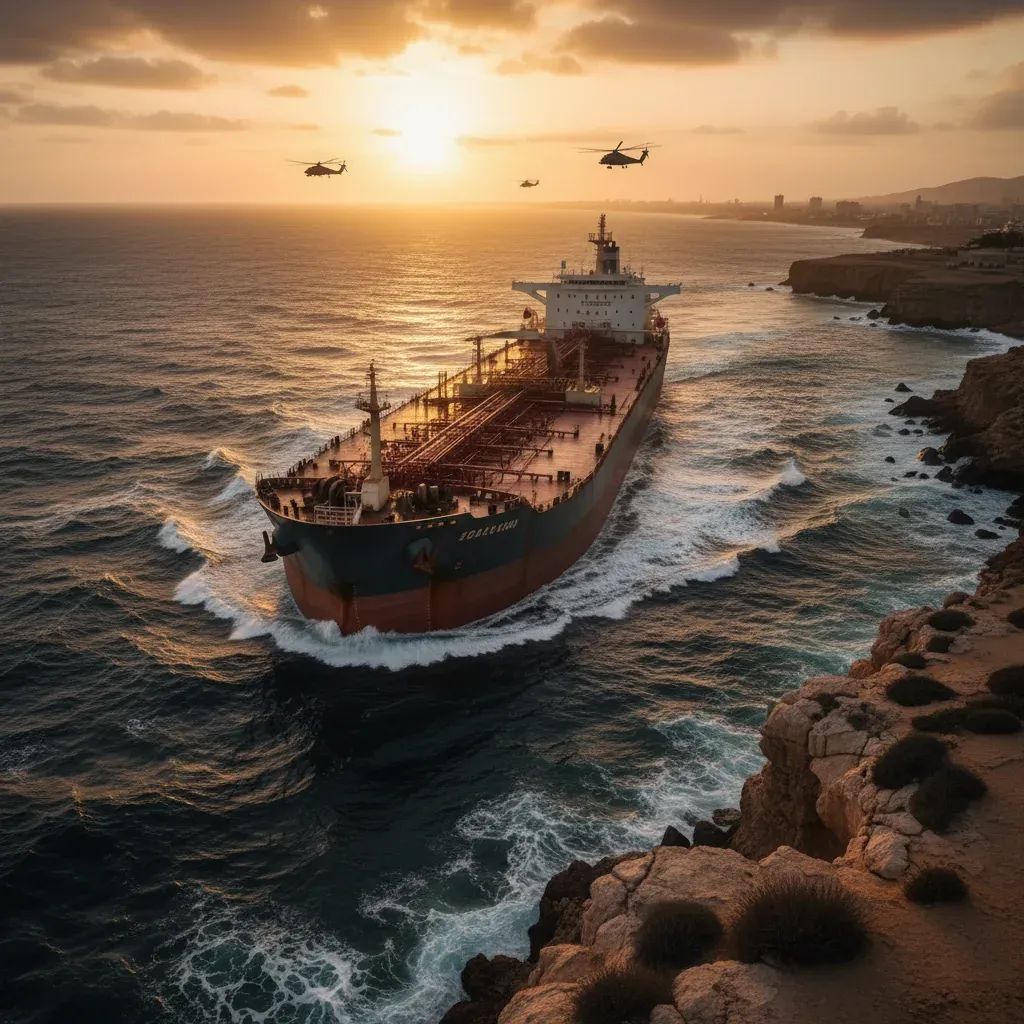
On April 20, mounting hostilities in the Gulf of Oman triggered a sequence that rippled across continents. U.S. Navy vessels seized an Iranian-flagged tanker accused of breaching blockade restrictions. Tehran responded by threatening to seal the Strait of Hormuz, the world's most critical oil chokepoint, through which approximately 13 million barrels flow daily. At minimum, at least 13 tankers immediately altered course, while diplomatic talks brokered through Islamabad collapsed when Iran refused engagement unless the blockade lifted first.
For Thailand, this was not abstract geopolitical theater—it became an immediate energy crisis. The kingdom sources between 50-70% of crude imports through that strait, leaving no margin for error. Unlike energy-exporting neighbors, Thailand possesses no domestic reserves and relies entirely on uninterrupted maritime supply lines. Refinery output currently stands at 80.51 million liters daily, barely exceeding domestic consumption of 52.88 million liters, leaving little buffer when tankers vanish from tracking systems.
The market response was immediate and severe. Brent crude jumped 5-8% from its pre-crisis close of $90.38 per barrel, while WTI climbed 4-7% from $83.85. Energy analysts project that if the standoff persists beyond weeks, crude could breach $105-115 per barrel, with worst-case scenarios potentially touching $150-200 and triggering the most severe energy shock in a generation.
Why Transport Costs Will Likely Follow
Transport operators consume 48% of Thailand's total petroleum, and they've warned the government that even modest pump-price increases will ripple through logistics networks and cascade into food-price inflation within days. Every $10 per barrel climb in Brent translates to roughly 0.5 percentage points of additional headline inflation in Thailand while shaving 0.15% off GDP growth. If crude sustains above $100 through the second quarter, you'll likely notice it in grocery prices, restaurant meals, and delivery costs before it shows up in headlines.
The government has publicly committed to "gradual, step-by-step" adjustments to retail prices, a phrase that means different things to different people. For the Energy Ministry, it signals fiscal responsibility. For transport unions, it signals political commitment to stability. The arithmetic suggests neither group will be satisfied indefinitely.
Thailand's Reserves: Safer Than They Appear?
Thailand maintains 110 days of oil reserves as of April 20: 25 days held as legally mandated strategic stock, 25 days in commercial inventory, 37 days aboard inbound vessels, and 23 days confirmed by purchase contracts. The International Energy Agency recommends 90 days for net importers, so Thailand appears cushioned. That appearance dissolves under scrutiny. In-transit barrels depend on unobstructed passage through contested waters; purchase contracts carry force-majeure clauses allowing cancellation or delay if conflict disrupts supply routes.
The Thailand Ministry of Energy has activated contingency measures kept quiet from public discussion. A 36 million-barrel import surge is scheduled for May, timed to coincide with peak Songkran demand and preemptively build buffer stocks. The ministry has suspended crude exports and opened an emergency energy-monitoring command center staffed around the clock.
Quietly, diplomatic missions have fanned across continents. Negotiators are in Brazil, Azerbaijan, and Nigeria, pivoting Thailand's import portfolio away from the Gulf region—currently representing 50-70% of crude inputs—toward alternative suppliers. State energy company PTT is quietly evaluating Russian crude as a transitional stopgap, though sanctions complications remain barriers. The long-term strategy includes accelerating the controversial Land Bridge project, a transnational pipeline across southern Thailand linking the Indian and Pacific oceans, bypassing both Hormuz and the Strait of Malacca. Feasibility studies are advancing, but construction timelines stretch years ahead.
How Your Neighbors Are Handling the Same Crisis
Thailand is not improvising alone. Indonesia, which also sources most crude from the Gulf, deployed envoys to Tehran and secured assurances that Indonesian-flagged vessels transit Hormuz safely. Jakarta additionally mandated B50 biodiesel (50% biofuel blend) effective July 1, displacing 4 million kiloliters of fossil diesel annually. Malaysia ordered Petronas to negotiate Russian supply contracts while launching rooftop-solar deployment to reduce energy demand. Vietnam, facing the bloc's highest vulnerability at 88% Middle East dependence, deployed the broadest toolkit: residential subsidies of 4,000-5,000 dong per liter, suspended environmental taxes on oil temporarily, and zeroed import tariffs on petroleum products to maximize supply flexibility.
Collectively, the region shifted from passive monitoring in March to active crisis management, revealing how vulnerable Southeast Asia remains when a single maritime chokepoint faces closure.
What Comes Next: Three Possible Futures
Most Likely (Baseline): Diplomatic back-channels yield partial Hormuz reopening within weeks. Brent settles near $95-100 per barrel. Thailand's fund deficit stabilizes around THB 70-75 billion by mid-year, manageable through the proposed debt-ceiling lift. Retail prices adjust modestly, food inflation creeps to 3-4%, and the crisis fades from headlines by summer. You'll likely see a modest pump-price adjustment but nothing dramatic.
Concerning Scenario (Stress): The strait remains sealed through May. Crude spikes toward $115 per barrel. The fund deficit approaches THB 90 billion. The government combines retail price hikes (at least 50 satang per liter), subsidy cuts, and emergency budget reallocations. Transport costs rise 5-10%, food inflation accelerates to 5-6%, and household purchasing power among lower-income earners contracts noticeably. Groceries cost more. Delivery fees increase. Your paycheck doesn't stretch as far.
Worst Case (Tail Risk): Broader regional conflict disrupts the Strait of Malacca as well. Crude touches $150-200 per barrel. Thailand joins neighbors in fuel rationing, emergency strategic-reserve draws, and work-from-home mandates. The Oil Fuel Fund requires a THB 200+ billion bailout. Real incomes decline, and social unrest emerges in transport and agricultural sectors.
What You Can Do Now
The immediate practical reality: hold tight for the next 2-4 weeks while diplomatic efforts continue. Energy analysts and the government's emergency command center will signal major changes before they happen—watch for announcements about pump-price adjustments or subsidy changes. If you rely on your vehicle for work or frequent travel, filling up before any announced price increase is rational household budgeting, not panic-buying. Budget for modestly higher food and delivery costs over the next two to three months as a precaution. If you're in agriculture or transport operations, begin conversations with your suppliers about cost-sharing arrangements before prices spike further. Monitor the news for government announcements about subsidies or targeted assistance programs—lower-income households may qualify for direct cash transfers or fare subsidies if the situation deteriorates.
For now, Thailand's official posture remains cautiously reassuring: reserves are adequate, alternative suppliers are lined up, retail prices will adjust gradually. Yet the widening THB 62 billion deficit and the daily THB 185.76 million burn rate underscore the arithmetic trap: subsidy architecture designed for $60 oil collides with sustained $90-plus crude, geopolitical risk premiums, and dwindling fiscal tolerance. The next few weeks will determine whether that architecture adapts or breaks.


