
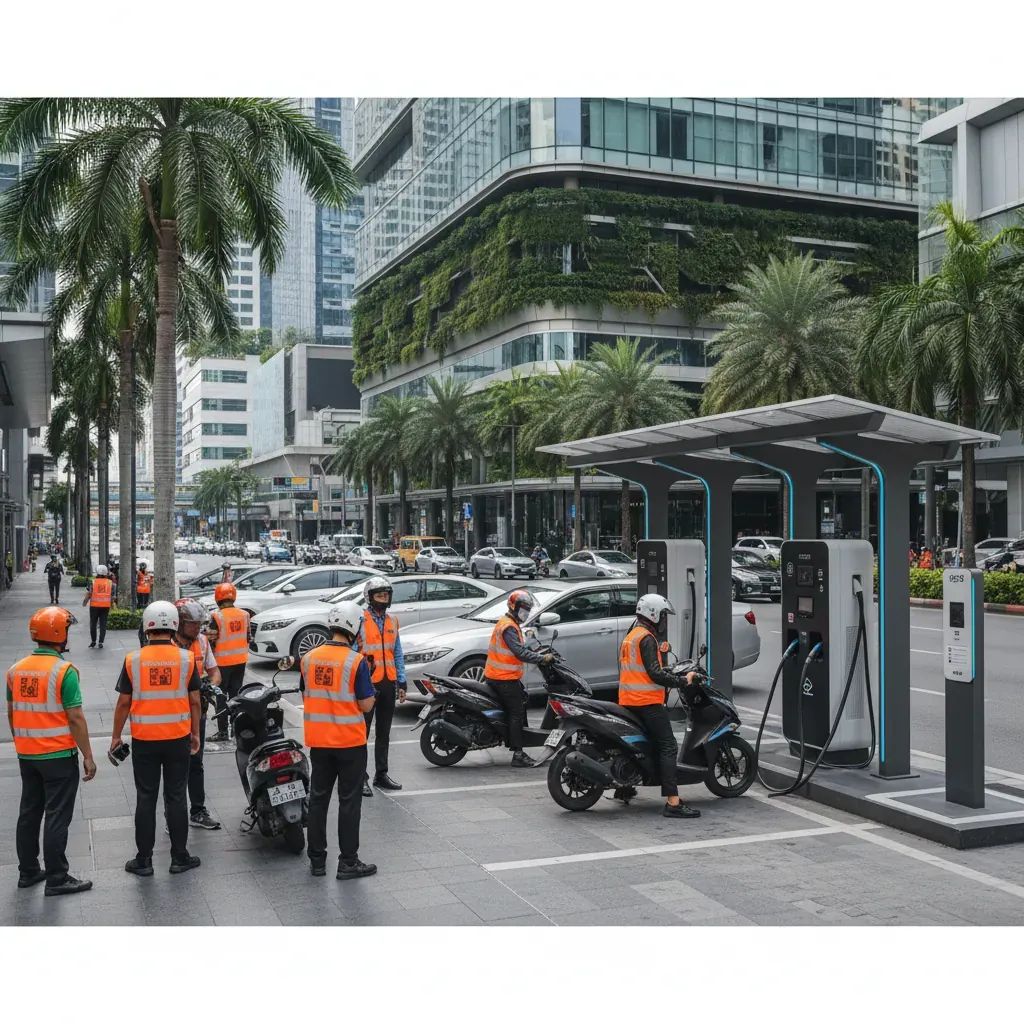
Grab Thailand has rolled out a sweeping expansion of its electric vehicle initiative—nine fresh partnerships with manufacturers, distributors, and taxi cooperatives—designed to offer drivers cost savings as energy prices remain elevated. The ride-hailing giant is accelerating its electrification strategy to provide a more economical alternative for commercial operators.
Why This Matters
• Cost relief: Running an EV can cost significantly less per kilometer than petrol vehicles—electricity is reported to be 60–70% cheaper than gasoline on a per-kilometer basis.
• Fleet milestone: Over 30,000 electric vehicles are now active on the Grab platform, and user adoption of "Grab EV Rides" has jumped more than 35%.
• Driver access: New "Drive-to-Own" schemes let drivers finance EVs with daily payments from 600 baht, approved based on platform performance rather than traditional credit checks.
• Charging rollout: Exclusive EV charging stations for Grab drivers are coming—40 nationwide by 2027, backed by a 400 M baht investment from Sharge.
The Nine Partners Powering the Shift
The alliance structure divides into three tiers, each targeting a different slice of the mobility spectrum. For electric taxi rentals, Grab has signed EV7, Ch. Pattana Taxi, Siam Taxi Cooperative, Mittare Taxi Cooperative, and P-bike. Electric motorcycle rentals will flow through SLEEK EV, while drivers looking to own four-wheelers can turn to CL & V GROUP CAR RENT or BORROW Mobility (operated by B Autohaus). Electric motorcycle ownership is handled by EM Motor.
This tiered approach addresses the fragmented nature of Thailand's ride-hailing ecosystem, where motorcycle taxis dominate short-haul urban trips and four-wheel vehicles cover longer routes and airport runs. By embedding partnerships at the cooperative level—traditionally the backbone of Bangkok's taxi infrastructure—Grab is sidestepping the capital-intensive burden of fleet ownership and instead acting as a platform enabler.
Drive-to-Own: Financing Built for the Gig Economy
The Drive-to-Own model represents a sharp departure from conventional auto financing. Instead of requiring pay stubs or formal employment records, loan approval hinges on a driver's platform performance metrics—trip frequency, customer ratings, and earnings consistency. Daily installments start at 600 baht over lease terms stretching to five years, and the package includes first-class public vehicle insurance, scheduled maintenance, battery insurance, and free tire replacements.
For drivers who've spent years locked out of traditional credit markets, this is a tangible on-ramp to asset ownership. It also aligns Grab's business incentives with driver retention: the longer a driver stays active, the more likely they are to complete the lease and own the vehicle outright, reducing turnover and stabilizing the platform's supply side.
Charging Infrastructure: Closing the Range Anxiety Gap
Access to reliable, affordable charging remains a significant barrier to EV adoption among commercial drivers. Grab is tackling this through partnerships with Sharge, Spark EV (at Bangchak stations), and Altervim Super Charge stations. The standout initiative is Sharge's commitment to build Thailand's first EV charging network exclusively for Grab drivers, with 40 stations slated for completion by 2027 and a total investment exceeding 400 M baht.
These dedicated stations will offer fast-charging capabilities and preferential rates, effectively creating a parallel refueling ecosystem that mirrors the convenience of petrol stations. For drivers operating 10- to 12-hour shifts, the ability to top up quickly at predictable locations removes a major operational consideration and makes EV adoption far more practical.
What This Means for Drivers and Riders
For drivers, the immediate benefit is cost predictability. With fuel prices experiencing volatility, electricity offers a more stable and significantly cheaper alternative per kilometer traveled.
For passengers, the shift to EVs translates into a quieter, smoother ride and, potentially, lower fares over time as operational savings trickle through the pricing model. Grab has allocated 10 M baht in subsidies to help gasoline-vehicle drivers, but the company's long-term strategy is unambiguous: electrification provides a more stable alternative to fluctuating fuel costs.
There's also a secondary effect on urban air quality. Bangkok's notable air quality challenges, exacerbated by dense traffic and aging diesel fleets, stand to improve as more ride-hailing vehicles switch to battery power.
Thailand's EV Market and Policy Environment
Thailand's EV market is growing, with government incentives in place to encourage adoption. The government's EV policies offer subsidies for battery electric vehicles and electric motorcycles. Thailand has set targets for domestic EV production, making commercial electrification increasingly important for large-scale transport operators.
The Bangkok Metropolitan Administration has also been exploring initiatives to support commercial vehicle electrification, signaling institutional interest in advancing the sector.
Considerations and Challenges
Several factors warrant consideration as Grab rolls out this expansion. Energy costs and economic conditions can influence both driver and consumer demand for ride-hailing services. Additionally, Thailand's charging network remains concentrated in major urban areas, and drivers operating in provincial markets may face infrastructure constraints until networks expand further.
The Drive-to-Own financing model also ties drivers to multi-year commitments. Changes in platform earnings or personal circumstances could affect a driver's ability to complete lease terms.
A Strategic Shift Toward Electrification
Grab's accelerated EV push aligns with broader global trends toward sustainable transport and the company's commitment to long-term sustainability goals. For commercial operators in Thailand, electrification increasingly represents a pragmatic response to energy cost pressures and reflects industry recognition that commercial fleets are transitioning toward electric alternatives.
For drivers, the partnerships Grab has assembled provide a structured pathway to access EV technology with financing tailored to gig economy work patterns. Whether infrastructure expansion and policy support can keep pace with demand remains an important question for the sector's growth.


