
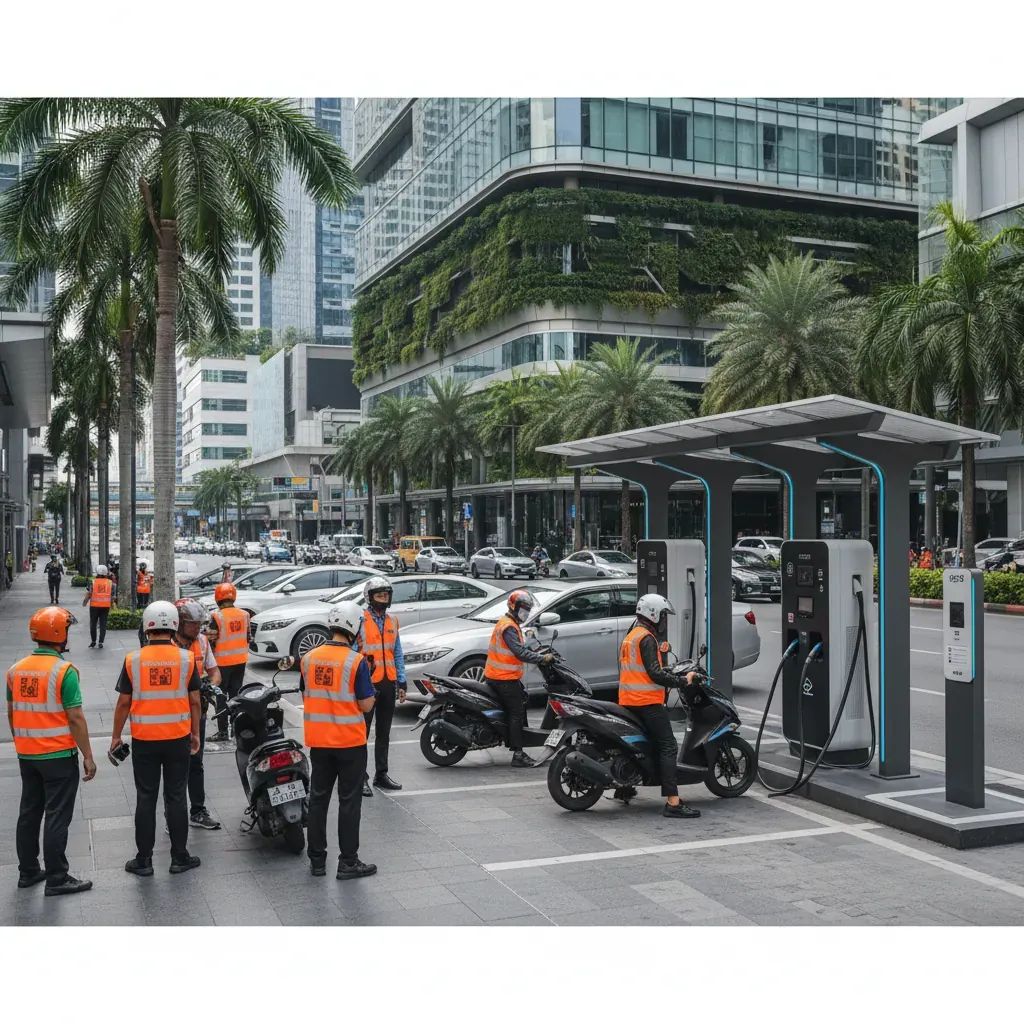
The Thailand Ministry of Transport has rolled out three major new rules for ride-hailing apps such as Grab and Bolt, moving to formalize and tighten safety standards for a driver population that until recently operated largely outside formal regulation. The measures—mandatory public driver licenses, vehicle re-registration as commercial transport, and in-car CCTV—aim to bring platform drivers into the legal framework by March 31, 2026, while introducing accountability mechanisms absent from the current system.
Why This Matters
• Public driver licenses are now compulsory: All platform drivers must hold public transport licenses (requiring background checks) as of March 31, 2026.
• Vehicles must switch registration: Private cars must become commercial taxis (รย.18), bikes must become public motorcycles (รย.17), with public liability insurance.
• CCTV inside cars: A forthcoming ministerial regulation will mandate closed-circuit cameras in all ride-hailing vehicles.
The Push for Licensing and Background Checks
The Thailand Department of Land Transport (DLT) has designated obtaining a public driver's license—not a standard Class 1 or 2 license—as the cornerstone of the new rules. This license category requires criminal background checks and formal driving competency testing, mechanisms absent when drivers simply register on Grab, Bolt, or other platforms using a personal ID.
The DLT has expanded testing capacity to accommodate the backlog of platform drivers seeking compliance before the March 31 cutoff. Platforms are required to verify that active drivers hold the correct license and must enforce account deactivation for those who do not obtain it within the specified period. Operators risk losing the ability to renew operating permits if they fail to enforce compliance.
The policy responds to safety concerns in the ride-hailing sector, including issues like identity fraud—sometimes called "ID swapping"—which has been flagged by driver unions and civil society as a systemic risk that existing platform self-regulation has failed to address.
Vehicle Re-registration and Insurance Requirements
Beyond driver credentials, the regulations now treat ride-hailing cars and motorcycles as commercial vehicles. Private cars must be re-registered under the รย.18 category (electronic taxi), and motorcycles under รย.17 (public motorcycle). Both categories require public liability insurance, which provides greater coverage for passengers than standard third-party policies.
Only vehicles less than nine years old from first registration qualify for commercial conversion. This rule is intended to improve safety and comfort standards.
The re-registration process requires drivers to visit DLT offices with vehicle ownership documents—a challenge for those with cars still under hire-purchase agreements. Driver associations have requested that the online registration portal be expanded to handle commercial conversions remotely.
Closed-Circuit Cameras and Privacy Considerations
The third measure, mandating in-car CCTV, is still being drafted as a ministerial regulation but is expected to be announced soon. The cameras are intended to deter assault, harassment, and theft, and to provide evidentiary records in disputes. The Ministry has cited similar rules already in place for public buses and taxis as precedent.
Privacy advocates note that the regulation does not yet specify data retention periods, access protocols, or encryption standards. These details will be important for protecting both driver and passenger privacy.
What This Means for Drivers
The formalization of ride-hailing work brings Thailand in line with regulatory models in other Southeast Asian countries, where background checks, commercial insurance, and platform oversight are standard. However, the transition imposes upfront costs and bureaucratic requirements on drivers, many of whom entered the gig economy precisely because it required minimal paperwork.
The regulatory package focuses on safety and legality requirements. Drivers should:
• Ensure they hold or can obtain the required public driver license
• Budget for vehicle re-registration fees and higher insurance premiums
• Prepare for CCTV installation once requirements are finalized
Driver unions have called on platforms to subsidize insurance premiums and equipment costs, but no platforms have committed to doing so to date.
A persistent concern from some drivers is the absence of work accident insurance. Because most platforms classify drivers as independent contractors, not employees, riders injured on the job receive no workers' compensation coverage.
Platform Accountability
While the new rules place obligations on individual drivers, they also impose duties on platforms themselves. Ride-hailing apps must:
• Implement checks to prevent ID fraud
• Maintain a complaint system with clear penalties and account suspensions
• Display driver license verification status in-app
• Cooperate with random audits by the DLT
Impact on Passengers
For users, the changes promise greater accountability and recourse. Verified licenses and insurance mean passengers harmed in accidents or crimes have clearer legal pathways for compensation. The CCTV requirement may also contribute to improved safety during rides.
However, the cost burden on drivers may push fares upward. If platforms pass compliance costs to consumers via higher base rates or reduced promotions, ride-hailing could experience pricing changes that affect its competitive position relative to metered taxis.
Next Steps for Residents
If you drive for a ride-hailing platform or use these services regularly, here's what to watch:
• License holders: Check if your current license is public or private category; if private, schedule a DLT appointment for testing before the March 31 deadline.
• Vehicle owners: Confirm your car or bike age and current insurance category; prepare for re-registration fees.
• Passengers: Monitor for possible service changes as the industry transitions to the new requirements.
• Advocates: Monitor platform compliance and enforcement of the new standards.
The CCTV regulation draft is expected to be published for public comment in the coming weeks. It will clarify data handling, retention, and access—issues with direct implications for both drivers and passengers.


