
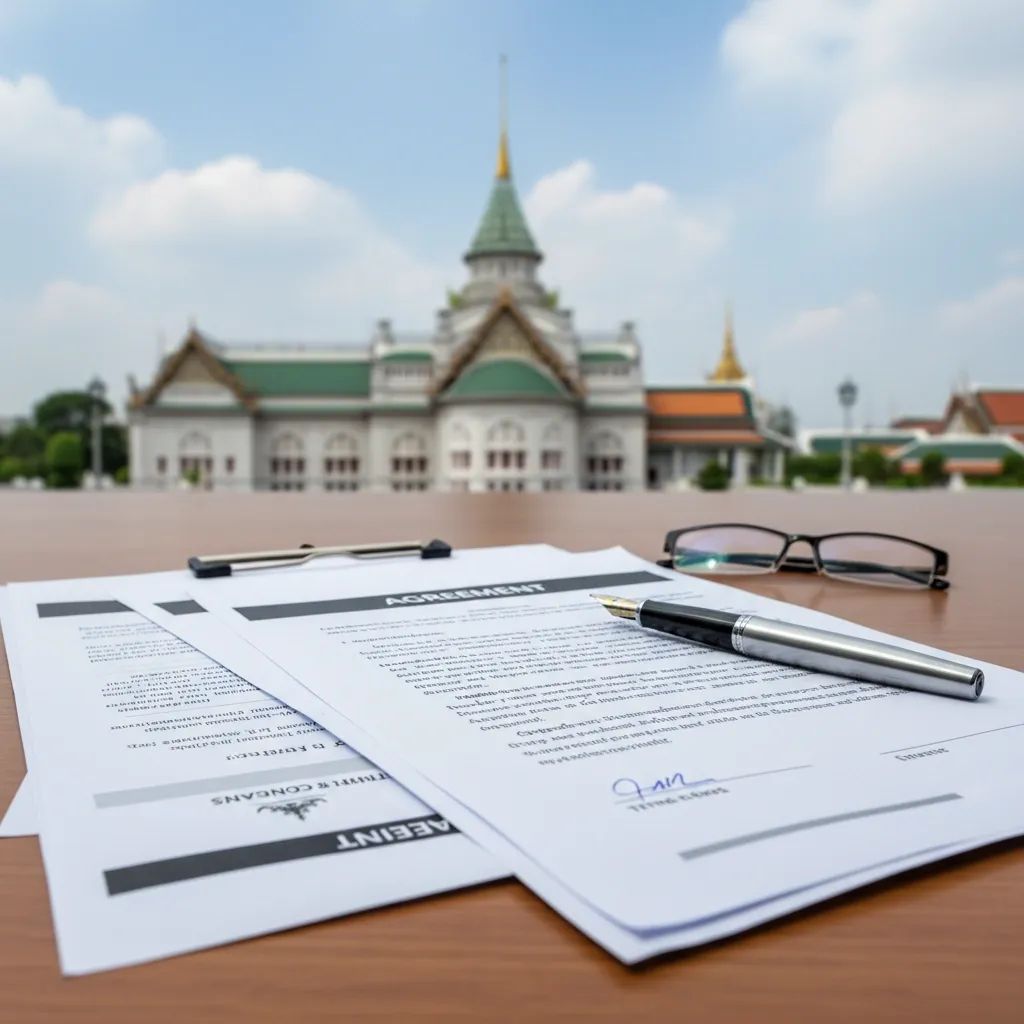
Thailand's Ministry of Justice has intensified scrutiny of legal professionals accused of facilitating illegal property ownership structures for foreign investors, as a wave of fraud victims moves to sue the very law firms they paid to protect them. The crackdown comes amid mounting evidence that dozens of expatriates have lost homes—and in some cases, life savings—after following advice that violated Thailand's Foreign Business Act.
Why This Matters for Foreign Property Owners
• Legal liability is shifting: Foreign property buyers who used "Thai nominee" company structures are now targeting their former legal advisors in court, claiming professional negligence.
• Government enforcement is escalating: The Thailand Land Department signed a new memorandum of understanding with the Department of Business Development on June 1, 2026, to cross-reference corporate ownership records and close nominee loopholes.
• Ethical penalties are coming: The Ministry of Justice convened in May 2026 to discuss disciplinary action against lawyers, accountants, and other professionals who enable nominee arrangements for foreign clients.
The issue has exposed a long-standing gap in Thailand's property market: foreign nationals cannot own land directly under the Land Code, yet unscrupulous advisors have for years marketed illegal workarounds—most commonly the "Thai company" scheme, in which a foreigner funds a Thai-registered company with 51% Thai shareholders who hold shares in name only. When authorities or the Thai nominees themselves challenge these arrangements, foreign buyers often lose everything.
The Nominee Trap and How It Unraveled
Under Thailand law, a foreigner may own a company registered here, but only if Thai nationals hold at least 51% of the shares and provide genuine capital. In practice, many law firms arranged sham structures in which Thai citizens were paid nominal fees to hold shares without contributing funds or exercising control—a clear violation of the Foreign Business Act and the Land Code.
For years, enforcement was sporadic. But in 2025 and 2026, the Thailand Land Department launched proactive audits of corporate landholdings, flagging thousands of suspicious structures. When investigators found that Thai shareholders had not paid for their stakes or that all capital came from a single foreign source, they voided ownership titles. In some cases, Thai nominees—realizing the property was registered in their names—claimed legal ownership and refused to transfer titles back, leaving foreign buyers with no recourse.
The legal and financial fallout has been severe. Multiple expatriates in Chiang Mai, Phuket, Koh Samui, Hua Hin, and Phetchaburi report paying in full for homes only to discover their ownership structures were invalid. Some have initiated lawsuits against the law firms that designed these schemes, alleging breach of fiduciary duty and professional malpractice.
Government Moves to Close Loopholes
The Thailand Ministry of Justice has taken a dual approach: tightening enforcement against foreign buyers who flout ownership rules, while also preparing disciplinary proceedings against the professionals who enable them. In a meeting held in May 2026, ministry officials discussed ethical sanctions for lawyers and accountants who facilitate nominee arrangements, emphasizing that such conduct violates the Lawyer's Code of Conduct.
The Thai Bar Association has publicly acknowledged the problem. In January 2026, the association confirmed that one lawyer had been disbarred and another had their license suspended for two years over ethics violations. The cases did not involve property fraud specifically, but the association signaled that it would pursue disciplinary action "rigorously and transparently" when misconduct is proven.
On May 12, 2026, the Land Department announced upgraded safeguards to prevent nominee land ownership and protect national interests. One month later, on June 1, 2026, it signed a data-sharing agreement with the Department of Business Development to cross-check shareholder records, ownership patterns, and capital flows in real time. The goal: identify shell companies before they register land titles.
What This Means for Expats and Investors
Foreign nationals who currently hold property through nominee structures face a stark choice: unwind the arrangement voluntarily or risk losing the asset when authorities audit the title. Legal experts now advise that any ownership structure relying on unpaid or inactive Thai shareholders is unenforceable and may subject the foreign buyer to criminal liability under nominee laws.
Legitimate pathways remain available:
• Condominiums: Foreigners may own condominium units outright (freehold), provided the foreign ownership quota in the building does not exceed 49% and the buyer can prove foreign currency transfer into Thailand.
• Long-term leases: Lease agreements of up to 30 years, renewable for additional terms, are legal and widely used. Buyers should ensure the lease is registered at the Land Office to secure enforceability.
• Superficies and usufruct rights: These allow foreigners to own structures on leased land or to use and derive income from property for a fixed term or for life.
• Investment-based land ownership: Under Land Code Section 96 bis, a foreigner who invests at least 40 M baht in a qualifying business may apply for permission to own up to 1 rai (approximately 0.4 acres) of land for residential use. In practice, approvals are rare and require extensive documentation.
Importantly, any structure involving Thai shareholders who did not contribute genuine capital is illegal. The Thailand Department of Special Investigation (DSI) has opened multiple cases involving property fraud, and Hong Kong media outlets have issued warnings to prospective investors about the risks in Thailand's real estate market.
Regional Context: How Thailand Compares
Thailand's restrictions are not unusual in the region. The Philippines limits foreign ownership of condominium units to 40% of a project and prohibits land ownership outright (except through inheritance). Vietnam allows foreigners to own apartments and villas on leasehold terms of up to 50 years, renewable once, with a cap of 30% foreign ownership per building. Malaysia permits freehold condominium purchases above a minimum price threshold (typically 600,000 to 1 M ringgit), while Singapore allows unrestricted condominium purchases but imposes a punitive 60% stamp duty on foreign buyers and requires special approval for landed property.
By contrast, the United States generally imposes no federal restrictions on foreign property ownership, though some states limit agricultural land purchases or ban ownership near military installations by nationals of "foreign adversary" countries. In Europe, EU and EEA citizens enjoy equal rights across member states, while non-EU buyers often need permits and face restrictions on agricultural land.
Thailand's rules aim to preserve national sovereignty over land, prevent speculative bubbles that price out local residents, and maintain cultural and demographic stability. The government has made clear it will not tolerate legal workarounds that undermine these objectives.
Legal Recourse and Next Steps
Victims of nominee schemes have begun pursuing lawsuits against the law firms that set up the structures. The legal theory is straightforward: if a lawyer advised a client to engage in an illegal arrangement, the lawyer breached their duty of care and is liable for resulting losses. Some plaintiffs are seeking damages equivalent to the full purchase price of their homes, plus legal fees and interest.
Success in these cases will depend on proving that the lawyer knew—or should have known—the arrangement violated Thai law. Internal emails, contract drafts, and retainer agreements are likely to be critical evidence. Plaintiffs will also need to show they relied on the lawyer's advice and would not have proceeded without it.
For foreign residents who have not yet faced enforcement, the window to act is narrowing. The Land Department's new data-sharing protocols mean that nominee structures are increasingly likely to be detected during routine audits. Legal advisors recommend that affected buyers consult with a reputable Thailand-licensed attorney experienced in property compliance to explore options for restructuring or unwinding the arrangement.
At a minimum, buyers should:
• Verify all corporate documents and confirm that Thai shareholders actually contributed capital.
• Review the source of funds used to purchase shares and ensure the paper trail matches the declared ownership structure.
• Consider converting to a long-term registered lease if outright ownership is not legally achievable.
• Avoid transferring additional funds into nominee structures or making improvements that increase exposure.
Lessons for Future Buyers
The current crisis underscores the importance of independent legal due diligence. Prospective buyers should:
• Hire a Thailand-licensed lawyer who is not affiliated with the developer or real estate agent.
• Ask for written opinions on the legality of any proposed ownership structure and request citations to relevant statutes and case law.
• Verify the lawyer's credentials with the Thai Bar Association and check for any history of disciplinary action.
• Avoid paying into personal bank accounts—legitimate developers use corporate accounts that can be audited.
• Check project permits with the Ministry of Interior and local land offices to ensure the development is authorized and that infrastructure connections (electricity, water) are in place.
The Thailand Revenue Department and Ministry of Justice have signaled that enforcement will continue. For the expatriate community, the era of "creative" property solutions is over. The question now is how many foreign buyers will lose their homes—and how many lawyers will face professional consequences—before the market adjusts.


