
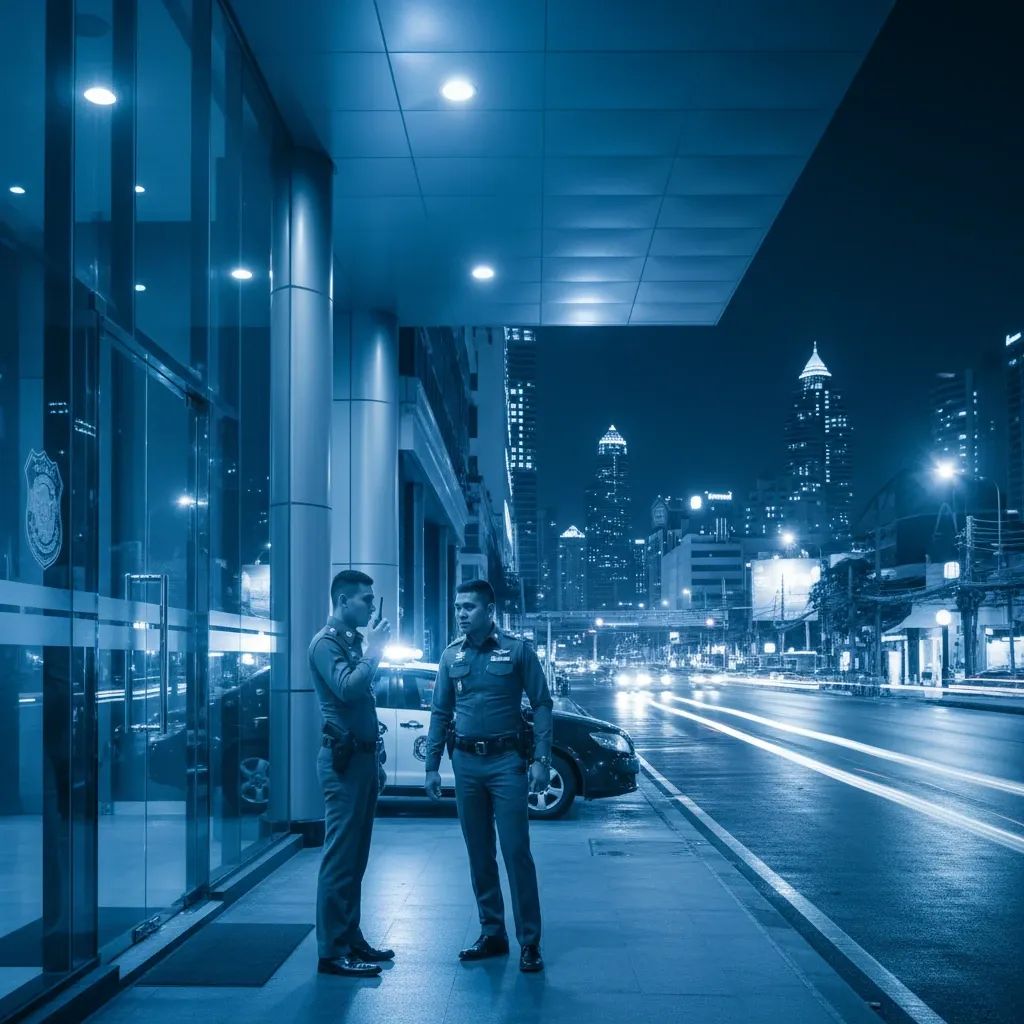
Thailand Immigration Police have arrested 5 foreign nationals on prostitution charges in central Bangkok's Sukhumvit Soi 4 district on July 25, 2025, part of an escalating enforcement campaign that is drawing questions about public safety priorities, tourism industry impacts, and the country's decade-long debate over how to regulate sex work.
The arrests took place shortly after midnight when Lumpini Metropolitan Police in coordination with immigration officials detained three Vietnamese women, one Filipina transgender woman, and one Tanzanian woman for allegedly soliciting tourists on the busy pedestrian corridor. All five were charged with "approaching, soliciting, or encouraging a person in a public place for prostitution" and face visa revocations and deportation.
Why This Matters
• Immigration enforcement in tourist zones is intensifying, with 27 foreigners arrested in Sukhumvit Soi 4 since March 2025—up from approximately 6 in the same period in 2024, representing a 340% increase.
• Legal ambiguity persists: Thailand's 1996 Prevention and Suppression of Prostitution Act remains in force, even as Parliament debates legalizing sex work and granting labor rights to workers.
• Tourism image at stake: Authorities are responding to viral social media videos and complaints from visitors about aggressive street solicitation, prioritizing "quality destination" branding over tolerance of visible street-level activity.
The Enforcement Surge in Bangkok's Tourist Belt
Sukhumvit Soi 4, a dense corridor of hostels, bars, and nightlife venues popular with international backpackers, has become the focal point of Thailand's contradictory approach to prostitution enforcement. While large-scale commercial sex establishments continue operating with relative impunity across the capital, street-level workers—often migrants from East Africa, Southeast Asia, and Central Asia—have borne the brunt of recent crackdowns.
Since March 2025, Lumpini Police have conducted at least three major sweeps in the area. On March 20, 2025, officers detained 16 women (10 Tanzanian, 5 Kenyan, 1 Vietnamese) around 8:30 PM. On May 11, 2025, another 6 arrests (5 Vietnamese, 1 Uzbek) followed. The July 25, 2025 operation marks the third documented raid in four months, bringing the total to 27 arrests—all foreign nationals, all processed for immediate deportation.
The crackdown appears reactive rather than strategic. Enforcement surged after viral clips on TikTok and Instagram showed women aggressively approaching male tourists, sparking complaints and negative coverage. The Thailand Ministry of Tourism and Sports, eager to preserve the country's "quality destination" positioning, has publicly supported a harder line on visible street activity that contradicts its carefully curated image of cultural refinement and high-spending tourism.
Legal Gray Zone: Enforcement Without Clarity
Thailand's sex work laws remain stuck in legislative limbo. Under the 1996 Prevention and Suppression of Prostitution Act, selling and purchasing sex is technically illegal, but the law is enforced selectively and inconsistently. In February 2025, the Thailand Cabinet reclassified prostitution from a criminal offense to an "administrative violation," shifting enforcement authority from police to the Ministry of Social Development and Human Security and replacing arrests with fines.
Yet on the street level, the distinction means little. Police still conduct raids, detain workers, and refer them to immigration for deportation—particularly foreign nationals who lack the connections, language skills, or legal representation to navigate the system. Meanwhile, larger commercial establishments—massage parlors, karaoke bars, entertainment complexes—continue to operate with minimal interference, shielded by patronage networks and licensing loopholes.
Empower Foundation, a Bangkok-based advocacy group, submitted a draft Sex Worker Protection Act to Parliament in May 2025, proposing full decriminalization and labor protections equivalent to other professions. The draft would repeal the 1996 law entirely, grant workers access to social security, healthcare, and legal recourse, and distinguish consensual adult sex work from trafficking. Political parties including Pheu Thai, Prachachat, the People's Party, and Democrat Party have signaled cautious support for reform.
A second draft bill from civil society networks was resubmitted in June 2025 after parliamentary dissolution stalled earlier proceedings. Both proposals aim to bring the underground industry into the regulated economy, enabling tax collection, reducing police corruption, and protecting workers from exploitation. As of this writing, neither bill has advanced to committee review.
Impact on Residents and Expatriates
For foreign nationals living in or frequently visiting Bangkok, the enforcement inconsistency creates friction. Expats report increased police presence in entertainment districts after dark, with officers conducting spot ID checks and questioning foreigners of color disproportionately. Several residents in online forums noted that Thai nationals and East Asian tourists are rarely stopped, while African and Southeast Asian visitors face routine scrutiny.
The deportation pipeline is also swift and opaque. Arrested individuals are typically processed within 48 hours, denied legal counsel, and placed on blacklists that bar future entry. Human Rights Watch and UNAIDS have criticized Thailand's enforcement model as discriminatory, noting that criminalization drives workers underground, where they face higher risks of violence, exploitation, and health dangers without access to support services.
For business owners in the hospitality and tourism sectors, the crackdown presents a reputational dilemma. Guesthouse operators in Sukhumvit report that raids and heavy police presence deter families and solo female travelers, who perceive the area as unsafe or seedy. At the same time, the entertainment economy depends on nightlife and adult services—estimated to generate over ฿6.4 billion annually in Bangkok alone in 2025, according to independent research.
What This Means for Residents
• Be prepared for increased police checks in entertainment zones, particularly Sukhumvit, Nana, and Silom after 10 PM. Foreign residents should carry passports or embassy-issued ID at all times to avoid detention.
• Know your rights during an ID check: Under Thai law, police may request identification to verify immigration status. You have the right to request that questioning occur at a police station with access to your embassy or legal representation. Do not hand over your passport; show it but retain possession. If arrested, request immediate contact with your embassy and do not sign any documents without legal counsel present.
• Understand deportation consequences: If detained, immigration typically processes cases within 48 hours. Deportation can result in a 5-year re-entry ban to Thailand. Those with visa violations face additional fines (up to ฿20,000) and blacklisting from future employment. Consult immigration lawyers before any police encounter if you work in entertainment zones.
• Legislative uncertainty continues: If you work in hospitality, tourism, or advocacy, monitor Parliament's committee schedule. The Sex Worker Protection Act, if enacted by late 2025 or 2026, would fundamentally alter enforcement, taxation, and labor standards across the industry. Follow updates from Empower Foundation or the Thai Parliament website for committee hearing dates.
• Tourism image vs. reality: Government rhetoric around "quality destination" branding conflicts with enforcement realities. Expect continued high-visibility raids in response to social media complaints, even as larger commercial operations face minimal scrutiny.
Anti-Trafficking Enforcement: The Parallel Campaign
While street-level prostitution enforcement targets migrant workers, enforcement priorities differ sharply when minors are involved. Thailand's Anti-Human Trafficking Division (AHTD) under the Central Investigation Bureau has intensified operations against sexual exploitation of minors and trafficking networks. In June 2025, CIB officers raided a massage parlor on Rama II Road and rescued several underage victims forced into commercial sex. In July 2025, a 25-year-old Thai man was arrested for producing and selling child sexual abuse material, generating an estimated ฿300,000 annually through subscription channels.
Trafficking enforcement enjoys broad political and public support, with cross-party consensus on zero-tolerance policies. The government established village-level anti-trafficking task forces in 2025, tasked with identifying and reporting suspected cases. Courts have imposed harsh sentences—up to 20 years—for trafficking convictions involving minors, and prosecutors are increasingly pursuing financial facilitators and online platform operators, not just direct perpetrators.
For foreign residents, this distinction is critical: enforcement resources prioritize child protection and trafficking networks over street-level adult sex work. If you witness or suspect child exploitation, report it immediately to the AHTD hotline (1300) or the US Embassy tip line for Bangkok. Such reports carry legal protection and may result in victim support rather than criminal prosecution.
The Ministry of Social Development and Human Security provides victim shelters, repatriation assistance, and psychological counseling, though capacity remains limited. Survivors often wait months for case resolution, during which they cannot work legally or access public services.
The Economic Calculation
Tourism remains Thailand's largest foreign exchange earner, accounting for roughly 12% of GDP. The government's push for "sustainable, high-value tourism" prioritizes affluent travelers over budget backpackers, and visible street-level sex work contradicts that branding. Yet the informal economy—including sex work, unlicensed accommodations, and street vending—provides livelihoods for hundreds of thousands of workers, many of them migrants or rural Thais with limited alternatives.
The regulatory tension is unlikely to resolve soon. Conservative factions oppose full legalization on moral grounds, while reformists argue that criminalization only enriches corrupt officials and endangers workers. Business groups favor a managed system with licensing and taxation, but worry about reputational damage if Thailand becomes explicitly branded as a sex tourism hub.
For now, the status quo persists: selective enforcement in high-visibility areas like Sukhumvit, tolerance of large-scale commercial establishments, and ongoing legislative paralysis. Foreign nationals arrested in Soi 4 serve as symbolic targets in a campaign to reassure tourists and international observers, while the deeper structural issues remain unaddressed.


