
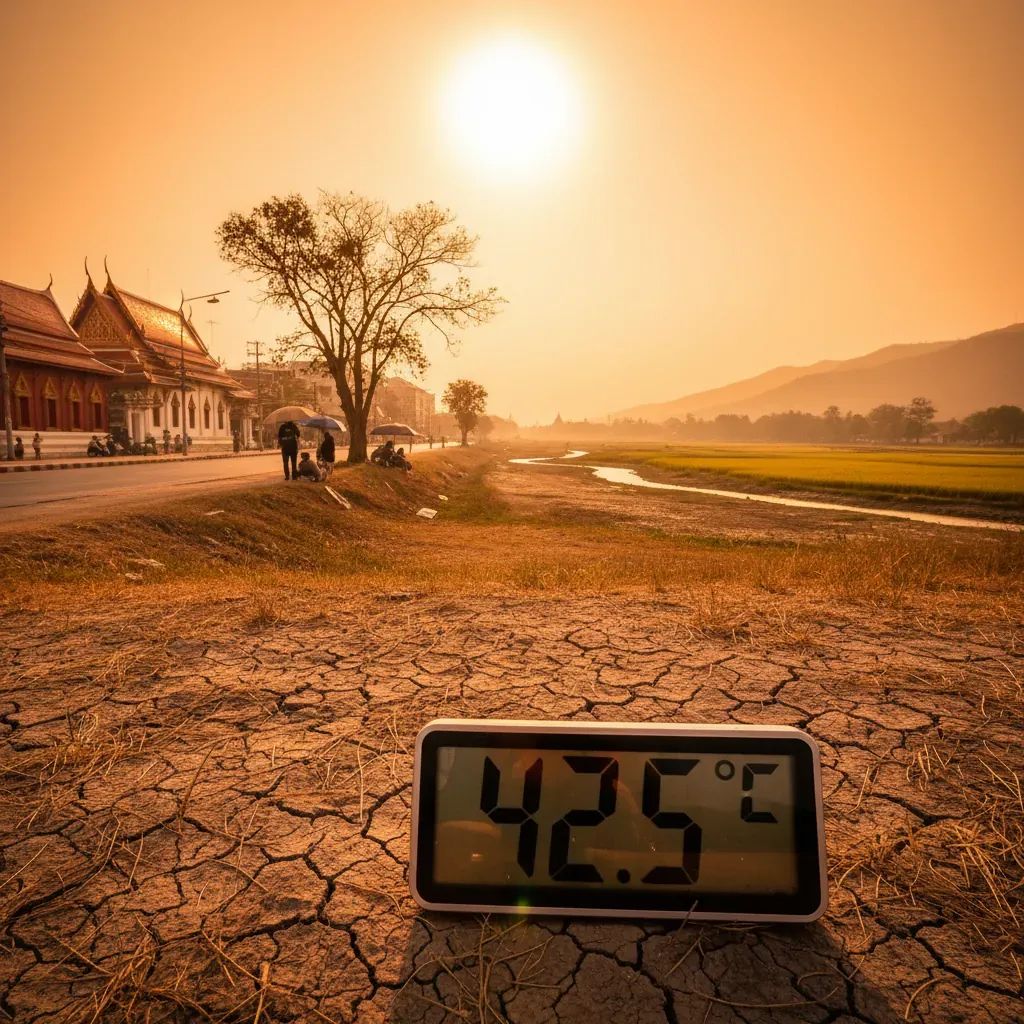
Thailand's Meteorological Department has issued an extended heat and haze advisory affecting much of the country through April 6, with northern provinces facing the most severe air quality concerns while coastal zones including Pattaya contend with sweltering temperatures punctuated by sporadic thunderstorm activity.
Why This Matters
• Extreme heat advisory remains in effect for northern and northeastern Thailand, with visibility-reducing haze concentrated in these regions
• Pattaya and the eastern seaboard face daily temperatures climbing during daylight hours, with brief thunderstorms offering only temporary relief
• Week-long weather pattern expected to persist through April 6, requiring residents and visitors to adjust outdoor activities accordingly
• Agricultural operations face potential crop and livestock damage from sudden wind gusts and unstable atmospheric conditions
Heat Dome Settles Over Northern Provinces
A low-pressure system anchored over northern Thailand has created a persistent weather pattern driving both elevated temperatures and reduced air quality across multiple provinces. The Thailand Meteorological Department attributes the conditions to weak southerly and southwesterly wind flows that have essentially stalled, allowing pollutants and heat to accumulate rather than disperse.
The northern and northeastern regions bear the brunt of the haze accumulation, where particulate matter remains trapped at ground level. Unlike the seasonal burning-related pollution that typically affects these areas earlier in the dry season, current conditions stem from a combination of atmospheric stagnation and residual particulates mixing with the heat dome effect.
Air quality in these provinces remains substantially degraded compared to coastal zones, creating a stark geographic divide in environmental conditions across the country. Residents in cities like Chiang Mai and Chiang Rai continue to experience visibility reductions that extend beyond typical seasonal patterns.
Pattaya's Weather Reality: Heat with Occasional Drama
For the eastern coastal corridor, including Thailand's tourism hub of Pattaya, the weather equation differs significantly from northern conditions. While haze occasionally drifts into the area, the primary concern centers on sustained daytime heat that drives beachgoers to seek shade beneath umbrellas and awnings along the shoreline.
Meteorological patterns suggest afternoon and early evening thunderstorms will develop sporadically across Pattaya and neighboring coastal districts. These storms, while brief, can pack sudden wind gusts capable of toppling outdoor furniture, beach equipment, and loosely secured items. The precipitation provides momentary temperature drops but does little to alter the underlying heat pattern.
Humidity levels remain elevated throughout the forecast period, creating conditions that feel substantially hotter than thermometer readings suggest. The combination of high moisture content and intense solar radiation produces a muggy atmosphere that persists even after sunset, offering limited overnight cooling.
Beach vendors and hospitality operators report adjusting their operations to accommodate guests seeking relief during peak heat hours, with increased demand for shaded areas and cooled spaces. The weather pattern essentially compresses comfortable outdoor activity windows to early morning and late evening hours.
What This Means for Residents and Travelers
Anyone currently in Thailand or planning activities through the coming week should recalibrate expectations around outdoor exposure. The Thailand authorities have issued specific guidance emphasizing hydration, limited midday sun exposure, and awareness of rapidly developing storm cells.
For expats and long-term residents, this weather pattern represents a intensification of typical hot season conditions rather than an anomaly. However, the persistence of the heat dome through the first week of April extends uncomfortable conditions beyond what many consider the normal seasonal timeline.
Visitors accustomed to temperate climates should exercise particular caution, as the combination of heat, humidity, and sudden weather shifts can trigger heat-related health issues faster than anticipated. Medical facilities in tourist zones like Pattaya report seasonal upticks in dehydration and heat exhaustion cases during similar weather patterns.
The geographical split in weather impacts means travel between regions brings dramatic environmental changes. A trip from Bangkok to Chiang Mai, for instance, moves from primarily heat concerns to combined heat and air quality challenges requiring different protective measures.
Agricultural Sector Faces Dual Threats
Thailand's agricultural communities, particularly in northern provinces, confront risks from both the sustained heat and the potential for damaging wind gusts associated with isolated thunderstorms. The Meteorological Department has specifically advised farmers to secure loose equipment, protect vulnerable crops, and ensure livestock have adequate shelter and water access.
The timing proves particularly challenging for operations managing dry season crop rotations or maintaining livestock during peak heat periods. Water demands spike as evaporation rates climb, while the threat of sudden storms creates uncertainty around fieldwork scheduling.
Crop varieties sensitive to temperature stress show visible impact in affected regions, with leaf wilting and reduced flowering observed in exposed plantings. The combination of heat stress and inadequate moisture creates compounding effects that extend beyond simple drought conditions.
Southern Provinces Face Different Timeline
While northern and eastern regions contend with the current heat wave, southern Thailand's coastal provinces present a slightly different meteorological picture. The forecast indicates scattered thunderstorms affecting these areas in the near term before transitioning to drier conditions as the week progresses.
This weather divergence reflects the complex interplay of monsoon influences, local topography, and the low-pressure system's positioning. Southern provinces typically experience weather patterns somewhat independent from northern and central Thailand due to their peninsular geography and exposure to different air mass movements.
Tourism operators in southern destinations should anticipate the weather transition, particularly those managing marine activities sensitive to storm development. The shift toward drier conditions later in the forecast period may actually improve operational windows compared to current conditions.
Navigating the Heat Week Ahead
The 31 March through 6 April period requires strategic planning for anyone unable to simply remain indoors. Early morning hours before 10:00 AM offer the most tolerable conditions for exercise, outdoor work, or tourism activities. Evening hours after 6:00 PM provide a second window, though temperatures may remain elevated depending on cloud cover and wind patterns.
Indoor venues across major cities report increased foot traffic as residents and visitors seek climate-controlled environments during peak heat hours. Shopping centers, museums, and entertainment complexes effectively become daytime refuges from the oppressive outdoor conditions.
For those who must work or travel outdoors, the Thailand authorities emphasize carrying adequate water supplies, wearing light-colored and loose-fitting clothing, and monitoring for signs of heat-related illness including dizziness, excessive fatigue, or reduced sweating despite high temperatures.
The weather advisory remains dynamic, with conditions subject to modification based on atmospheric developments. However, the underlying pattern shows sufficient stability that planning around hot and occasionally stormy conditions through the weekend and into next week remains the prudent approach for anyone in affected regions.


