
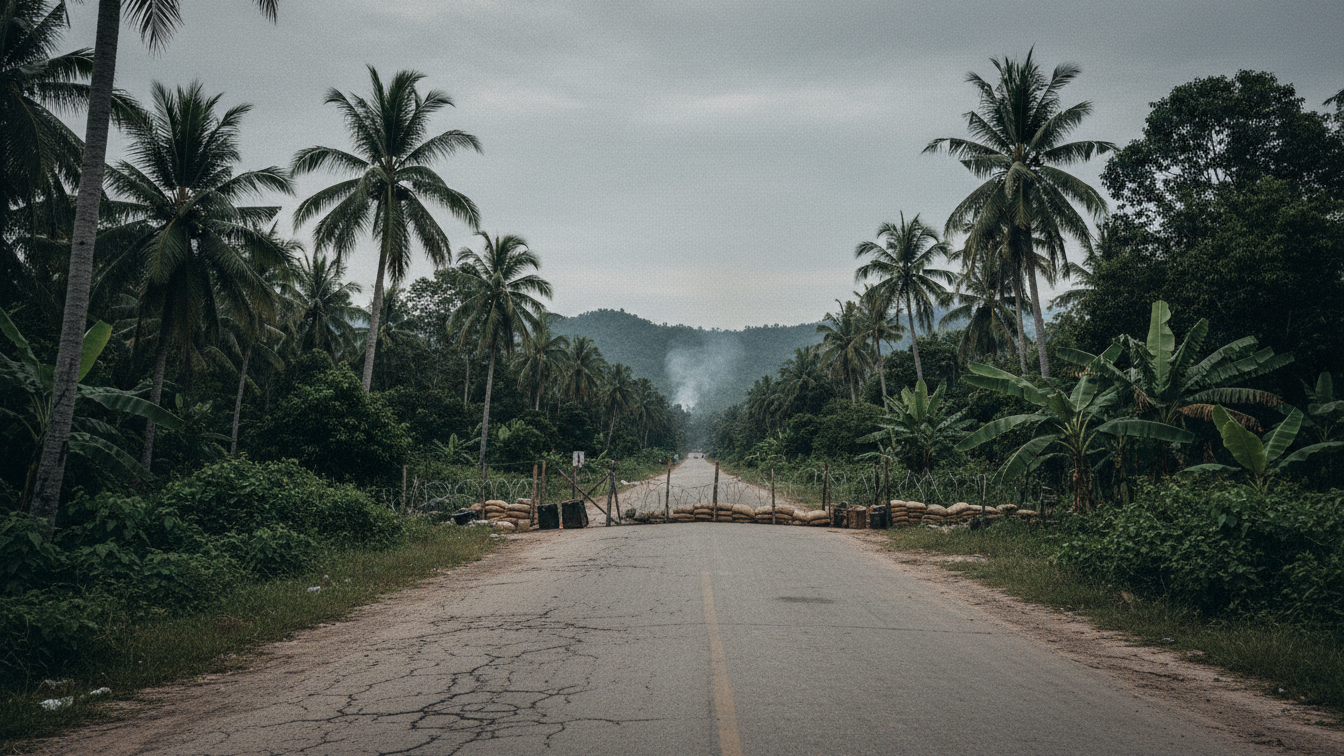
Thailand's northern province of Chiang Rai will soon enter one of the most challenging periods of the year as the 2026-2027 burning season approaches, bringing hazardous air quality that has historically reached crisis levels requiring urgent protective measures for residents and visitors.
Why This Matters
• Timing is critical: The worst air quality typically strikes between late February and early April, with AQI readings sometimes exceeding 400 (Hazardous).
• Health impact: During peak burning season, PM2.5 concentrations in northern districts can reach levels significantly exceeding WHO guidelines, forcing thousands indoors.
• Official burn ban: Chiang Rai enforces a strict no-burning period from February 14 to May 10 annually, with legal penalties for violators.
• Current conditions: As of mid-August 2026, air quality remains "Good" with AQI around 32, offering residents a critical window to prepare.
The Burning Season Challenge
Historical data from past spring seasons demonstrates the severity of air quality challenges facing Chiang Rai residents. During typical peak burning periods in early April, monitoring stations across the province have recorded AQI readings in the "severe health effects" range. For context, areas in Mae Sai and Chiang Khong districts typically experience some of the highest concentrations, while downtown Chiang Rai city center generally records somewhat lower—though still concerning—levels.
The worst episodes place readings well into the "Hazardous" threshold where outdoor activity becomes dangerous for all population groups. These represent typical conditions during northern Thailand's most severe air quality episodes each burning season.
Where the Smoke Comes From
The Thailand Pollution Control Department attributes the annual haze crisis to multiple overlapping factors. Agricultural burning—primarily in sugarcane, rice, and corn fields—remains the dominant source as farmers clear land during the dry season. Forest fires set deliberately to stimulate undergrowth for wildlife also contribute significant particulate matter.
Chiang Rai's geography compounds these emissions. The province sits in a basin surrounded by mountain ranges, creating a natural trap for pollutants. During the dry months from January through April, weak winds and stable atmospheric conditions prevent smoke dispersal, allowing concentrations to build to dangerous levels over successive days.
Cross-border contributions add another layer of complexity. Prevailing winds carry emissions from agricultural burns in Myanmar and Laos, where enforcement mechanisms remain less robust than Thailand's domestic controls. This transnational dimension has required diplomatic coordination through the ASEAN Agreement on Transboundary Haze Pollution and bilateral frameworks.
Government Response and Enforcement
Chiang Rai Provincial Administration has implemented progressively stricter controls since 2025. For 2026, authorities established a two-phase approach: voluntary cooperation from January 1 through February 13, followed by an absolute burning prohibition from February 14 to May 10. Anti-burning campaigns have mobilized community volunteers and enforcement personnel under unified command structures.
The province received designation as a Pollution Control Zone in 2026, granting expanded regulatory authority. Enforcement measures include roadside inspections for diesel vehicles producing visible emissions, mandatory tarpaulin covering for construction material trucks, and compliance audits at industrial facilities with particulate emissions.
Despite budget allocations and intensified patrols, controlling air quality remains challenging when cross-border fires continue to overwhelm local mitigation efforts during peak burning weeks.
Regional Cooperation Through CLEAR Sky
Thailand's Ministry of Natural Resources and Environment has coordinated with Myanmar and Laos through the CLEAR Sky Strategy, a trilateral framework targeting measurable reductions in hotspot detection. The initiative includes hotline channels between agency directors, shared satellite monitoring systems, and equipment donations to neighboring fire suppression units.
Border provinces have established joint firebreak zones along frontier areas. Chiang Rai works directly with Bo Kaeo and Xayabury provinces in Laos to create cleared perimeters that prevent fire spread during dry months. Training programs conducted by the Thailand Department of National Parks have brought field personnel from all three countries together for practical wildfire suppression techniques and drone surveillance operations.
These diplomatic efforts have yielded modest improvements—hotspot counts within Thai territory have shown declining trends between recent years—but weather patterns and agricultural economics continue to drive regional burn cycles that no single government can unilaterally halt.
What This Means for Residents
Anyone living in or visiting Chiang Rai during February through May should prepare for sustained periods of unhealthy air. N95 respirator masks become essential equipment, as standard surgical masks provide insufficient filtration against PM2.5 particles. Residents should stockpile masks before demand spikes in late February.
Outdoor exercise and strenuous work should shift to early morning hours when overnight air circulation temporarily improves conditions, or be suspended entirely when AQI exceeds 150. Parents with children, elderly household members, and anyone with respiratory or cardiovascular conditions face elevated risk and may need to relocate during the worst weeks.
Creating a clean room at home offers critical refuge. Seal one interior room with weatherstripping, run a HEPA-grade air purifier continuously, and restrict entry to minimize particulate intrusion. DIY purifier designs using box fans and furnace filters provide affordable alternatives to commercial units, with effectiveness validated by independent testing.
Monitoring real-time conditions through mobile applications like Air4Thai and THAI DISASTER ALERT allows residents to time essential outdoor errands during temporary improvements. When AQI readings enter the "Unhealthy for Sensitive Groups" range (101-150), vulnerable populations should remain indoors; above 200, everyone faces health risks from exposure.
Medical facilities typically experience surges in respiratory complaints during peak smoke weeks. Chiang Rai Provincial Public Health Office has equipped community health centers with "dust-free rooms" offering temporary relief, but capacity remains limited. Symptoms warranting immediate medical attention include persistent cough, chest tightness, difficulty breathing, or eye irritation lasting beyond brief outdoor exposure.
The Agricultural Dilemma
Farmers across northern Thailand face economic pressure that perpetuates burning despite legal prohibitions. Mechanized alternatives to field burning—such as incorporating crop residue through tilling or composting—require equipment investments many smallholders cannot afford. Thailand's Ministry of Agriculture has piloted subsidy programs for "zero-burn" farming techniques, but adoption remains geographically limited.
The province's sugarcane sector presents particular challenges. Pre-harvest burning remains standard practice for removing sharp leaves before manual cutting, despite health externalities borne by the broader population. Coordinating harvest schedules to avoid simultaneous burns across multiple districts could flatten emission peaks, but market logistics and mill capacity constraints complicate implementation.
Long-Term Outlook
Climate projections suggest increasingly unpredictable monsoon onset, potentially extending the vulnerable dry period when fires proliferate. Without structural changes to agricultural practices and sustained cross-border enforcement, Chiang Rai faces recurring air quality challenges during spring seasons.
The Thailand Environment Institute recommends residents planning long-term stays in the province arrange temporary relocation options for March and April, when conditions historically reach their most challenging levels. Remote workers with location flexibility increasingly adopt "haze migration" patterns, moving to coastal or southern provinces during the northern burning season.
The August respite currently enjoyed across Chiang Rai—with air quality in the "Good" range—offers preparation time before the cycle begins anew in approximately four months. Residents should use this window to secure protective equipment, establish indoor refuge spaces, and develop contingency plans for the challenging weeks ahead when Thailand's beautiful northern landscapes may be obscured during the burning season.


