Northern Border Becomes Flashpoint in Drug War as Methamphetamine Seizures Surge
In mid-July, the Thailand Pha Muang Task Force intensified military operations along Chiang Rai's frontiers following a dramatic series of interdiction successes. Over three days straddling July 13-14, armed clashes and checkpoint seizures netted over 1.2 million methamphetamine pills and 80 kilograms of crystal methamphetamine—a single haul that underscores both operational gains and the overwhelming scale of narcotics trafficking pouring through the region.
Why This Matters
• Checkpoint seizure: Officers intercepted 200,000 methamphetamine tablets at 11:50 AM on July 14 in Mae Fah Luang district, concealed in a single modified fertilizer sack aboard a motorcycle.
• Staffing crackdown: Border security units have intensified patrols within 20 km of international boundaries, resulting in longer wait times and mandatory document verification for all travelers and vehicles.
• Price collapse: A single methamphetamine pill now sells for 25–30 baht in Chiang Rai city, down from 50 baht two years ago, making the drug cheaper than a street meal for low-wage workers.
The Golden Triangle Supply Flood
Chiang Rai occupies the northern apex of the Golden Triangle—the tri-border region where Shan State in Myanmar operates a major cluster of methamphetamine production facilities. This geographic reality has made the province a frontline for drug enforcement. The Thailand Third Army Region has documented substantial drug flows: million-tablet shipments have traversed the border, often accompanied by industrial quantities of crystal methamphetamine and ketamine supplied to distribution hubs throughout Southeast Asia.
Manufacturing infrastructure in Shan State operates on an industrial scale. Ethnic armed groups and criminal syndicates operate labs with chemical precursors sourced from Guangdong Province in China. Myanmar's ongoing internal conflicts have created operational challenges for enforcement. Thai military and police agencies acknowledge that interdiction primarily occurs at Thai checkpoints, with limited capacity to constrain production at the source.
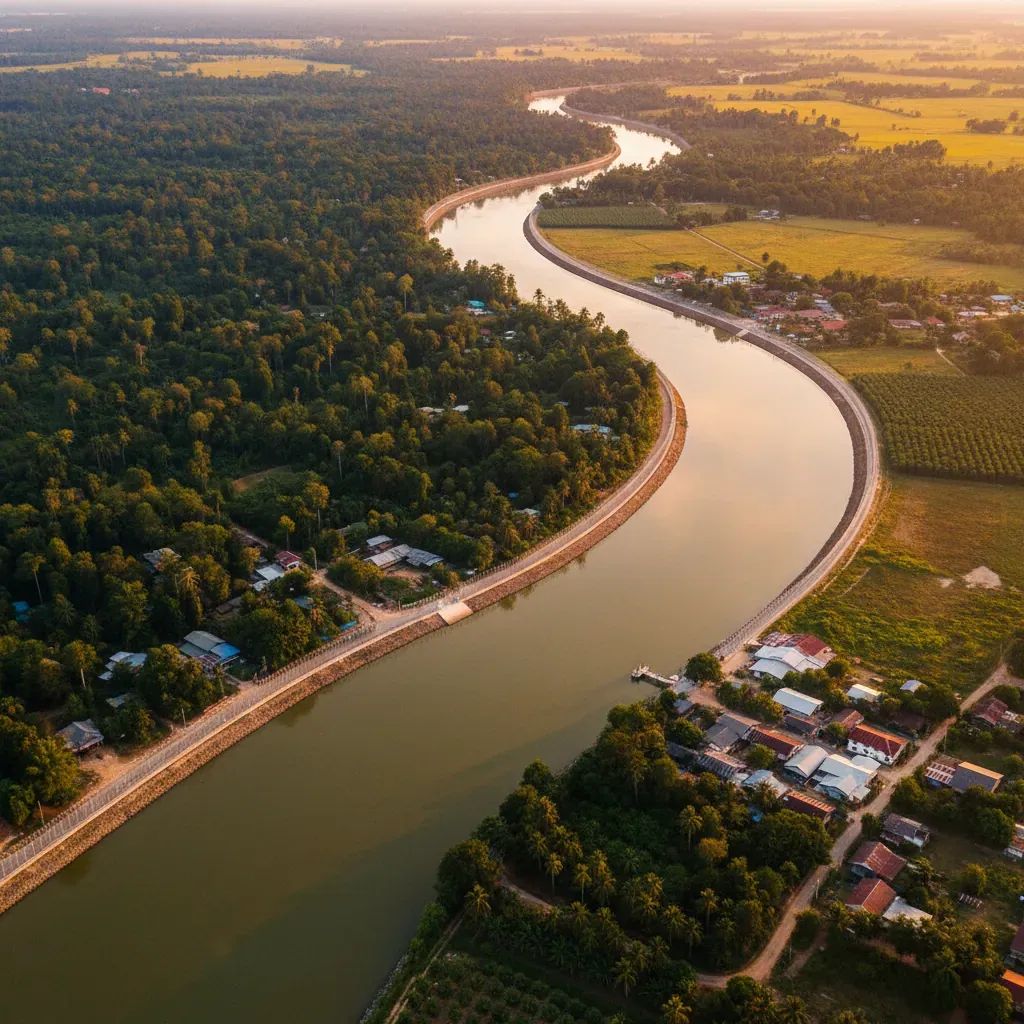
Most narcotics destined for Thailand follow overland routes through Laos or move directly across the Chiang Rai frontier via river crossings, jungle trails, and back-country roads. A secondary flow continues through Thailand toward Australia, Malaysia, and other East Asian markets.
The July 14 Checkpoint Seizure
Soldiers staffing the Mae Fah Luang district checkpoint at approximately 11:50 AM flagged a motorcyclist at their roadblock. Upon inspection, authorities discovered a blue fertilizer sack containing 200,000 methamphetamine pills strapped to the rear carrier. The operator—a local man hired for the delivery—stated that he had retrieved the payload from a forest cache near the Myanmar border and was instructed to transport it to a warehouse contact in Chiang Rai city. The courier received approximately 15,000 baht (equivalent to roughly two weeks' wages for an unskilled laborer) for the assignment.
This seizure reflects standard trafficking architecture: syndicates recruit intermediaries—often impoverished villagers, migrant workers, or economically desperate individuals—for single-leg courier missions. The suspect was transferred to Mae Fah Luang police for prosecution under Thailand's Narcotics Act B.E. 2522, which mandates penalties for methamphetamine possession with intent to distribute.
Combat Operations Yield Larger Hauls
The checkpoint seizure was accompanied by parallel military engagements. On the evening of July 13 at approximately 9:40 PM, Pha Muang Task Force rangers encountered armed figures carrying heavy backpacks through jungle trails in Ban Sam Tao village, Mae Fah Luang district. When confronted, the group opened fire with AK-pattern rifles, triggering an exchange before traffickers dispersed. Rangers recovered five custom-modified fertilizer sacks each holding approximately 200,000 pills—totaling 1 million methamphetamine tablets. Evidence suggested at least two shooters sustained wounds, but dense vegetation prevented pursuit.
Hours later, on the morning of July 14 at 5:00 AM, a patrol boat crew operating on the Ruak River near Mae Sai district intercepted waders attempting to cross carrying waterproof bundles. The traffickers returned fire, prompting an exchange before escaping toward the Myanmar bank. Thai personnel recovered 80 kilograms of crystal methamphetamine abandoned on the riverbank.
Major General Sathit Waiyanon, commanding the Pha Muang Task Force, responded by ordering all subordinate units to saturate frontier regions with randomized checkpoints and intensified patrols. The military deployed additional personnel to Mae Sai, Mae Fah Luang, and Chiang Saen districts.
What This Means for Residents
The enforcement surge carries immediate practical consequences for Chiang Rai inhabitants and visitors. Border security zones now encompass 20-kilometer perimeters around international checkpoints, subjecting all vehicles to potential inspection. Residents and visitors traveling by motorbike or rental car should carry passport photocopies and vehicle registration documents at all times—failure to produce identification can result in detention pending verification. Night driving on unpaved rural roads has become particularly hazardous, with rangers maintaining standing orders to challenge movement in sensitive areas after dark.
Commercial shipping patterns have shifted. Private courier and parcel services operating in the province report heightened scrutiny. In May, police dismantled a trafficking operation that used a registered courier company as operational cover, seizing narcotics from a delivery vehicle. All legitimate shippers now face mandatory X-ray screening for packages exceeding specific weights.
Residents face legal consequences under Thailand's strict liability statutes. The Narcotics Act criminalizes possession of even trace quantities discovered in shared vehicles or communal housing, with penalties ranging from imprisonment for personal consumption amounts to significant sentences for quantities deemed commercial. Residents employing domestic staff, drivers, or sharing accommodations should conduct regular inspections of common areas to ensure no contraband has been placed without their knowledge.
Property values in border areas have been affected. The Anti-Money Laundering Office (AMLO) froze properties in Chiang Rai during enforcement operations—guesthouses, warehouses, and rural parcels connected to individuals charged with trafficking. Tourism operators reported concerns about checkpoint delays affecting travel patterns and business.
The Seizure Boom and Supply Dynamics
Recent seizure statistics reflect substantial enforcement activity. Between October 2025 and June 2026, the Thailand Third Army Region documented cumulative seizures of 517.7 million methamphetamine pills across northern provinces—an increase compared to the identical period in the previous year. Thai police analysts note that interdiction operations capture a portion of methamphetamine entering Thailand monthly.
Street pricing reflects market conditions. A single methamphetamine pill now retails for 25–30 baht in Chiang Rai city—roughly the cost of a small bottle of drinking water—rendering the drug economically accessible to workers and laborers.
The consumption impact is evident in healthcare settings. Northern Thai medical institutions report that methamphetamine-related acute conditions represent a significant portion of emergency department cases, and rehabilitation centers operate at substantial capacity.
Trafficking Methods
Drug operations employ various supply chain methods. Intelligence sources describe trafficking moving through multiple routes—jungle networks, river crossings, and integrated freight shipments. In June, the Department of Special Investigation (DSI) raided a warehouse and recovered methamphetamine and other narcotics concealed within agricultural shipments. Some operations have involved shell companies registered as legitimate exporters.
The Precursor Chemical Pipeline
Production depends on precursor chemical availability. Guangdong Province in southern China remains a significant source of pharmaceutical intermediates that feed production facilities. Thai customs agencies report that chemical shipments destined for production facilities sometimes transit Thailand via registered importers. The Thailand Revenue Department and Customs Enforcement Division work to close regulatory gaps in chemical diversion.
The Enforcement Challenge
Thai military and National Police Bureau officials acknowledge that border interdiction, however significant in seizure volume, operates within broader supply dynamics. Shan State production generates substantial revenue that finances armed groups providing security and logistics infrastructure for trafficking networks.
Myanmar's military authorities maintain limited enforcement in areas controlled by allied militia factions. Laos faces capacity constraints in patrolling its borders. Thailand shoulders the primary burden of interdiction across three international boundaries. This asymmetry ensures that Chiang Rai's checkpoints will remain active for the foreseeable future—costly in personnel and resources, yet capturing a portion of supply flowing southward.
The Thailand government has allocated resources for border security infrastructure in recent budget cycles, including expanded checkpoint capabilities and detention facilities. These investments support interdiction efforts but address only one component of the broader trafficking challenge. As long as production remains profitable and governance challenges persist in neighboring regions, checkpoint delays, travel restrictions, and enforcement intensity will remain features of life in the northern borderlands for residents and businesses operating in the region.