
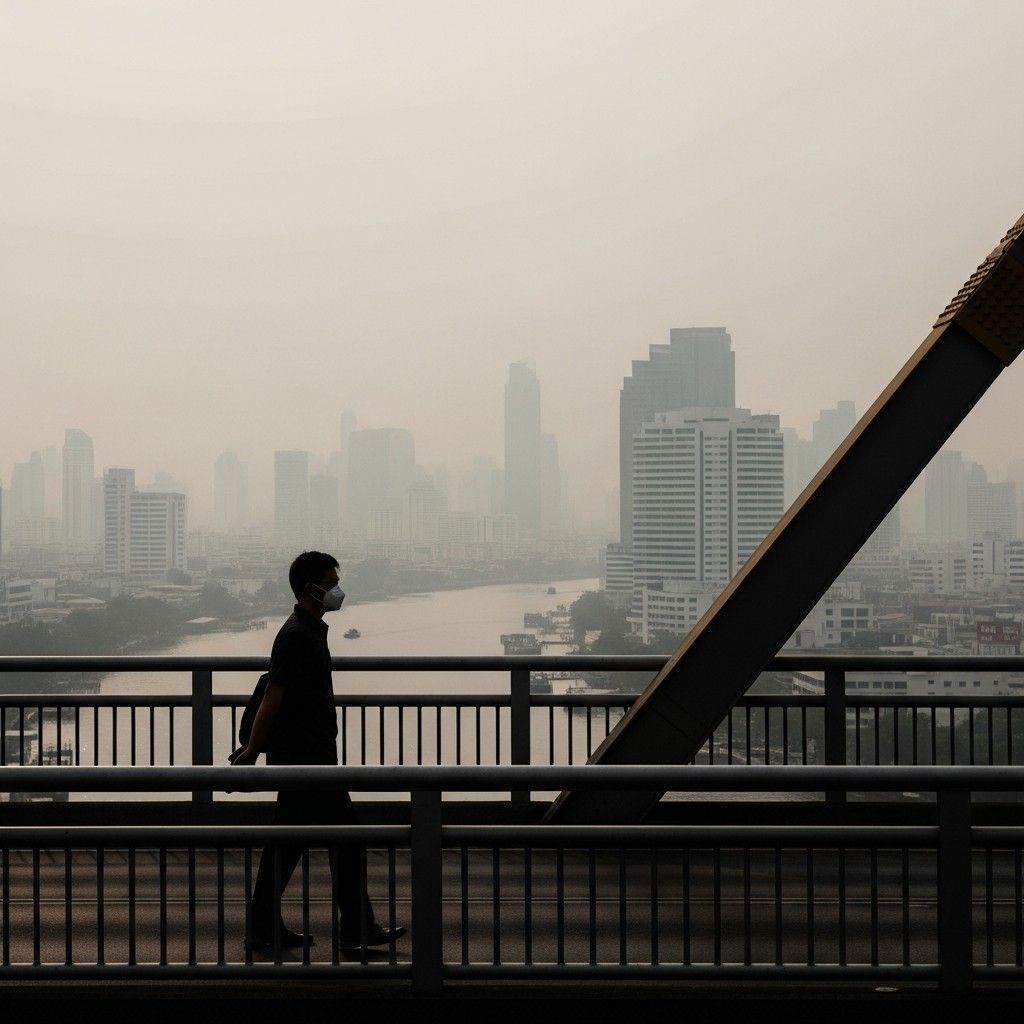
Thailand's northern capital has reclaimed an unwelcome global distinction, registering air quality readings that place it among the world's most dangerous urban environments for human health. On March 30, 2026, Chiang Mai municipality logged an Air Quality Index (AQI) of 263 with PM2.5 concentrations reaching 188.0 µg/m³—significantly exceeding safe exposure levels.
While hour-by-hour rankings fluctuate on monitoring platforms, the broader reality remains stark: Northern Thailand has entered another acute haze season, and residents face weeks of hazardous air ahead.
Why This Matters
• Health emergency threshold: AQI above 200 is classified as "very unhealthy" and triggers warnings for the general population to avoid outdoor activity.
• Duration risk: Northern Thailand's haze season typically persists from February through April, creating prolonged exposure scenarios linked to respiratory illness and cardiovascular strain.
• Economic disruption: Tourism-dependent Chiang Mai sees canceled bookings, closed schools, and reduced foot traffic across hospitality and retail sectors during severe episodes.
The Numbers Behind the Hazard
PM2.5 particles—fine particulate matter measuring 2.5 micrometers or smaller—penetrate deep into lung tissue and enter the bloodstream. At 188.0 µg/m³, Chiang Mai's March 30 reading represents extremely hazardous pollution levels.
Northern Thailand's mountain valleys create topographic conditions where inversions trap smoke and exhaust, forming what meteorologists call a "pollution dome." This geography makes the region particularly vulnerable to sustained air quality degradation compared to coastal or flatter areas.
The Thailand Pollution Control Department issues daily health advisories through its Air4Thai platform. Many residents lack access to indoor air purification systems or N95-grade masks, particularly in rural districts surrounding the urban core.
The Agricultural Fire Connection
Northern Thailand's annual haze stems primarily from agricultural burning. Farmers across Chiang Mai, Chiang Rai, Lamphun, and Lampang provinces clear crop stubble and undergrowth ahead of planting season, often ignoring burn bans.
Manual stubble removal represents a significant cost for farmers compared to burning, creating economic incentives that can overwhelm environmental and health concerns among smallholders operating on thin margins.
Cross-border factors complicate the situation. Satellite imagery regularly shows fire activity in Myanmar's Shan State and Laos, with prevailing winds carrying transboundary smoke into Thailand. Regional coordination between the three countries continues to develop, though joint enforcement mechanisms remain limited.
What This Means for Residents
If you live in Chiang Mai or surrounding northern provinces, the immediate health guidance is clear:
Vulnerable groups—children under 5, adults over 65, pregnant women, and anyone with asthma, COPD, or heart conditions—should remain indoors with air purifiers running during significant AQI spikes. Even healthy adults should limit outdoor exertion when readings become severely elevated.
N95 or N99 masks provide effective filtration for PM2.5 when properly fitted. Surgical masks and cloth face coverings offer minimal protection. Residents are advised to secure masks early during haze season, as demand typically exceeds supply at major pharmacies.
School closures follow provincial announcements, typically triggered during sustained high pollution periods. Parents should monitor the Air4Thai app and provincial education office channels for real-time updates.
Economic impacts extend beyond health costs. Hotels and co-working spaces in Chiang Mai report activity fluctuations during March and April as businesses and visitors respond to air quality conditions.
Government Response and Structural Challenges
The Thailand Ministry of Natural Resources and Environment has implemented various policy interventions over recent years. Recent initiatives include enhanced monitoring systems and pilot programs to encourage alternative agricultural practices.
Cloud seeding operations conducted by the Royal Thai Air Force provide temporary relief but cannot address underlying emission sources. Rainmaking flights require specific atmospheric conditions and deliver localized, short-term benefits.
Legal enforcement remains challenging due to resource constraints. Provincial authorities face difficulties patrolling vast rural areas during burn season, and community-level cooperation varies when economic survival conflicts with environmental compliance.
Regional Pattern and Context
Air quality data over recent years indicates that Northern Thailand experiences recurring severe pollution episodes during the dry season. The current haze season demonstrates the persistence of this annual challenge.
Regional meteorologists note that seasonal patterns affect haze duration and intensity, with timing variations in monsoon transitions influencing air quality windows.
For context, southern provinces including Phuket, Krabi, and Surat Thani maintain significantly better air quality year-round due to coastal airflow patterns. Bangkok experiences pollution primarily from vehicle emissions and construction dust, with pollution levels typically lower than northern haze season peaks.
Looking Ahead
The 2026 haze season is expected to continue through mid-April based on typical seasonal patterns. Residents should expect several more weeks of elevated air quality concerns before sustained improvement occurs.
Long-term solutions require structural economic shifts that reduce dependence on agricultural burning—a transformation involving crop diversification, mechanization options, and possibly land-use approaches. Those changes operate on timelines measured in years rather than individual seasons.
For now, residents of Northern Thailand face a recurring annual challenge that tests public health infrastructure, economic resilience, and regional environmental governance. The March 30 pollution spike serves as another reminder that Chiang Mai's haze season remains a significant concern requiring vigilance and preparation.


