
Bottom Line
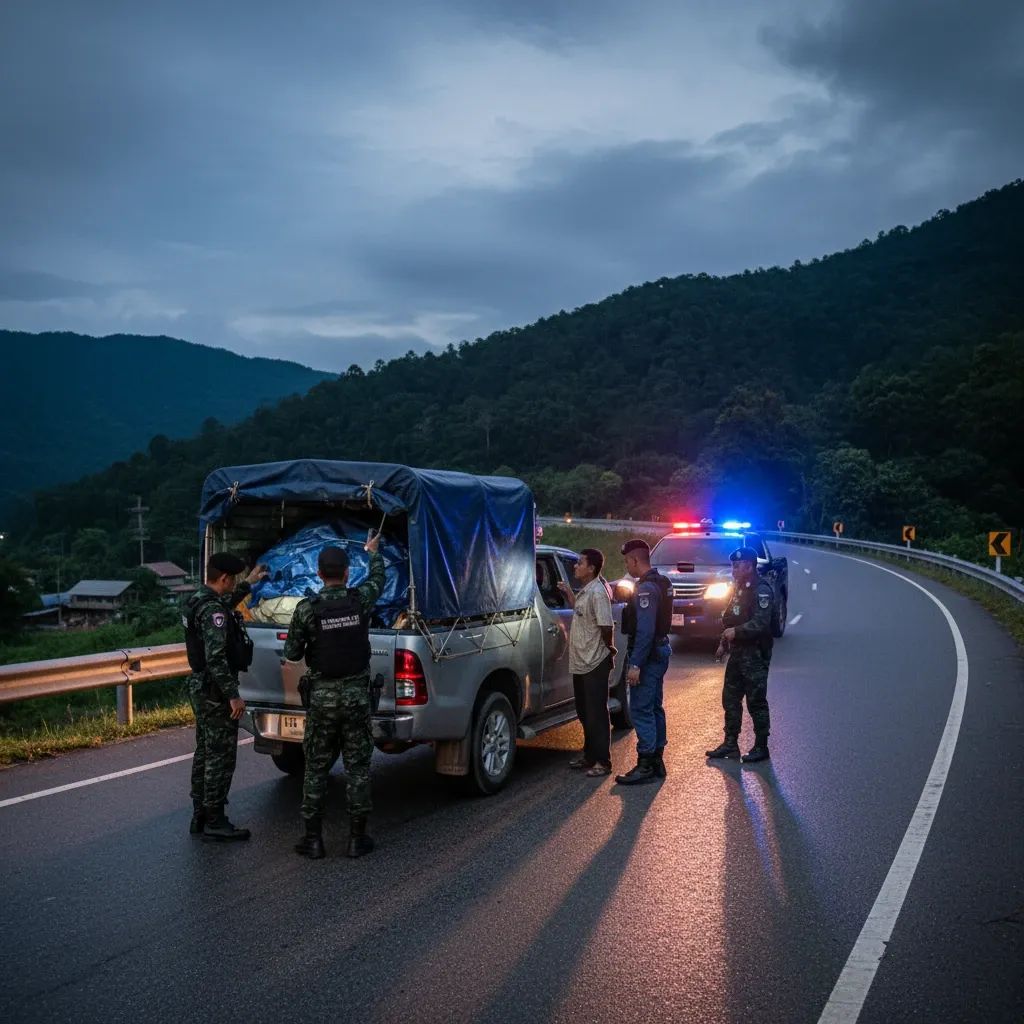
Thailand's military has intercepted a major drug convoy attempting to breach the northern frontier, confiscating 5.7 million methamphetamine pills in a dawn firefight on March 20, 2026. This operation underscores the scale of Myanmar-sourced narcotics crossing Thai territory and signals an ongoing intensification of armed enforcement along border routes feeding supply chains that reach Bangkok and beyond.
Why This Matters
• Northern supply chains under pressure: Border interdictions are accelerating, affecting commercial logistics, transportation timelines, and checkpoint procedures across Chiang Mai and surrounding provinces.
• Street supply disruption: The confiscated volume represents a significant intercept that may create temporary supply disruptions before trafficking networks adapt routing.
• Civilian friction ahead: Expect heightened military presence, longer vehicle inspections, and tightened surveillance in communities near enforcement zones through the end of the dry season.
The March 20 Operation: Facts and Context
Pre-dawn hours on March 20, 2026, personnel from the Thailand Chaiyanuphap Task Force (operating under the Pha Muang Border Command) detected armed smugglers near the Arunothai border checkpoint in Chiang Dao district. A firefight erupted when the trafficking unit resisted. The confrontation lasted minutes; couriers then abandoned 25 sacks of contraband and fled into jungle terrain. Thai forces reported no casualties among their ranks, though evidence at the scene—bloodstains and spent ammunition—indicated smugglers sustained injuries.
This operation reflects broader enforcement efforts along the border. According to regional security authorities, the Pha Muang command has maintained sustained operations against trafficking organizations in recent months, documenting multiple seizures and arrests as part of ongoing dry-season enforcement campaigns.
Why Chiang Mai Remains Ground Zero
The concentration of drug seizures in northern Thailand reflects geography, production capacity across the frontier, and Myanmar's political fragmentation. Chiang Mai province maintains significant strategic importance in Thailand's narcotics enforcement landscape, with enforcement data showing the region accounts for a substantial portion of national drug interdictions.
The province shares a mountainous, porous frontier with Myanmar's Shan State, where ethnic armed organizations control vast territories following the 2021 junta coup. That political upheaval destabilized state institutions and pushed armed groups toward narcotics production as a revenue source. Production has become increasingly organized, with modern trafficking syndicates operating sophisticated logistics networks including encrypted communications and armed security details.
Border enforcement data indicates accelerating trafficking volume over recent periods. The Thailand Office of the Narcotics Control Board reports that northern provinces account for a major portion of the nation's drug seizures, reflecting both production capacity across Myanmar's frontier and the militarization of smuggling operations.
How Product Crosses: Methods and Vulnerability
Traffickers exploit terrain through methods refined by years of operation. Small-load "mule" teams move backpack-sized shipments through dense jungle, river crossings, and unmarked mountain passes. Larger volumes are increasingly concealed within commercial agricultural transport: dried longan, tomatoes, and seasonal produce destined for Bangkok and central Thai markets.
This "agricultural camouflage method" persists because enforcement, despite visible intensity, remains stretched across vast, sparsely monitored terrain. The Thailand-Myanmar border spans multiple provinces; enforcement concentration focuses on Chiang Rai, Chiang Mai, Mae Hong Son, and Tak. Within these regions, multiple districts function as primary infiltration corridors due to dozens of unmarked trails and river crossings exploitable by organized traffickers.
Interception at the frontier represents one layer of enforcement. The Border Patrol Police have activated operations specifically to intercept drugs moving from northern entry points through secondary routes in other provinces. Regional enforcement data indicates that frontier captures alone are insufficient; traffickers shift volume through alternative corridors when primary routes face heightened enforcement.
Recent border operations illustrate standard enforcement patterns. Throughout March and the preceding months, border units have conducted multiple interceptions and clashes with smuggling organizations as part of ongoing dry-season enforcement campaigns.
Impact on Daily Life and Business Operations
Movement through northern corridors will become more restricted and time-consuming. Expect expanded roadblocks on Highway 107 (connecting Chiang Mai to Fang) and Highway 1 (the primary north-south artery). Residents in proximity to enforcement zones should anticipate regular military patrols, possible temporary road closures during active operations, and longer wait times at checkpoints during morning and evening commutes.
Commercial transport faces elevated scrutiny and new costs. Logistics companies must budget for expanded inspection procedures and screening of cargo. Shipping timelines will lengthen. Suppliers dependent on northern agricultural products should expect delayed deliveries and pressure to adjust cost structures to account for logistics inefficiency.
Asset seizure laws create legal exposure for property owners. Thailand's government has empowered enforcement authorities to freeze bank accounts, seize vehicles, and confiscate real estate connected to trafficking networks. Landlords and property investors should conduct background checks before entering rental agreements or partnerships in higher-risk districts; transacting with individuals later found to have narcotics ties creates liability.
Community surveillance networks are being formalized and expanded. The Thailand Ministry of Social Development and Human Security is deploying community-based monitoring initiatives in pilot areas including Chiang Mai. While officially framed as public health outreach, these initiatives effectively involve local networks in reporting suspicious activity, which alters privacy expectations in participating communities.
Corruption and the Limits of Enforcement
Thailand's drug-war strategy prioritizes interdiction and incarceration over demand reduction or rehabilitation. The Thailand military has assumed significant authority in border enforcement, operating task forces with varying levels of civilian police oversight. This arrangement allows faster decision-making but raises questions about institutional oversight and accountability.
A structural challenge persists: corruption within security agencies remains a documented concern. Border official bribery—the acceptance of payments to allow shipments through—has been reported repeatedly. Unless compensation structures, institutional oversight, and accountability mechanisms improve materially, interdiction efforts risk being undermined by leakage at the enforcement level itself.
Rehabilitation infrastructure remains inadequate relative to demand. Treatment programs in northern provinces operate at limited capacity. The Thailand Health Promotion Foundation operates community-based treatment pilots in select districts, but funding constraints limit expansion and effectiveness.
Myanmar's Collapse and China's Supply Pipeline
Thailand's narcotics crisis cannot be separated from Myanmar's fractured state apparatus. The junta that seized power in 2021 maintains control only over portions of the country; ethnic armed organizations govern vast territories in Shan State where precursor chemicals sourced from China fuel clandestine production labs.
Thai military analysts assess these organizations as increasingly independent, profit-maximizing enterprises with minimal ideological constraint on drug production. Intelligence-sharing efforts have proved challenging, with enforcement gaps persisting particularly along remote borders where territorial control remains ambiguous.
Enforcement Escalation Through Dry Season
The current dry season—when jungle trails become passable and trafficking volume historically peaks—has prompted authorities to prepare for sustained enforcement escalation. Border task forces are repositioning personnel and coordinating operations across provinces.
Residents and businesses should anticipate: longer security checkpoint queues during peak commute hours, heightened scrutiny of commercial deliveries and logistics, possible temporary closures of rural roads during active operations, and increased police presence in commercial districts and transportation hubs. Travelers should carry identification at all times, avoid rural routes after dark, and budget extra time for security procedures. For businesses dependent on northern supply chains, anticipate shipping delays and factor logistics costs upward.
The Grinding Reality
The 5.7 million pill seizure represents a genuine operational success—a coordinated intercept of a significant trafficking unit. It will disrupt supply temporarily and reflect military enforcement capabilities. But it captures only a portion of the methamphetamine crossing Thailand's frontier. Given production capacity in Myanmar's clandestine operations and the profitability of the trade, traffickers will absorb this loss, reroute through alternative corridors, and resume operations.
Without fundamental shifts—Myanmar stabilization, meaningful controls on Chinese precursor chemicals, or Thailand's pivot from punishment-focused policy toward demand reduction and rehabilitation—the cycle will perpetuate. Northern provinces will continue bearing the operational brunt, experiencing intensified security measures, expanded enforcement activity, and collateral consequences of militarized border enforcement. The March 20 operation represents a snapshot of ongoing border security efforts, not a conclusive resolution to the trafficking challenge.


